

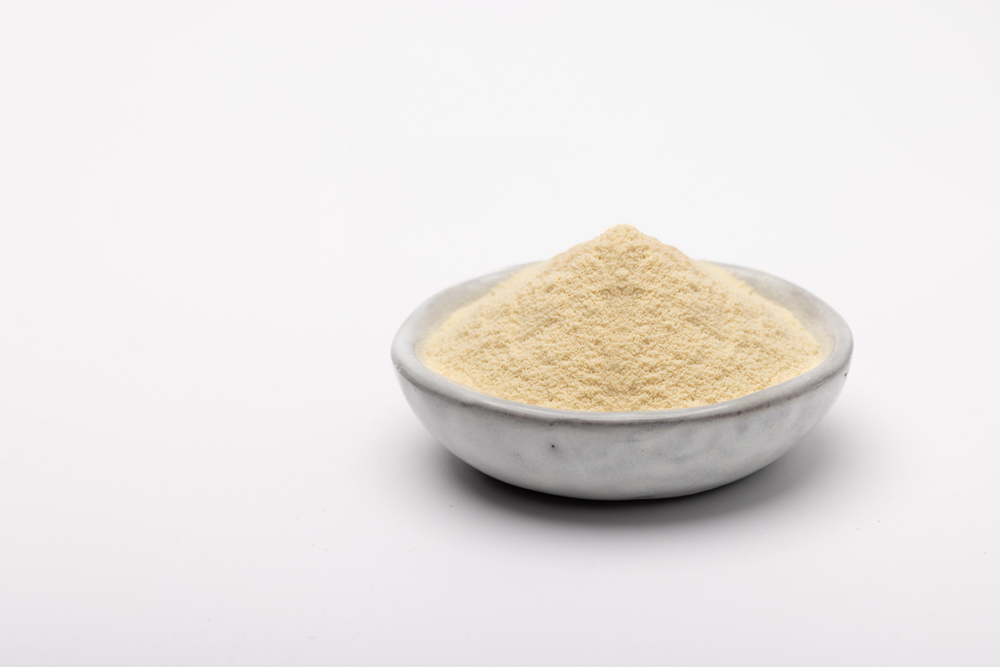
Protein under pressure: Balancing nutrition and texture

Meala FoodTech's researcher, Maayan Ben David, explores why protein functionality has become just as important as protein content
Protein has evolved far beyond a nutritional ingredient. Today, it is one of the most sought-after attributes across food categories, influencing consumer purchasing decisions and product innovation strategies worldwide. For us as formulators, adding protein is rarely a simple matter.
Consumers increasingly expect products to deliver higher protein levels while maintaining the sensory qualities they already enjoy: smooth texture, stability, juiciness, and an indulgent eating experience. But as demand for protein-enriched foods accelerates, supply constraints are pushing R&D, product, and innovation teams across the food industry to rethink how to deliver high-protein products without creating overly complex formulations. At the same time, increasing protein content introduces a wide range of sensory and functional challenges, including chalky or sandy mouthfeel, dryness, reduced juiciness, excessive viscosity, sedimentation, and undesirable off-notes.
Why protein matters more than ever
Protein has long been associated with wellness, muscle maintenance, and longevity. More recently, demand has been further accelerated by the rapid adoption of GLP-1 therapies. Consumers using these medications typically eat smaller portions and place greater emphasis on nutrient density while trying to preserve lean muscle mass. They expect products with more protein – but not longer ingredient lists. They still want short, recognizable ingredient labels, creating growing demand for multifunctional protein ingredients that help formulators deliver both nutritional value and functionality without adding formulation complexity.
For us as R&D teams, this creates a clear brief: We need to respond quickly to evolving nutritional needs while protecting the texture, stability, and sensory experience consumers already expect.
The formulation challenge: protein changes more than nutrition
One of the most common misconceptions in food formulation is that adding or replacing one ingredient simply means swapping it for another. In reality, every formulation is a carefully balanced functional system.
Proteins, stabilizers, hydrocolloids, emulsifiers, fats, starches, and other ingredients interact to create the required texture, viscosity, stability, mouthfeel, processability, and shelf life.
Changing a single component can disrupt this balance and trigger a chain reaction throughout the formulation. There is increasing complexity in ensuring consistent functionality across different formulations, processing conditions, and product formats. Small changes in an application can often have a significant impact on texture and performance.
Additional protein may influence water binding, hydration, viscosity, emulsification, gelation, heat stability, and flavor release. Restoring the desired performance can then require several development iterations and, in some cases, the addition of multiple compensating ingredients. This is why, as formulators, we need to treat protein enrichment as both a nutritional task and a texture-management task.
We need to treat protein enrichment as both a nutritional task and a texture-management task
From protein enrichment to commercial production: the formulator's journey
Stage 1: The Lab – Protein Enrichment and Reformulation
The journey begins in the R&D laboratory. Adding protein is rarely a simple substitution. Proteins interact with water, starches, fats, and other ingredients, often changing viscosity, aeration, gelation, moisture distribution, and ultimately the product's texture. A cake may become dry and dense, a sauce may lose its creaminess, and a meat alternative may become rubbery or brittle.
At the same time, formulators are expected to simplify ingredient lists, reduce reliance on eggs and hydrocolloids, improve nutritional value, control costs, and maintain clean-label claims.
Developing a successful formulation therefore requires extensive experimentation – optimizing ingredient interactions, adjusting processing conditions, and evaluating texture, stability, and sensory performance through multiple development iterations.
Stage 2: The Production Line – Turning a Formula into a Product
A successful laboratory prototype is only the beginning. Commercial production introduces an entirely new set of variables. Mixing equipment, shear forces, hydration time, the order of ingredient addition, heating profiles, filling conditions, production speed, and storage conditions all influence the final product.
An ingredient that performs perfectly in a benchtop trial may behave very differently on a high-speed production line. Scale-up frequently requires further formulation refinement and process optimization before consistent quality can be achieved.
This is why close collaboration between ingredient suppliers and food manufacturers is essential. Pilot-scale trials that replicate real production conditions help identify potential challenges early, reduce development risk, and accelerate commercialization.
Ultimately, successful innovation is not defined by creating a formulation that works in the laboratory – it is defined by delivering consistent texture, functionality, and quality every day on the production line.

Redefining functionality: where texture meets nutrition
To address today's formulation challenges, Meala has developed a proprietary technology that unlocks the hidden functionality of plant proteins, transforming them into high-performance texturizing ingredients that deliver both protein enrichment and the multifunctionality traditionally provided by eggs and complex additive systems.
Instead of treating protein enrichment and texture as two separate formulation challenges, our texturizing proteins deliver both. They contribute high-quality protein while providing the binding, emulsification, foaming, water retention, and structural functionality traditionally achieved through complex systems of eggs, hydrocolloids, and stabilizers.
The goal is not simply to replace one ingredient with another. It is to give formulators a more efficient starting point: a single protein ingredient that simplifies formulations, reduces reliance on multi-component additive systems, and enables the development of cleaner-label products with exceptional texture and higher protein content.
Successful innovation is not defined by creating a formulation that works in the laboratory – it is defined by delivering consistent texture, functionality, and quality every day on the production line
By combining nutrition and functionality in one ingredient, Meala helps manufacturers reduce formulation complexity, lower cost-in-use, improve supply resilience, accelerate product development, and simplify the transition from laboratory development to commercial production – all while delivering the texture and eating experience consumers expect.
The next generation of food formulation
The future of food formulation will be defined by the convergence of texture and nutrition.
For decades, texture and nutritional value have largely been treated as separate formulation objectives. Protein was added to improve nutrition, while eggs, hydrocolloids, and stabilizers were added to deliver functionality and texture. As consumer expectations continue to evolve, this separation is no longer sustainable.
Consumers want foods that are higher in protein, cleaner label, and enjoyable to eat. For formulators, the challenge is no longer balancing nutrition against texture – it is integrating both into a single solution.
The next generation of ingredients will therefore do more than replace individual components. They will combine nutritional value with functionality, enabling formulators to create products that are easier to manufacture and simpler to formulate.
The convergence of texture and nutrition is more than a formulation trend – it represents a fundamental shift in food innovation, where a single ingredient contributes simultaneously to nutritional value, functionality, and the consumer eating experience.
Maayan Ben David is a Senior R&D Researcher at Meala FoodTech with an M.Sc. in Biotechnology and Food Engineering from the Technion – Israel Institute of Technology. She specializes in protein functionality and food innovation, helping develop and optimize Meala's clean-label texturizing protein technology for a wide range of food applications. Her experience spans formulation, process scale-up, and manufacturing, supporting the successful transition of new technologies from the laboratory to pilot and commercial production

Join Us At One Of Our Upcoming Events

If you have any questions or would like to get in touch with us, please email info@futureofproteinproduction.com

.jpg)
.jpg)
