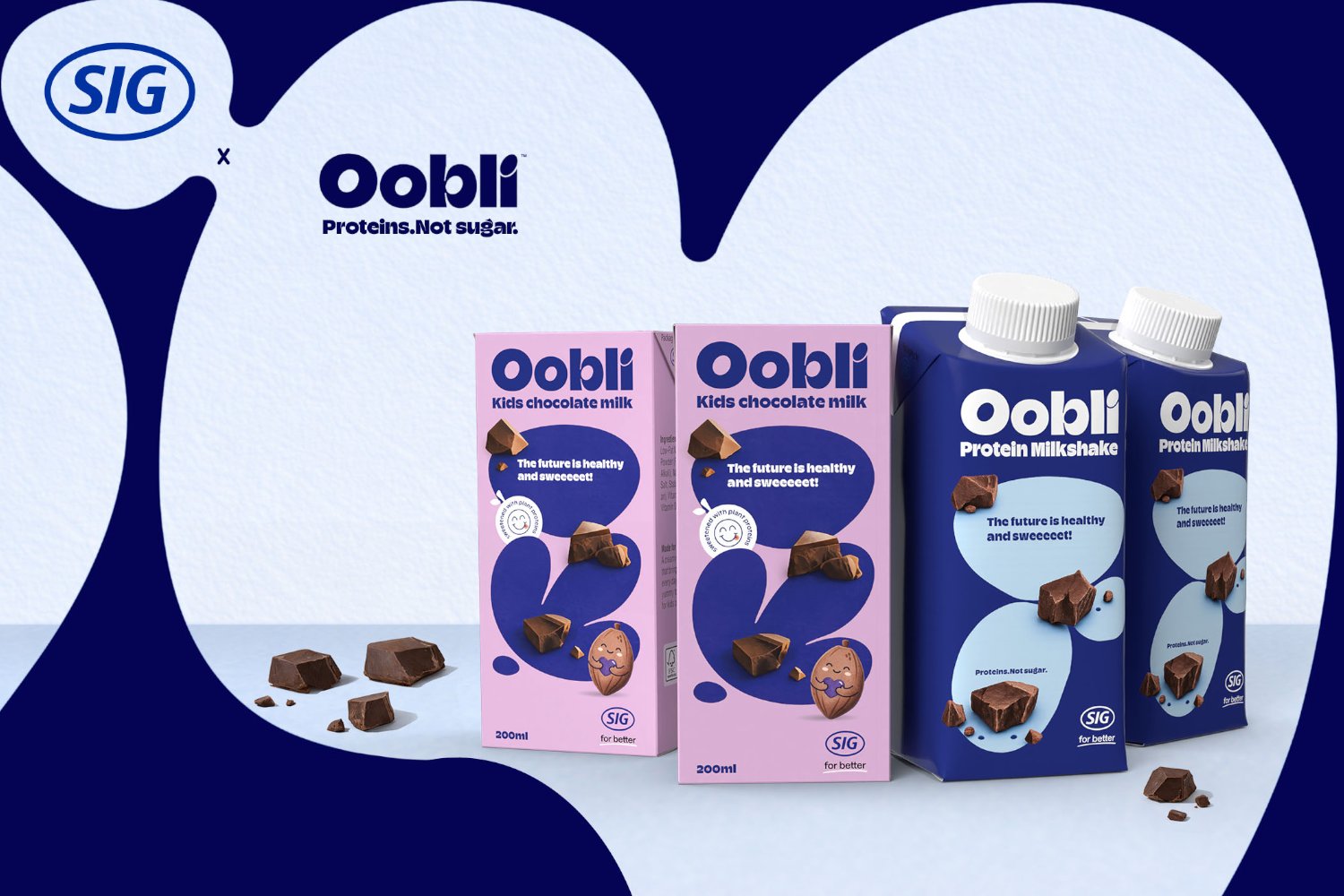
SIG and Oobli team up to put protein-sweetened beverages into shelf-stable packs

SIG and Oobli have announced a strategic partnership aimed at accelerating the development of reduced-sugar beverages that combined sweet proteins with aseptic packaging and long shelf life.
• SIG and Oobli announced a strategic partnership to develop reduced-sugar beverage concepts using sweet protein technology and aseptic packaging solutions.
• The collaboration combined Oobli’s sweet proteins with SIG’s filling systems and packaging formats to support shelf-stable, preservative-free drinks without refrigeration.
• The partners said they were pursuing joint development projects, pilot runs, and consumer testing to validate flavor, performance, and shelf life across key markets.
The tie-up brought together Oobli’s sweet protein platform and SIG’s expertise in aseptic filling, with the companies saying the goal was to help beverage manufacturers bring protein-sweetened products to market in a range of shelf-stable formats.
The partnership centered on beverages that reduced sugar while maintaining taste and convenience. According to the companies, the combination of sweet proteins and aseptic processing could support long shelf life at ambient temperatures, removing the need for refrigeration and easing distribution constraints.
That gave the collaboration a practical commercial angle as well as a formulation one. SIG said its filling systems could handle multiple packaging formats and volumes, while its global innovation centers offered equipment, technical support, and testing resources for product development. Oobli, meanwhile, said its sweet protein technology could help significantly cut sugar without compromising taste, while also supporting cleaner nutrition labels aligned with consumer demand for healthier products.
Ali Wing, CEO of Oobli, said: “Today’s consumers expect beverages that deliver both taste and health benefits. Our collaboration with SIG couples sweet-protein technology with proven filling and packaging capabilities, supporting the launch of reduced-sugar beverages that can reach consumers across price tiers and channels.”
SIG also cast the partnership as part of a broader push to meet demand for products that combined health, convenience, and scalable manufacturing. Norman Gierow, Director Global Customer Marketing at SIG, said: “This collaboration with Oobli reinforces SIG’s position at the intersection of taste, health, and convenience. By pairing our aseptic filling systems and packaging versatility with Oobli’s sweetness technology, we are enabling manufacturers to bring healthier beverages to market quickly and reliably, with broad distribution potential.”
The companies said the collaboration focused on beverage concepts that demonstrated reduced sugar content, natural-protein-based sweetness, and shelf-stable formulation while maintaining consumer appeal and brand integrity. They added that joint development projects, pilot runs, and consumer testing were already part of the plan, with work set to validate flavor, performance, and shelf life across key markets.
The partnership also emerged from a shared innovation network. SIG and Oobli said the relationship was formed at MISTA, the San Francisco-based food innovation platform that connected companies across ingredients, food, and technology to tackle industry challenges. Both businesses were active members of MISTA, and they said that ecosystem had helped create the conditions for collaboration.
For Oobli, the announcement added another commercial route for its sweet protein technology, which the company has promoted as a way to reduce sugar without the glycemic impact associated with conventional sweeteners. The company said its proteins had no effect on the gut microbiome and were produced via fermentation. It also described the technology as a cost-effective sweetener replacement and a more climate-friendly option than farmed sugarcane, citing lower use of land, water, and carbon.
That broader sustainability message aligned with SIG’s own positioning in food and beverage packaging. The Swiss-headquartered company described itself as a provider of aseptic cartons, bag-in-box systems, and spouted pouches, working with customers to deliver products in ways it said were safe, sustainable, and affordable. SIG said its technology portfolio enabled end-to-end solutions spanning differentiated products, smarter factories, and connected packs.
While the announcement did not name specific beverage categories or launch timelines, it made clear that both companies saw scope to move beyond concept development into validation work with commercial relevance. The emphasis on pilot runs and consumer testing suggested the partnership was aimed not only at demonstrating technical feasibility, but also at building a case for how sweet proteins and aseptic packaging could work together in products designed for mainstream distribution.
In practical terms, the collaboration appeared to rest on a straightforward proposition: combine sugar reduction with shelf stability, and do so in formats that could travel widely without cold-chain requirements. For beverage makers, that could open up a route to lower-sugar products that were easier to distribute across geographies, channels, and price points.
For both SIG and Oobli, the partnership marked an attempt to connect ingredient innovation with packaging and processing infrastructure, turning a promising formulation story into something closer to a market-ready beverage platform.

Join Us At One Of Our Upcoming Events

If you have any questions or would like to get in touch with us, please email info@futureofproteinproduction.com