The Protein Brewery extends winning streak with €18 million funding boost ahead of European launch

The Protein Brewery has secured an €18 million (US$21 million) extension to its Series B funding round, adding fresh momentum to what has become one of the strongest recent runs of commercial progress in the biomass fermentation sector.
• The Protein Brewery has secured an €18 million (US$21 million) Series B extension, taking total funding raised to more than €70 million (US$82 million).
• The round was led by ABN AMRO Sustainable Impact Fund, with Invest-NL, Novo Holdings, Madeli and BOM also participating.
• The investment follows EU Novel Food authorization, EU LIFE funding, sold-out US capacity and industry recognition for Fermotein.
The investment was led by incoming investor ABN AMRO Sustainable Impact Fund, with existing investors Invest-NL, Novo Holdings, Madeli and the Brabant Development Agency (BOM) also participating. The round takes total funding raised by the Netherlands-based company to more than €70 million (US$82 million) as it prepares to begin commercial sales across Europe following regulatory approval for its flagship mycelium ingredient, Fermotein.
According to The Protein Brewery, the extension was deliberately expanded beyond its original target following strong investor demand. The additional capital will be used to accelerate production scale-up, support European commercialization, advance scientific research and progress regulatory approvals in further international markets.
The funding comes only weeks after The Protein Brewery secured European Commission authorization for Fermotein under the EU Novel Food Regulation, making Rhizomucor pusillus mycelium the first novel mycelium ingredient approved through the bloc’s novel food framework. For a company that submitted its dossier to the European Commission in May 2020, the approval marked the end of a long regulatory process and the beginning of commercial access to its home market.
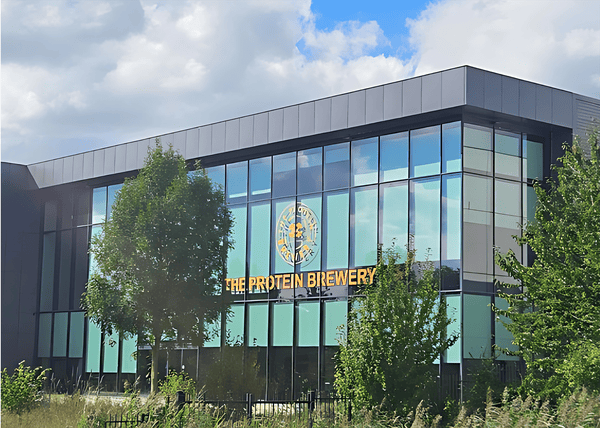
The company will now use the new investment to expand production capacity to more than 2,000 metric tons through further capital investment and scaling operations at its Mijkenbroek facility in Breda. It will also drive sales into Europe after summer 2026, with an initial focus on active nutrition applications such as ready-to-mix powders and bars, as well as functional foods and beverages.
Alongside the commercial rollout, The Protein Brewery plans to deepen clinical and scientific research into the potential longevity-promoting benefits of Fermotein. The company is also pursuing regulatory approvals in Canada, Australia, New Zealand and India as it looks to broaden access beyond its existing markets.
“Building a completely new ingredient category takes patience and investment in the right activities, at the right time. With this additional funding, we move from proving that whole-food mycelium is a desirable ingredient to delivering it at the scale that brands and manufacturers need. Fermotein meets the challenge of feeding a growing and ageing population with fewer environmental resources. ABN AMRO Sustainable Impact Fund is the right partner because they understand that high-quality nutrition and sustainability go hand-in-hand,” said Thijs Bosch, CEO of The Protein Brewery.
ABN AMRO Sustainable Impact Fund said the investment reflected The Protein Brewery’s progress in moving from scientific development into industrial production and commercial growth.
“The Protein Brewery has successfully translated strong scientific foundations into a robust industrial-scale production process and a growing commercial business, exactly the profile we look for in companies that can deliver measurable environmental impact at scale. We are pleased to support its next phase of growth,” said Ugur Yuksel, Investment Manager, ABN AMRO Sustainable Impact Fund.
The financing adds to a sequence of milestones that has accelerated over the past year. In September 2025, The Protein Brewery announced a €30 million (US$35 million) Series B to support the move from pilot-scale validation toward commercial production. At the time, Bosch told Protein Production Technology International that the earlier fundraise had enabled the company to move from pilot plant operations to commissioning and building its demonstration factory in Breda.
“The previous fundraise enabled the company to move from pilot scale to becoming a true scale-up,” Bosch said. “We went from a pilot plant to commissioning and building the demo factory in Breda. That foundation means the company can now produce 500-600 tons of ingredients, which is a solid commercial scale to be at.”
That demonstration capacity has since become an important foundation for The Protein Brewery’s next phase. The company said it has sold out its 2026 capacity to customers in the USA, established a full supply chain from fermentation to finished product and built a strong commercial pipeline in the EU and UK, with initial customers in active nutrition.
The company also secured €2.3 million (US$2.7 million) from the European Union’s LIFE Programme in January 2026 to support the scale-up and commercialization of Fermotein for dairy alternative applications. That project was designed to address persistent challenges in the category, including nutrition, taste and affordability, while demonstrating the environmental performance of fermentation-derived proteins in dairy-style products.
The LIFE funding was followed by a positive commercial and regulatory sequence. In May, Fermotein won the Most Innovative Sustainable Solution category at the Vitafoods Startup Challenge. In June, the European Commission authorization opened the door to sales across the EU, including in protein powders, supplements, nutrition bars, dairy alternatives and other health-focused foods and beverages.
Speaking after the EU authorization, Dr Yvonne Dommels, Director of Nutrition and Regulatory Affairs at The Protein Brewery, said the approval demonstrated the importance of constructive engagement between regulators and food innovators.
“We are pleased with the way we worked with the European Commission,” she said. “They were very open to host us in Brussels for a transparent conversation, and to discuss important points in the draft regulation together. That openness is exactly what European food innovators need. Today we are proud that we can finally sell Fermotein in our home country, and across Europe.”
Bosch also described the approval as a turning point for the company’s European strategy.
“Europe is our home market and supplying European customers directly from our Dutch factory is a turning point for the company,” he said. “We see strong demand from leading and emerging EU brands looking for a single ingredient that delivers complete protein, fibre, and bioactives. We strongly believe Fermotein is uniquely positioned to support the next generation of nutrient-dense and sustainable foods that European consumers are asking for.”
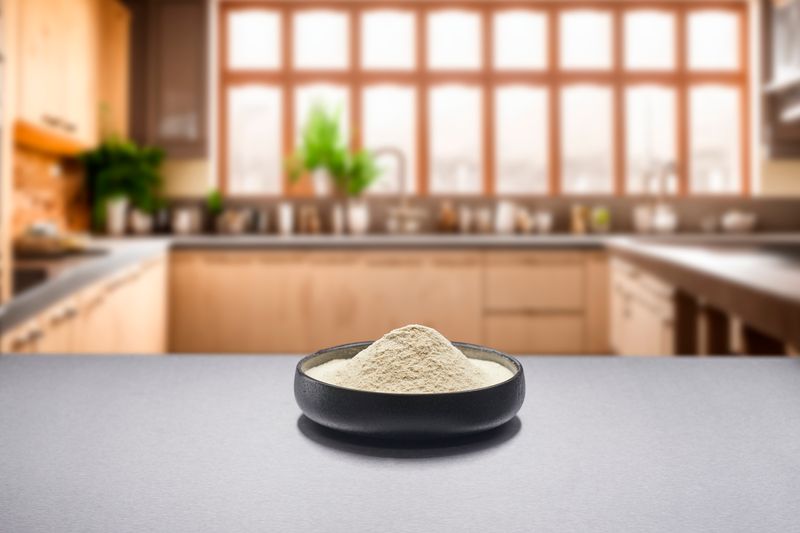
Fermotein is produced through biomass fermentation using Rhizomucor pusillus, a non-fruiting fungal species related to strains traditionally used in Asian fermented foods such as tempeh. According to The Protein Brewery, the ingredient contains approximately 50% complete protein, including all essential amino acids, alongside dietary fiber, naturally occurring micronutrients and bioactive compounds.
Unlike companies focused primarily on meat alternatives, The Protein Brewery has increasingly positioned Fermotein as a nutritional building block for active nutrition, functional foods, beverages, dairy alternatives and broader health-focused categories. Bosch has previously argued that sustainability is no longer enough on its own to differentiate a next-generation ingredient.
“Sustainability, in my view, is the ticket to the table; it’s a hygiene factor,” he told Protein Production Technology International in 2025. “Producing with very limited CO₂ output, low water use, and minimal land use is simply the way forward. Even if it’s not getting as much attention right now, all the big companies are working on it. It’s critical, but it’s not a differentiator.”
He pointed instead to health and nutrition as central to Fermotein’s commercial potential.
“With Fermotein, I believe we can play a strong role there too,” Bosch said. “The fiber has potential satiety and prebiotic effects, the complete protein supports muscle maintenance, and we’re finding some very interesting bioactive components in Fermotein that could also play a role in cellular health.”
The latest funding extension suggests investors are backing that strategy as The Protein Brewery moves into a more execution-focused phase. With European authorization secured, commercial capacity committed in the USA and new production expansion planned in Breda, the company is now seeking to convert a run of regulatory, funding and product milestones into broader market adoption.
For The Protein Brewery, the next phase will be defined less by proving that Fermotein can be produced and more by demonstrating that it can be supplied consistently, integrated into real products and scaled into additional markets.
With fresh capital, new regulatory access and a growing commercial pipeline, the company is entering the second half of 2026 with one of the clearest momentum stories in food fermentation.

Join Us At One Of Our Upcoming Events

If you have any questions or would like to get in touch with us, please email info@futureofproteinproduction.com