UC San Diego engineers bacteria to consume three corn stalk sugars simultaneously

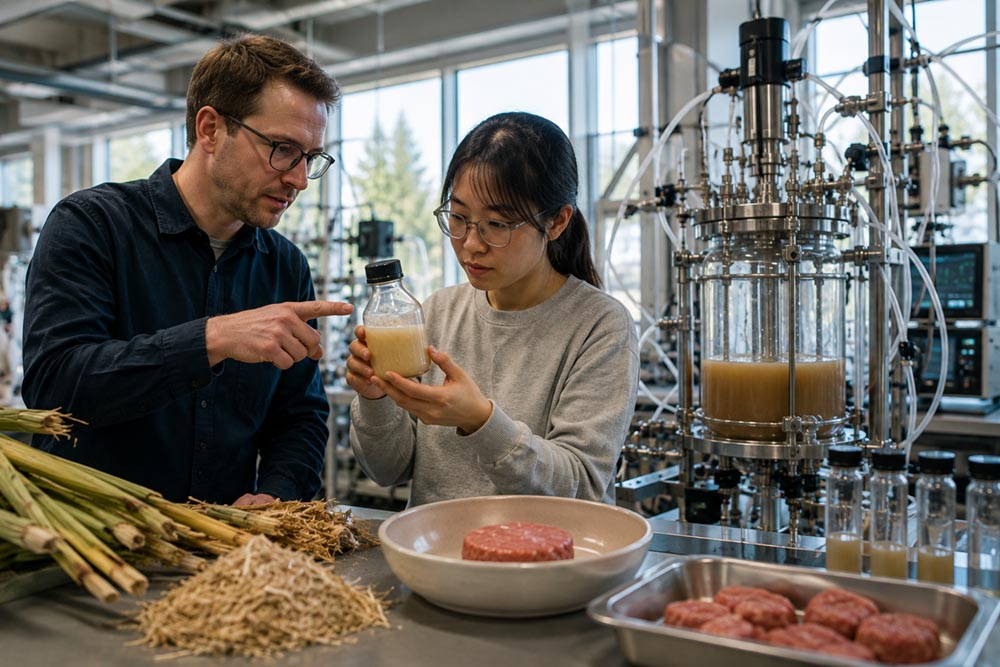
Bioengineers at the University of California San Diego have evolved a strain of Pseudomonas putida capable of rapidly consuming all three major sugars found in corn stalks simultaneously, offering a potential route to more efficient biomanufacturing using agricultural waste and other mixed feedstocks.
• UC San Diego researchers evolved Pseudomonas putida to rapidly consume glucose, xylose and arabinose simultaneously using an automated adaptive laboratory evolution platform.
• The researchers found that the composition of the growth environment determined whether evolution favored versatile generalist strains or narrower sugar specialists.
• The engineered bacteria were subsequently programmed to produce indigoidine, a blue pigment, demonstrating their potential use in biomanufacturing from agricultural waste.
The work, published in Nature Communications on July 29, used adaptive laboratory evolution to improve a bacterium that had already been engineered to consume glucose, xylose and arabinose, the three sugars commonly present in agricultural waste.
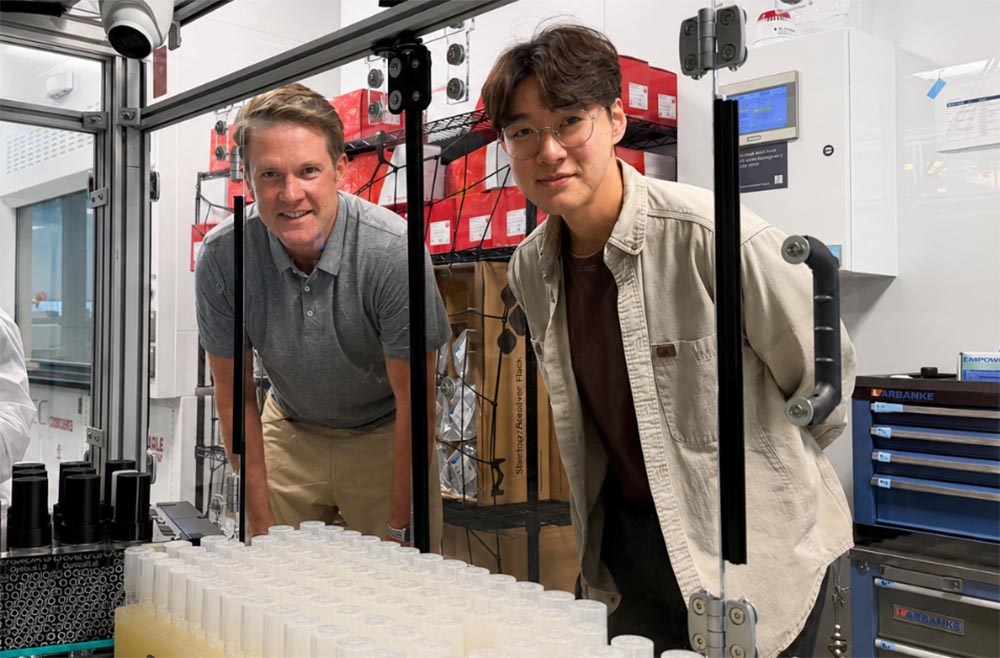
The starting strain could metabolize the sugars but had not been optimized to the level required for efficient biomanufacturing. The researchers therefore subjected it to sustained evolutionary pressure using ALEbot, an automated Adaptive Laboratory Evolution robot developed by Adam Feist and his team at UC San Diego.
ALEbot allowed multiple experiments to operate continuously and in parallel for months, giving the researchers a way to select for bacterial variants with the characteristics they wanted.
The resulting strain consumed all three sugars quickly and at the same time.
“Given the likelihood that some of the most economically viable biomanufacturing feedstocks of the future will be complex mixtures of different components, this work has far reaching implications,” said Feist, Professor of Bioengineering at UC San Diego and senior author of the paper.
“With our automated culturing platform, we engineered a bacterial strain using evolution capable of taking up all three sugars found in corn stalks quickly and simultaneously.”
The way the evolutionary pressure was applied proved crucial.
Rather than allowing individual strains to become particularly effective at consuming one component of the feedstock, the researchers created conditions in which complete consumption of all three sugars provided the competitive advantage.
“We found that the key was evolving strains under a specific mixture of sugars that required complete consumption of all three of the sugars in order for the strain to outcompete other variants,” Feist said. “This produced versatile generalist strains, rather than narrow specialists.”
That distinction could be useful when designing microorganisms for industrial processes using agricultural residues.
Unlike highly refined sugar feedstocks, agricultural waste contains mixtures of components that microorganisms need to metabolize efficiently if the available carbon is to be fully exploited.
Corn stalks, for example, contain lignocellulosic material from which glucose, xylose and arabinose can be derived. A microorganism that preferentially consumes one sugar before moving to another can make the overall conversion process less efficient.
The UC San Diego researchers instead selected for simultaneous sugar consumption.
The team then programmed the evolved bacterium to produce indigoidine, a blue pigment used for dyeing clothing, providing a demonstration of how the strain could be applied to manufacture a useful molecule.
P. putida is already of interest in industrial biotechnology because of its metabolic capabilities and ability to tolerate challenging chemical environments. The new study examined how adaptive laboratory evolution could further tailor those capabilities for complex feedstocks.
The approach could extend beyond corn residues.
The researchers identified agricultural waste and mixed plastics as examples of lower-cost, non-uniform feedstocks that future biomanufacturing processes could be designed to exploit.
Feist, who directs the Future Biomanufacturing Center at UC San Diego, worked with research teams at three US national laboratories on the project.
“We partnered with research teams across three US national laboratories to bring the necessary expertise together,” he said. “In this arrangement, we each contributed our unique skill sets to both develop useful biomanufacturing strains and lay the groundwork for additional applications.”
The study, Simultaneous optimization of lignocellulosic sugar catabolism via systematic laboratory evolution under complex selection pressure, was funded by the US Department of Energy.
Researchers from UC San Diego, the Joint BioEnergy Institute and Inha University in South Korea contributed to the work.
If you liked this, check these out...
• RMIT study uses ultrasound to extract protein from cauliflower leaf waste
• Unicamp develops fungi-based process to turn food waste into meat-aroma plant ingredient

Join Us At One Of Our Upcoming Events

If you have any questions or would like to get in touch with us, please email info@futureofproteinproduction.com