

Unicamp develops fungi-based process to turn food waste into meat-aroma plant ingredient

Researchers at the State University of Campinas (Unicamp) have developed a fermentation-based process that transforms agricultural waste into a plant ingredient with a meat-like aroma, while also improving its nutritional profile.
• Unicamp researchers developed a solid-state fermentation process using Amazonian fungi to convert food waste into a plant-based ingredient with meat-like aroma.
• The process increased protein content, improved amino acid profiles and generated compounds linked to vitamin D.
• The technology has been patented and is being explored for applications in plant-based foods and broader food formulations.
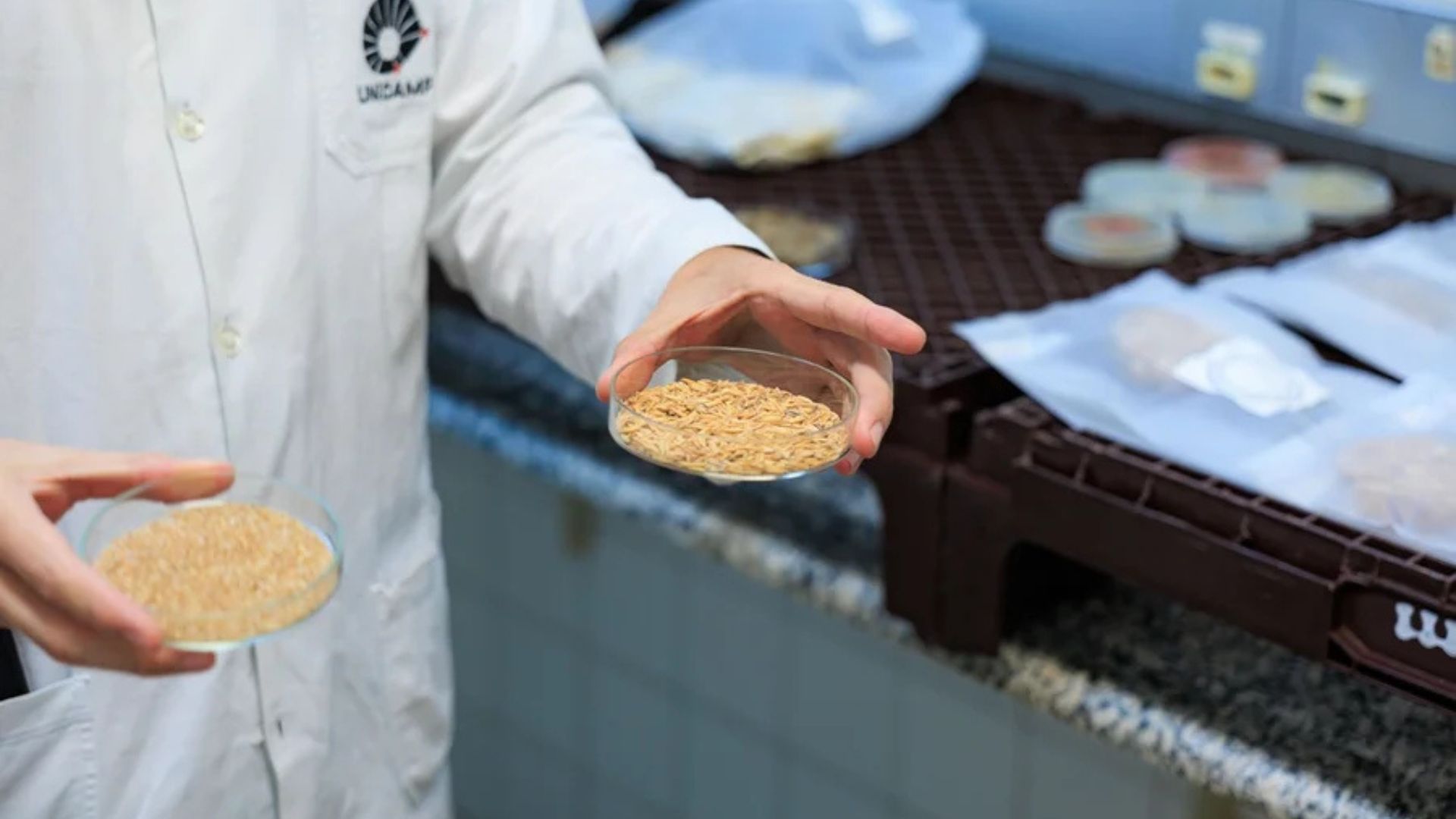
The technology uses agricultural byproducts such as potato peels, oats and açaí residues as a substrate for fermentation, producing a material that can be incorporated directly into food products in the form of flour or paste.
The research was conducted at Unicamp’s Faculty of Food Engineering in collaboration with the National Institute of Amazonian Research and The Good Food Institute Brazil. A patent application has been filed with support from Inova Unicamp.
The process relies on fungi sourced from the Amazon, which are cultivated through solid-state fermentation, a method in which microorganisms grow directly on solid plant material without the need for large volumes of water or chemical solvents.
Researchers reported that this approach reduces processing steps and eliminates the need for extracting and isolating flavor compounds. Instead, the fermented material itself functions as both a flavor and functional ingredient.
Juliano Lemos Bicas, professor at Unicamp, said the discovery emerged during early trials focused on flavor development.
According to the research team, initial fermentations produced a fruity aroma similar to passion fruit. When the material was heated, however, the aroma shifted toward notes associated with broth or cooked meat, highlighting its potential use in plant-based food formulations.
The team then refined the process by testing different combinations of fungi and plant substrates to achieve consistent results.
Unlike conventional flavor production methods, which often require large volumes of raw material to isolate small quantities of aromatic compounds, the Unicamp approach integrates aroma generation directly into the ingredient matrix. This allows the fermented product to be used without additional purification or reformulation steps.
The researchers compared the process to traditional fermentation techniques used in foods such as cheese and wine, where microbial activity contributes both flavor and functionality.
Beyond sensory properties, the process also delivered nutritional improvements. Mário Roberto Maróstica Junior, Professor at Unicamp, said fungal growth enriched the substrate by increasing protein content and modifying its amino acid profile.
The team also reported the formation of bioactive compounds, including ergosterol, a precursor to vitamin D, as well as a reduction in antinutrients that can limit nutrient absorption.
These changes suggested that low-value agricultural residues could be converted into higher-value food ingredients with both functional and nutritional benefits.
In addition, the fermented material demonstrated properties relevant to food formulation, including water retention and emulsification capacity. These characteristics are important for texture and stability in a range of products, from meat alternatives to baked goods and snacks.
The researchers indicated that the technology could be applied across multiple food categories, extending beyond plant-based meat analogs to broader processed food applications.
The project is now moving toward commercialization, with the patent application in place and further development dependent on partnerships for scaling and licensing.
The work reflects a broader trend within the food industry toward combining waste valorization, fermentation and functional ingredient development. By linking aroma generation, nutritional enhancement and process efficiency, the Unicamp research highlights a pathway for integrating sustainability and product performance within a single ingredient system.

Join Us At One Of Our Upcoming Events

If you have any questions or would like to get in touch with us, please email info@futureofproteinproduction.com


%20-%20Photo%20Credit%20Matt%20Qu%C3%A9r%C3%A9e.jpg)

