

What comes after the cultivated meat hype? Didier Toubia is finding out

With approvals in Israel and Singapore, a more capital-efficient manufacturing model and a product designed to work alongside conventional beef, Aleph Farms’ CEO believes cultivated meat is entering a more grounded phase
Cultivated meat has had quite a ride. Huge investment, bold projections and plans for enormous production facilities were followed by a sharp funding correction and some uncomfortable questions about cost, scale and how quickly consumers would actually get to eat the products.
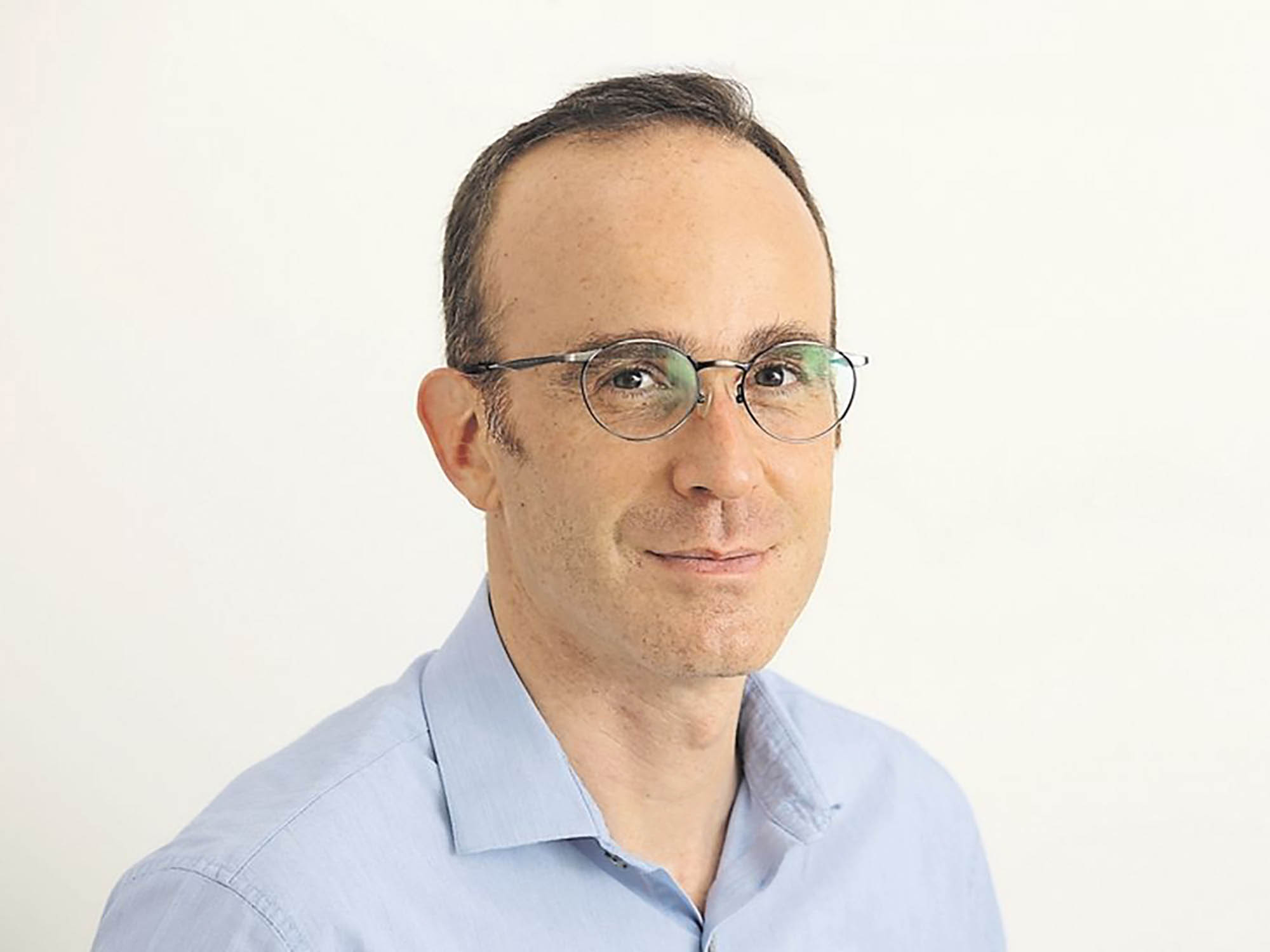
Didier Toubia has been there for all of it. As Co-founder & CEO of Aleph Farms, he has spent almost a decade trying to turn cultivated beef from an intriguing technology into a commercial food business. His assessment of where the industry now finds itself is refreshingly matter-of-fact.
“The industry has gone through a classical hype cycle,” says Toubia.
He does not necessarily see that as a bad thing. Cultivated meat went from a relatively obscure scientific proposition to one of food tech’s hottest investment stories, attracting huge amounts of capital and some equally large expectations. Inevitably, not everything survived the correction.
What interests Toubia now is what has.
“Companies with real products, focusing on the fundamentals, reducing their costs, focusing on product-market fit and real positioning, are now starting to grow again as real businesses and not as a hype.”
Aleph Farms itself is a useful example. The Israeli company has raised US$147 million and once envisaged a route to market that included raising substantial capital, entering major markets such as the USA and developing its own production capacity.
That strategy has changed. Today, Aleph is pursuing regional manufacturing partnerships, more selective market entry and a hybrid cultivated beef product that combines animal cells with plant proteins. In August, it secured regulatory approval for its Cultivated Thin-Cut Steak in Singapore, its second clearance after Israel, and is targeting a launch with selected restaurants in the first half of 2027.
The interesting question now is whether that more pragmatic version of Aleph Farms also tells us something about where cultivated meat itself is heading.
A different route to scale
“Getting here took years spent reducing cost, validating our economics, and choosing partners over building everything ourselves.”
That comment from Toubia following the Singapore approval gets to the heart of Aleph’s revised approach.
Singapore is being developed as the company’s Asia-Pacific hub, with Cell AgriTech providing manufacturing capacity. Switzerland is intended to perform a similar role in Europe. Rather than constructing large greenfield facilities in each region, Aleph plans to work with local partners and existing supply chains.
“It also reflects a conviction about how this industry scales,” Toubia says. “Not through one company owning every plant, but through regional partnerships and existing supply chains, with cultivated meat working alongside conventional production rather than against it.”
It is a very different proposition from some of the scale-up strategies that characterized the sector during its investment peak.
Toubia says Aleph began reconsidering its own approach in 2022 and 2023. Instead of attempting to move immediately into the biggest markets with expensive infrastructure, the company started looking at markets where it could launch earlier, command appropriate margins and progressively improve its economics.
Its existing 65,000ft² facility can produce around 10 tons of cultivated steak annually, but the longer-term model is increasingly about accessing capacity through partnerships rather than assuming Aleph must own every piece of infrastructure required to grow.
Cost, inevitably, sits at the center of those decisions.
For cultivated meat, the challenge has never simply been whether animal cells can be grown outside an animal. It is whether they can be grown economically enough, reliably enough and at sufficient scale to create products people will repeatedly buy.
That has become considerably harder to ignore now that capital is more difficult to raise.
How cultivated does cultivated meat need to be?
Aleph’s first product offers another indication of how the company’s thinking has evolved.
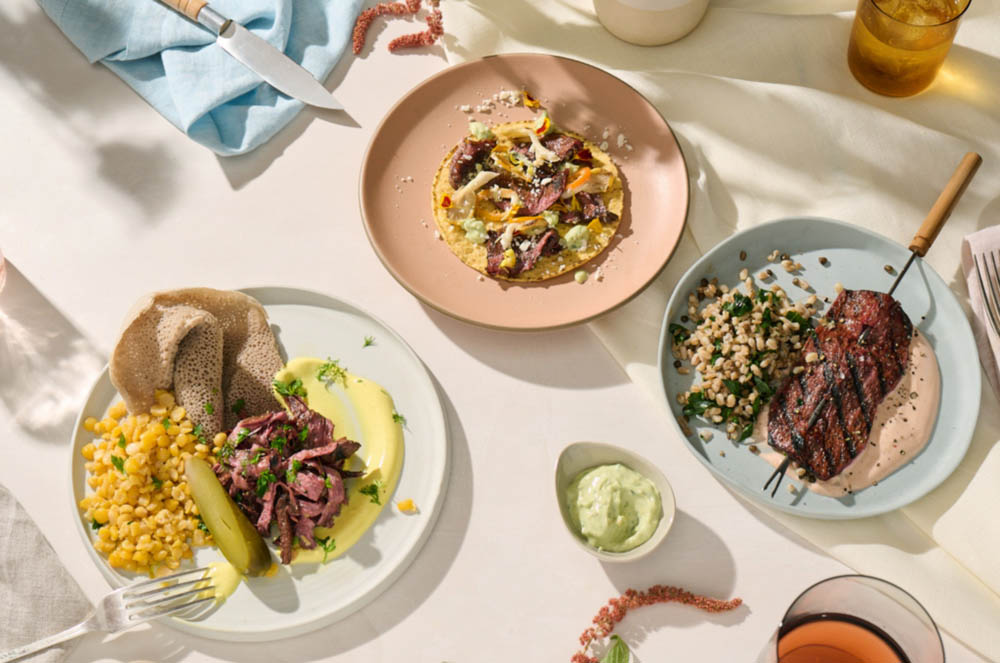
Its Aleph Cuts steak is not 100% cultivated meat. Cultivated Black Angus cells account for around 10-20% of the product, with a soy and wheat protein matrix making up the remainder.
There was a time when that might have been regarded as a halfway house on the journey toward fully cultivated meat. Toubia takes a more pragmatic view.
“You know, at the end of the day, we're talking about proteins here, not meat versus non-meat.”
His preference is to talk about complementary proteins rather than a future in which one production system simply displaces another. The question becomes what each component contributes to the finished food, rather than whether a product satisfies an ideological definition of cultivated meat.
Aleph now has some interesting consumer evidence to support that approach.
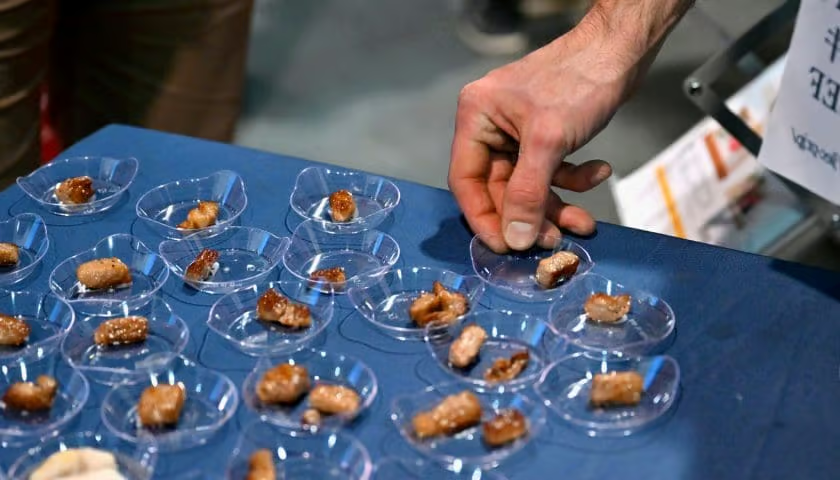
Earlier this year, the company conducted a blind taste test involving 60 regular meat consumers. Its cultivated steak achieved 96% acceptance, compared with 98% for conventional beef, a difference that was not statistically significant.
Half of participants said they would consider ordering the cultivated steak in a restaurant, almost identical to the 51% recorded for conventional beef. The cultivated product scored slightly higher for tenderness, while juiciness scores were also comparable.
Those numbers are particularly interesting given the relatively modest cultivated-cell inclusion rate. If 10–20% cultivated content can deliver the sensory attributes consumers are looking for, increasing that percentage simply to make a product more cultivated could make the economics harder without necessarily making the food better.
Toubia has also argued that sensory performance has to come first. Sustainability, nutrition and ethical considerations can influence purchasing decisions, but only once the food clears the basic test of whether somebody actually wants to eat it.
Approval is only the beginning
Getting the product right is one challenge. Being legally allowed to sell it is another.
Aleph became the first company to receive regulatory approval for cultivated beef when Israel cleared its product in December 2023. Singapore has now become its second approved market, while formal regulatory dossiers have also been submitted in the UK, Switzerland and Thailand, alongside other markets the company has not disclosed.
Toubia describes regulatory approval in straightforward commercial terms: it is a “license to sell”.
That makes regulatory strategy inseparable from capital allocation. Years spent waiting for authorization are years in which a company must continue funding development, people and operations before meaningful revenues can begin.
It is one reason Aleph has become more deliberate about where it enters first.
Singapore is particularly interesting in that context. The city-state imports most of its food and has deliberately built an environment around food security and new production technologies. Aleph expects to begin with selected restaurant partners in the first half of 2027, with volumes expanding through 2028.
For Toubia, beef itself also remains central to the opportunity. “Beef is, in my view, the most compelling application for cultivated meat. It is premium and mass market at the same time. That is what makes it worth solving, and it is also what makes it the hardest thing to get right.”
Not a fight with farmers
The bigger story for Toubia is increasingly about diversification. That argument was given an interesting twist earlier this year by research co-funded by Aleph Farms examining what conventional beef producers themselves are worried about.
The study surveyed 172 farmers in the USA and France. Alternative proteins were not high on their list.
US producers were more concerned about policy uncertainty, financial pressure and labor shortages. French producers pointed more frequently to disease, climate and market volatility.
For all the political and cultural debate surrounding cultivated meat, farmers themselves appeared considerably more preoccupied by the immediate pressures involved in producing beef.
“We have always believed that a Just Transition in animal proteins has to be built with farmers, not around them,” Aleph Farms stated when the research was published.
It fits with Toubia’s insistence that cultivated meat should complement conventional beef rather than attempt to eliminate it.
“Our aim is to complement conventional beef, not replace it, and to scale it on a capital-efficient footing,” he says.
That thinking becomes particularly relevant when the conversation moves from individual products to food security.
Climate disruption, disease, geopolitics, input costs and supply-chain shocks all create different vulnerabilities. Adding new production methods potentially gives countries and food companies more options without requiring existing agriculture to disappear.
Aleph’s regional-hub strategy can be viewed through the same prism. Production closer to the markets being served, using local manufacturing partners and existing infrastructure, is not only a way of reducing the capital required to scale. It could also provide another layer of resilience within protein supply.
.jpg)
After the hype
Cultivated meat is unlikely to return soon to the investment environment that surrounded it a few years ago. That may ultimately prove useful.
The companies that remain now have to answer much harder questions about cost, manufacturing, regulation, demand and where their products genuinely fit within the food system.
Aleph Farms has responded by changing its own playbook. It is relying more heavily on manufacturing partners, choosing markets more selectively, accepting that hybrid products may make greater commercial sense and presenting cultivated beef as another part of the protein supply rather than the technology destined to replace everything that came before it.
None of that is as dramatic as the early promises made about cultivated meat.
It may be considerably more useful.
Toubia will bring both sides of that argument to Amsterdam this November. In the morning, he will join a discussion about food security, sovereignty and geopolitical risk, looking at how diversified production could make food systems more resilient. A few hours later, he will switch stages for a much more direct question: Where Is Cultivated Meat Really, in 2026?
They are, in many ways, two versions of the same conversation. One asks whether cultivated meat can become a useful part of a more resilient food system. The other asks whether the sector itself has finally become realistic enough to get there.
For Toubia, the destination is not a world in which cultivated meat wins and conventional agriculture loses. It is one with more ways of producing the proteins people need.
“You know, at the end of the day, we're talking about proteins here, not meat versus non-meat.”
Didier Toubia will appear twice at The Future of Protein Production Amsterdam and the co-located Cultured Meat Symposium on Wednesday, November 4 at the RAI Amsterdam.
At 10:15-11:00am, he will join Jasmijn De Boo of ProVeg International, Zbigniew Lewicki of Unilever, Anne Reshetnyak of The Good Food Institute, Katrien Martens of The Protein Project and former European Commission official John Clarke for Food Security, Sovereignty & Geopolitical Risk. The discussion will examine how regional manufacturing, diversified protein production and food innovation infrastructure could strengthen resilience as climate disruption, geopolitical instability and supply-chain volatility put pressure on global food systems.
Then, at 12:15-1:00pm, Toubia will join Ido Savir of SuperMeat, Roman Lauš of Mewery, Jo Anne Shatkin of Vireo Advisors and Sebastian Rakers of Bluu for Where Is Cultivated Meat Really, in 2026? The panel will look candidly at manufacturing, regulation, partnerships, commercialization timelines and how cultivated meat companies are adapting their business models in a more capital-constrained market.
Both sessions take place at the RAI Amsterdam on Wednesday, November 4. Delegates can book a conference ticket for access to both conference programs, while the exhibition and networking are free to attend.

Join Us At One Of Our Upcoming Events

If you have any questions or would like to get in touch with us, please email info@futureofproteinproduction.com


