What readers couldn’t stop reading on PPTI in 2025

2025 was the year alternative proteins stopped talking about potential and started facing reality. As readers flocked to stories on scale, regulation, and commercial proof points, clear patterns emerged about what’s working – and what isn’t
If 2025 proved anything, it was that the alternative protein sector has moved decisively beyond its proof-of-concept era. Across fermentation, cultivated meat, plant-based, and hybrid formats, the year’s most-read stories on Protein Production Technology International showed readers shifting their attention away from vision statements and toward execution: factories, filings, partnerships, unit economics, and infrastructure.
From the outset, interest clustered around scale and credibility. January’s focus on industrial fermentation platforms, manufacturing partnerships, and early regulatory filings set the tone for a year in which ambition was no longer enough. Readers consistently rewarded stories that answered hard questions: where production would happen, how costs would fall, who would pay, and which regulatory pathways were realistic rather than aspirational.
As the months progressed, a clear pattern emerged. Commercial signals began to outweigh technical novelty. Hybrid products gained traction as pragmatic entry points. Ingredient functionality, fat performance, and downstream efficiency mattered as much as headline protein yields. At the same time, regulation remained a central axis – not just approvals, but court rulings, labeling decisions, and policy shifts that could accelerate or stall entire categories.
By year’s end, 2025 had become a study in contrast: major regulatory wins alongside high-profile failures; factory openings alongside shutdowns; consolidation in some corners and retrenchment in others. Taken together, the year offered a sharper, more honest picture of what it will take to build the next generation of food – and who is likely to get there.

January: From promises to production pathways
Attention peaked early with Standing Ovation’s partnership with Ajinomoto Foods Europe, which resonated by directly addressing one of the sector’s most persistent challenges: manufacturing capacity. Readers were drawn not only to the animal-free casein itself, but to the signal that a global fermentation specialist was committing industrial-scale biomanufacturing infrastructure to precision-fermented dairy proteins, moving the discussion beyond pilot-scale promise.
That focus on enabling technology continued with Bühler’s unveiling of its Stellar bioprocessing platform. The story attracted strong readership because it spoke to a familiar frustration across fermentation and cellular agriculture: how to accelerate efficiency without rebuilding production lines from scratch. As Bühler’s Head of Bioprocessing Leandro Buchmann put it at the time, “Stellar technology represents a significant step forward in making bioprocessing methods not only more efficient but also more sustainable,” capturing why the announcement landed with practitioners rather than just strategists.
Later in the month, attention shifted toward institutions with the launch of the Bezos Centre for Sustainable Protein at Imperial College London. Readers responded to the breadth of the initiative, spanning seven academic departments and multiple protein modalities, alongside repeated reminders that taste and affordability remain non-negotiable.
January closed with Mosa Meat’s submission of its first EU Novel Foods application for cultivated beef fat, one of the clearest regulatory signals of the year. As CEO Maarten Bosch said, “Fat is the soul of flavor”, a concise explanation of why the company chose fat as its regulatory entry point, and why readers saw the move as a meaningful step rather than symbolic progress.
February: Commercial signals and consumer firsts
February’s most-read stories reflected a growing reader appetite for signs that alternative proteins and next-generation ingredients were beginning to meet real markets, not just technical milestones.
Interest was strong around Brevel’s long-term agreement with Israel’s Central Bottling Company, largely because it showed microalgae ingredients moving decisively into mainstream beverage and dairy-alternative pipelines. A 10-year development and supply deal with a Coca-Cola bottler signaled durability and commercial intent, tapping into reader curiosity about which biomass platforms were gaining traction beyond pilot customers.
That theme continued with Melt&Marble’s partnership with Valio, which resonated as another example of a young precision fermentation company working directly with a major dairy incumbent on product development rather than distant proof points. Readers responded to the focus on fat functionality, a reminder that sensory performance, not protein alone, was increasingly shaping where partnerships formed.
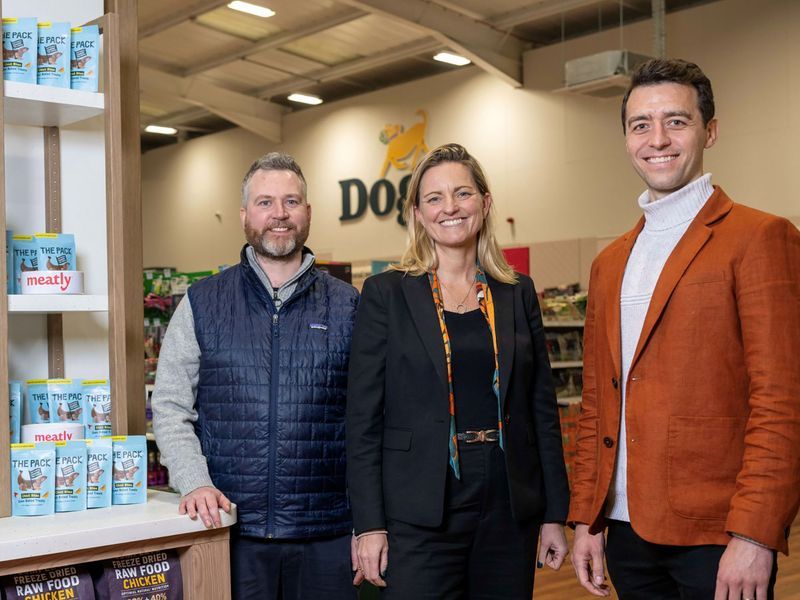
The clearest moment of the month, however, came with Meatly and THE PACK’s launch of Europe’s first cultivated pet food product. The story drew exceptional interest because it crossed a regulatory and retail threshold, placing cultivated meat on shelves rather than timelines. As Meatly CEO Owen Ensor said at the time, “We’ll also be the first company in Europe ever to sell cultivated meat”, a line that captured why the launch felt like a turning point.
February closed with Oobli’s collaboration with Ingredion, combining sweet proteins, regulatory progress, and fresh capital into a single story. For readers, it reinforced a broader pattern: large ingredient players were no longer watching from the sidelines, but actively shaping how new food technologies reach consumers.

March: When regulation and reality converged
March’s most-read stories reflected a growing reader focus on what happens once alternative proteins and novel ingredients leave the conceptual phase and collide with regulation, geography, and manufacturing commitments.
That tension was visible early in the month with Vivici’s introduction of its precision-fermented dairy protein to the US market. Readers were drawn to the combination of commercial readiness and regulatory positioning, with the launch underscoring how self-affirmed GRAS had become a critical lever for companies bringing fermentation-derived ingredients into active nutrition and mainstream food applications.
The importance of production discipline was reinforced days later by Pow.Bio’s opening of its new continuous fermentation facility in Alameda. Interest centered less on the square footage than on what the site represented: a working demonstration of how AI-enabled fermentation could shorten timelines and lower costs. As CEO Shannon Hall said at the time, the facility was designed to deliver results “in weeks rather than months or years,” a promise that resonated with readers fatigued by slow scale-up narratives.
Mid-month attention shifted sharply to Washington, after the US Department of Health and Human Services directed the FDA to explore closing the GRAS self-affirmation pathway. The story became one of the most-read of the month, reflecting widespread concern that regulatory certainty, long taken for granted by food tech startups, could soon be rewritten.
That regulatory pressure made Onego Bio’s decision to site its flagship US egg protein facility in Wisconsin particularly notable. With land secured and capacity mapped in terms of millions of hens, the story resonated as a reminder that by March, the sector’s biggest questions were no longer theoretical. They were about where to build, how to comply, and how long the runway really was.
April: Power plays, policy lines, and who sets the rules
April’s most-read stories showed readers grappling less with technology itself and more with influence: who controls the pathways to scale, who writes the rules, and how much power sits with incumbents, regulators, and courts.
That dynamic was clear early in the month when Icos Capital and Bühler convened startups, corporates, and investors at Bühler’s CUBIC Innovation Campus. The story resonated not because of any single announcement, but because it captured a broader shift toward collaborative venturing as a survival strategy. With capital tighter and timelines longer, readers were drawn to models that promised access to data, infrastructure, and market pull, rather than stand-alone innovation.
Attention then turned to Europe’s protein strategy, with Lantmännen securing a major loan from the European Investment Bank to build Sweden’s first large-scale pea protein isolate facility. The scale of the project, and the involvement of public finance, struck a chord with readers watching how governments and financial institutions were backing domestic protein capacity as a matter of food security rather than consumer choice.
Regulation moved decisively into focus with Vow’s approval from Food Standards Australia New Zealand for its cultivated quail ingredient. The milestone mattered not just for Vow, but because it demonstrated how a regulator could assess cultivated meat within existing food law, offering a template other regions may study closely.
April closed on a more adversarial note, with UPSIDE Foods winning a key court ruling allowing its challenge to Florida’s cultivated meat ban to proceed. The case became one of the most-read stories of the month, reflecting growing concern that the future of alternative proteins would be shaped as much in courtrooms and legislatures as in bioreactors.

May: Labeling lines and legitimacy tests
May’s most-read stories showed readers tracking how the sector’s next phase would be shaped as much by language, law, and regulatory credibility as by bioprocess performance.
In Switzerland, the Federal Supreme Court’s ruling on Planted’s 'planted.chicken' labeling drew immediate attention because it clarified where courts were willing to draw lines. By upholding the use of generic terms such as 'steak' and 'fillet' for plant-based products while rejecting a specific animal-linked label, the decision became a bellwether for how alternative protein brands communicate with consumers without triggering regulatory pushback. Planted’s response, blending defiance with pragmatism, amplified interest, with co-founder Judith Wemmer signaling the company would adapt packaging rather than retreat.
Readers also gravitated toward evidence that plant protein manufacturing was consolidating around large industrial plays. Bunge’s new soy protein line, backed by a US$550 million facility expansion in Indiana, resonated as a reminder that the scale conversation in plant-based was increasingly being driven by global commodity and ingredients companies, not only startups. The emphasis on price parity reflected a mood shift among readers toward unit economics and mass-market feasibility.
Personnel news also landed strongly. Robert E. Jones stepping down from Mosa Meat and Cellular Agriculture Europe marked the exit of one of the cultivated sector’s most visible European advocates, and readers treated it as a meaningful moment for a movement that has relied heavily on policy and coalition-building.
Finally, TurtleTree’s FDA “no questions” letter for its precision-fermented lactoferrin became one of the month’s most-read regulatory stories, with CEO Fengru Lin calling it “one of the most significant milestones in TurtleTree’s journey,” reflecting why readers continue to treat clear regulatory signals as the sector’s most valuable currency.
June: Cost curves, clean labels, and course corrections
June’s most-read stories showed PPTI readers gravitating toward one overriding question: what actually works now?
On the cultivated side, GOURMEY’s independently validated €7/kg production cost milestone dominated attention. Backed by Arthur D. Little, the analysis cut through years of speculative claims and gave readers something the sector has been craving – third-party numbers grounded in industrial reality. CEO Nicolas Morin-Forest’s emphasis on modular, continuous biomanufacturing, rather than speculative giga-factories, aligned closely with a growing appetite for sober, engineering-led pathways to scale.
Ingredients also took center stage. Meala’s partnership with dsm-firmenich to commercialize Vertis PB Pea in Europe tapped directly into two powerful reader interests: clean-label simplification and multifunctional ingredients that reduce formulation complexity. The promise of replacing multiple binders with a single pea protein resonated strongly in a market increasingly wary of long ingredient lists and processing baggage.
Meanwhile, Juicy Marbles’ decision to partner with Revo Foods rather than develop a fish alternative in-house reflected a broader strategic shift readers are watching closely: capital efficiency over vertical obsession. The collaboration signaled a maturing sector learning to share infrastructure, brands, and routes to market.
Finally, Beyond Meat’s repositioning around 'Beyond Ground' drew heavy traffic not because of novelty, but because it marked a philosophical reset. Moving away from mimicry toward a product designed to stand on its own mirrored a wider industry recalibration – one focused less on imitation and more on value, nutrition, and price parity.
July: The rise of the hybrid middle
July’s most-read stories suggested readers were increasingly interested in middle-ground solutions: products and platforms that could scale sooner by blending approaches, leveraging incumbent know-how, and meeting consumers where they actually are.
That was clearest in retail, with Lidl Belgium’s launch of a hybrid minced beef product made from 60% beef and 40% plant proteins. The story resonated because it framed decarbonization as a familiar swap, not a lifestyle leap, with Lidl’s Sam Van Lier arguing that “when people think about eating less meat, they often see it as an all-or-nothing choice.” Pricing and availability gave the launch extra weight, reinforcing that hybrid formats were starting to look like a serious volume play rather than a niche experiment.
Hybrid logic also showed up in cultivated seafood, where VAN HEES partnered with BLUU Seafood to develop products combining plant ingredients with cultivated fish cells. Readers were drawn to the implication that hybrid formulations could help manage cost, taste, and regulatory complexity, especially when an established ingredients specialist brought product safety and flavor expertise to the table.
On the ingredient side, 21st.BIO’s push to commercialize precision-fermented alpha-lactalbumin via an exclusive strain license from Novonesis hit a different nerve: supply constraints and functional nutrition economics. CEO Thomas Schmidt’s point that current supply was “mostly reserved for the very high-end infant formula market” captured why readers saw fermentation as a way to widen access to scarce dairy proteins.
Finally, attention swung to industrial enablement with GEA’s US$20 million Janesville technology center, which appealed as an on-the-ground answer to scale-up friction. As CEO Stefan Klebert put it, “we must turn vision into scalable reality,” a line that fit the month’s theme: not reinvention, but workable pathways into the mainstream.

August: Commercial signals start turning into commitments
August’s most-read stories suggested PPTI readers were watching for proof that alternative proteins were moving from promise into purchase orders, approvals, and production capacity.
That was most obvious in cell-based dairy. Opalia’s agreement with Hoogwegt, framed as the first commercial deal aimed at developing and distributing cell-based dairy products, drew strong interest because it paired a young platform company with one of the world’s biggest dairy ingredients traders. The detail that the agreement spanned 2026 and 2027, and included a purchase order, made it feel less like a pilot-era partnership and more like a concrete route to market. Jennifer Côté called it “a decisive step,” while Hoogwegt CEO Sander Hulsebos described it as “a next major step towards establishing Opalia as a strategic supplier of cell-based milk.”
On the plant-based side, readers clicked heavily on signs of category expansion beyond meat and dairy. Just Egg’s UK arrival, via the Vegan Food Group and an Ocado launch, resonated as a rare attempt to build a credible plant-based egg staple in a market where the segment has historically struggled to break through at scale. The price point and usage versatility helped explain the traffic: it was positioned as an everyday product, not a novelty.
Manufacturing momentum also landed. Plantible opening its first US commercial facility in Texas appealed because it was a classic “steel in the ground” signal: output targets, filtration upgrades, workforce impact, and a clear push toward cash flow positivity. The story’s traction suggested readers were looking for companies that could pair climate narratives with real unit economics.
Finally, Nourish Ingredients’ US clearance for Tastilux via FEMA GRAS became a standout regulatory-commercial story, especially given the ingredient’s focus on solving taste. With founder James Petrie explicitly linking approval to accelerated US market entry, it reinforced why readers keep treating regulatory validation as the fastest proxy for commercial readiness.

September: From prototypes to production footprints
September’s most-read PPTI stories suggested readers were watching for one thing above all: where alternative proteins and next-gen ingredients would actually be made - and who would control the infrastructure.
NoPalm Ingredients’ move to build its first yeast-oil demonstration factory at NIZO’s Food Innovation Campus in Ede landed as a classic “lab-to-line” milestone. The appeal was in the specifics: consolidating production under one roof, targeting several hundred tons per year with a pathway beyond 1,200 tons, and a clear timeline toward first industrial output in H2 2026. CEO Lars Langhout framed it as “dreams… becoming reality,” while CCO Julie Cortal stressed reliability, consistency, and security of supply - all signals that readers interpreted as commercial seriousness.
In plant-based, the creation of The Vegetarian Butcher Collective read less like branding and more like strategy. By combining Vivera’s retail strength with The Vegetarian Butcher’s foodservice footprint, the story offered a blueprint for scaling in a tougher market. Vivera CEO Willem van Weede called it “a new leader,” and The Vegetarian Butcher CEO Rutger Rozendaal described it as “a bold new chapter” to accelerate the “Food Revolution.”
Cultivated meat, meanwhile, showed a distinct September theme: decentralization. The CRAFT Consortium’s plan for the world’s first cultivated meat “farm” in the Netherlands caught attention because it pulled cellular agriculture toward primary production. Mosa Meat’s Peter Verstrate talked about “merg[ing] cellular and traditional farming,” while RespectFarms’ Ralf Becks summed up the ambition bluntly: “Let’s export technology instead of meat and animals.”
That same footprint logic carried into Aleph Farms’ MoU with The Cultured Hub in Switzerland - another signal that cultivated meat players were prioritizing capital efficiency and local embedding over hypey mega-factory narratives. CEO Didier Toubia explicitly framed the model as “capital efficient and deeply embedded in the local market,” which likely helped explain why readers kept clicking.
If August was about commitments, September was about where the new food system would physically take shape - and who gets to build it.
October: The scale-up stack gets real
October’s biggest PPTI traffic drivers all pointed to a single reader obsession: what happens when alternative proteins move from promising biology to bankable manufacturing - and how fast the “enabling layer” (packaging, downstream, facilities, M&A) was catching up.
SIG’s partnership with Nutrition from Water (NXW) stood out because it tackled the unglamorous but decisive question of distribution. Pairing microalgae protein with aseptic packaging made the pitch less about novelty and more about reach: shelf-stable nutrition that could move without cold chains. NXW CEO Federico Duarte framed it as “nutrition as a whole system,” while SIG’s Norman Gierow underlined the need for “strong collaboration” to turn innovation into products that could travel.
On the process side, New Wave Biotech + CPI pulled readers into the cost center many companies avoid talking about: downstream. Lipid extraction was positioned as a stubborn bottleneck, and the hook was the promise of AI-led modeling that could reduce trial-and-error, speed decisions, and sharpen techno-economic trade-offs. CTO Nix Hall tied it directly to affordability, while CPI’s Stephen Wright emphasized accuracy from minimal data - catnip for an industry that’s always data-hungry and cash-conscious.
The biggest cultivated headline came via consolidation: Gourmey acquiring Vital Meat to form PARIMA. Readers likely clicked because it suggested a shift from “many startups, many bets” toward category leaders and IP-heavy platforms. Nicolas Morin-Forest called it “the right moment for consolidation and scale,” with Etienne Duthoit pointing to “critical mass.” The detail about patents and regulatory filings made it feel like a real industrial play, not a branding exercise.
Finally, Solar Foods hitting full capacity at Factory 01 landed as a pure validation moment: operating at 160 tons/year, planning a 44% capacity boost by 2026, and advancing Factory 02 toward 2028. CTO Petri Tervasmäki’s framing - a “historic first” hydrogen fermentation platform - gave October its cleanest “we’re actually doing it” proof-point.
Net-net: October rewarded stories where the sector looked less like a science project - and more like an operating model.

November: Proof points, not prototypes
November’s most-clicked PPTI stories shared a common thread: commercial momentum - deals, filings, funding, and launches that signaled the sector was building real supply chains, not just telling future-tense stories.
On the cultivated side, Fork & Good’s acquisition of Orbillion read like another chapter in the industry’s consolidation arc, but with a clear “ingredients-first” angle. CEO Niya Gupta captured the mood when she said the merged company was “not asking food manufacturers to wait five to 10 years for supply chain solutions,” but offering tools to improve products “right now.” The emphasis on immediate B2B value - taste, binding, shelf life, and clean label performance - helped explain why readers leaned in, especially with Luiten Food’s Lennert Luiten explicitly framing hybrid formats as a bridge to mainstream adoption.
Regulation, meanwhile, stayed front and center. Hoxton Farms’ Singapore filing for cultivated pork fat gave readers a rare, date-stamped view of the long game, with Max Jamilly pointing to “clearer guidance and more precedent” at the SFA and flagging a decision window of late 2026 to early 2027. The strategic choice to lead with fat rather than muscle also landed well because it spoke to a pragmatic commercialization pathway: lower inclusion rates, high sensory impact, and a clearer route to cost-in-use competitiveness.
But the biggest “this is happening” moment came from precision fermentation. Remilk and Gad Dairies launching The New Milk in Israel brought a mainstream consumer product into focus, with Aviv Wolff calling it “science fiction just a few years ago” and describing the grind of “failed experiments” before the breakthrough. The combination of a legacy dairy brand and fermentation-derived milk proteins made the story feel less like an alternative and more like a new category with real cultural fit (especially with the kosher-pareve angle and foodservice rollout ahead of January 2026 retail).
Finally, capital and scale rounded out the month. EVERY’s US$55 million Series D hit the theme of resilience head-on, tying fermentation-made egg proteins to supply stability and year-round manufacturing as a hedge against shocks like avian flu. As Arturo Elizondo put it, “one outbreak can wipe out hundreds of millions of hens” - and the reader takeaway was simple: the commercial case for fermentation was getting easier to articulate.
Taken together, November wasn’t about hype. It was about the infrastructure of credibility: regulatory steps, industrial distribution, and the first wave of products and platforms that looked built to last.

December: Regulation moved forward, but the sector’s 'survival gap' got louder
December opened on a high note with The Protein Brewery receiving a positive scientific opinion from EFSA for Fermotein, marking Europe’s first approval of a fungal biomass novel food. It was a significant regulatory milestone, not just for the company but for the broader fermentation sector, reinforcing the idea that alternative proteins are steadily moving from regulatory uncertainty toward mainstream acceptance.
But optimism was quickly tempered by the collapse of Believer Meats, once seen as one of the cultivated meat sector’s strongest contenders. Despite securing FDA and USDA approvals and raising more than US$390 million, the company shut down after running out of cash, underscoring the brutal reality of capital intensity, long timelines, and shrinking investor patience. The shutdown became one of the most-read stories of the year, reflecting widespread concern about what it signaled for cultivated meat more broadly.
Against that backdrop, countervailing signals emerged. Mosa Meat secured fresh funding and reported dramatic cost reductions as it edged closer to commercial launch, while China’s Joes Future Food reached a 2,000-liter cultivated pork milestone, highlighting continued technical momentum outside Western markets.
Taken together, December captured a sector at an inflection point: regulatory doors opening, engineering progress continuing — but only the most disciplined and well-capitalized players still standing.
Analysis and look ahead to 2026
Stepping back from the month-by-month headlines, 2025 reads less like a breakthrough year and more like a reckoning. The sector did not run out of ideas — it ran out of tolerance for vagueness. Across PPTI’s most-read stories, readers consistently gravitated toward companies that demonstrated discipline: capital efficiency, regulatory realism, and a willingness to narrow focus in order to reach the market sooner.
One of the clearest throughlines was the rise of 'enabling layers'. Fermentation platforms, continuous processing, downstream optimization, packaging, and hybrid formulation quietly became as important as the headline technologies themselves. The attention paid to Bühler, GEA, SIG, CPI, and similar players reflected an industry recognizing that biology alone does not scale – systems do.
Hybridization also emerged as a defining strategy. Whether blending plant proteins with animal cells, fat with structure, or fermentation-derived ingredients into conventional products, the hybrid middle proved attractive precisely because it reduced risk. Retailers, foodservice operators, and manufacturers showed growing appetite for solutions that cut emissions and cost without asking consumers to change behavior overnight. In 2026, hybrids are likely to move from “bridge products” to a permanent category in their own right.
Regulation, meanwhile, became both clearer and more consequential. EFSA opinions, GRAS debates, court rulings on labeling, and sandbox programs revealed a maturing regulatory landscape – but also one with sharper edges. The message from readers was unmistakable: regulatory progress is necessary, but no longer sufficient. Believer Meats’ collapse underscored that approvals do not guarantee survivability, especially when capital markets tighten and build-outs outrun demand.
Geographically, 2025 hinted at a more fragmented future. While Europe and the US remained central to policy and narrative, China, Singapore, and the Middle East increasingly appeared as scale and commercialization laboratories. Companies able to operate across regulatory regimes – or sequence their market entry intelligently – looked better positioned than those betting everything on a single jurisdiction.
Looking ahead to 2026, several shifts feel likely. First, consolidation will continue, particularly in cultivated meat and precision fermentation, as IP-rich platforms absorb narrower plays or exit quietly. Second, more companies will lead with ingredients rather than finished consumer brands, recognizing that B2B adoption offers faster routes to revenue and resilience. Third, cost claims will be scrutinized more aggressively, with third-party validation becoming a de facto requirement rather than a nice-to-have.
Perhaps most importantly, 2026 is likely to reward restraint. The winners will not be the loudest or the most futuristic, but those that can align biology, engineering, regulation, and market pull into something operationally boring – and commercially durable.
If 2025 marked the end of the sector’s adolescence, 2026 will test whether it is ready for adulthood.

Join Us At One Of Our Upcoming Events

If you have any questions or would like to get in touch with us, please email info@futureofproteinproduction.com

.jpg)
.jpg)