Yeastup switches on industrial-scale production to turn brewer’s yeast into egg alternatives

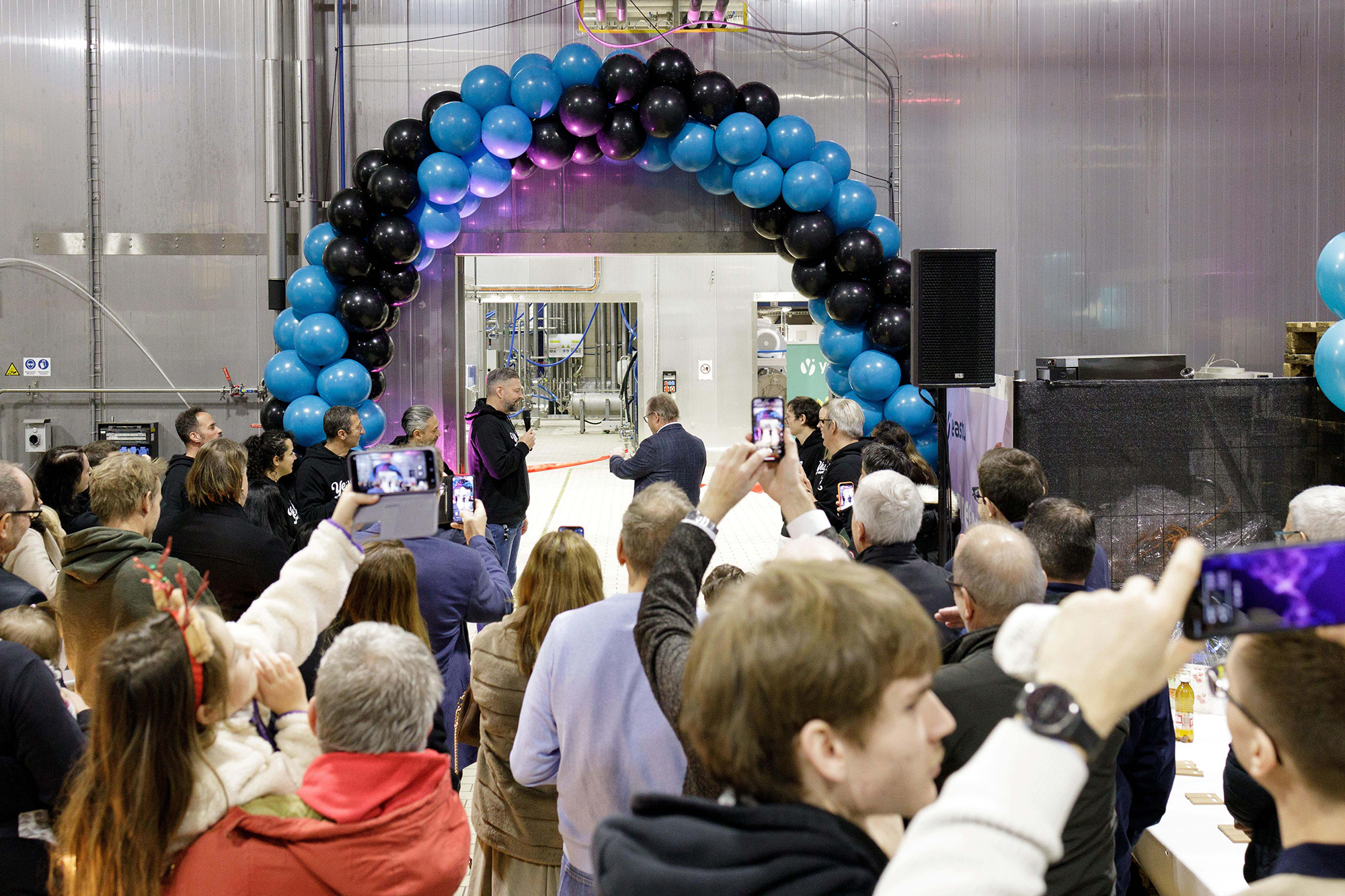
Yeastup has marked a turning point in its commercial journey this December with the official opening of its first industrial-scale production facility, bringing its yeast upcycling technology out of pilot mode and into full operation. The Swiss startup inaugurated the new plant in Lyss, in the canton of Bern, on St Nicholas Day, a symbolic moment that coincided with the start of large-scale manufacturing of its functional yeast-based ingredients.
The Lyss facility was designed to process up to 40 hectoliters of spent brewer’s yeast per hour, converting a byproduct of beer production into vegan-friendly protein and fiber ingredients for food and nutrition applications. With the site now operational, Yeastup confirmed it was preparing a Series A financing round to support further scale-up and international market expansion.
Founded by Daniel Gnos, Yeastup had spent several years developing its technology in close cooperation with the University of Applied Sciences and Arts Northwestern Switzerland. Over that period, the company invested 10 million Swiss francs, around US$11.3 million, in venture capital and research to refine and validate a patented process for extracting functional ingredients from spent brewer’s yeast.
That process allowed Yeastup to produce two core products: Yeastin, a functional yeast protein, and UpFiber Beta-Glucan, a dietary fiber ingredient. Both were derived from yeast streams that would otherwise be treated as low-value waste, aligning the company’s approach with circular economy principles and growing interest in alternative protein sources with a reduced environmental footprint.
The opening of the Lyss plant also served as a practical demonstration of Yeastin’s performance in finished products. Vegan protein bars formulated with the ingredient were sampled by employees and invited guests at the launch event, highlighting its functional similarities to collagen hydrolysate, which is commonly used in conventional sports nutrition and functional food recipes to improve texture, moisture retention, and mouthfeel.
“Our Yeastin NUTRA enables the development of bars with a soft, candy bar-like consistency, without any animal ingredients,” Gnos said. “This application showcases the technological potential and versatility of our protein fractions. Samples are available on request.”
Beyond sports nutrition, Yeastup said Yeastin could be used as an emulsifier and egg substitute in applications such as baked goods. According to the company, the ingredient offered an alternative to both animal-derived and plant-based proteins, combining functional performance with strong nutritional properties and a significantly lower ecological footprint.
The Lyss site comprised a fully equipped food-grade production facility covering around 1,700m2 and employed 16 people. Yeastup had begun producing initial samples and pilot batches earlier in the year, before expanding capacity from 1,600 liters to 4,000 liters of yeast per hour as part of the industrial launch.
Regular industrial production was scheduled to begin at the start of 2026. Yeastup said it planned to move toward continuous, round-the-clock operation once commercial volumes and customer demand were established, allowing it to fully utilize the plant’s processing capacity.
With industrial readiness achieved, the company was now focused on its next phase of growth. Yeastup confirmed it was preparing a Series A financing round aimed at ramping up production following the successful capacity expansion and accelerating international market development.
“Following the completion of Innosuisse funding and technology financing in 2025, we are now focusing on scaling, product development and building long-term strategic partnerships,” Gnos said. He added that the timing was favorable for new investors. “With industrial readiness achieved and initial customer projects underway, now is a very good time for investors to get involved with Yeastup and help shape the next stage of growth.”
By bringing industrial-scale infrastructure online, Yeastup moved closer to its ambition of establishing spent brewer’s yeast as a reliable raw material for functional food ingredients. The Lyss facility represented the company’s first commercial manufacturing base, providing the foundation for higher volumes, broader applications, and expansion beyond its home market as it sought to translate years of research into sustained commercial output.

Join Us At One Of Our Upcoming Events

If you have any questions or would like to get in touch with us, please email info@futureofproteinproduction.com

More News