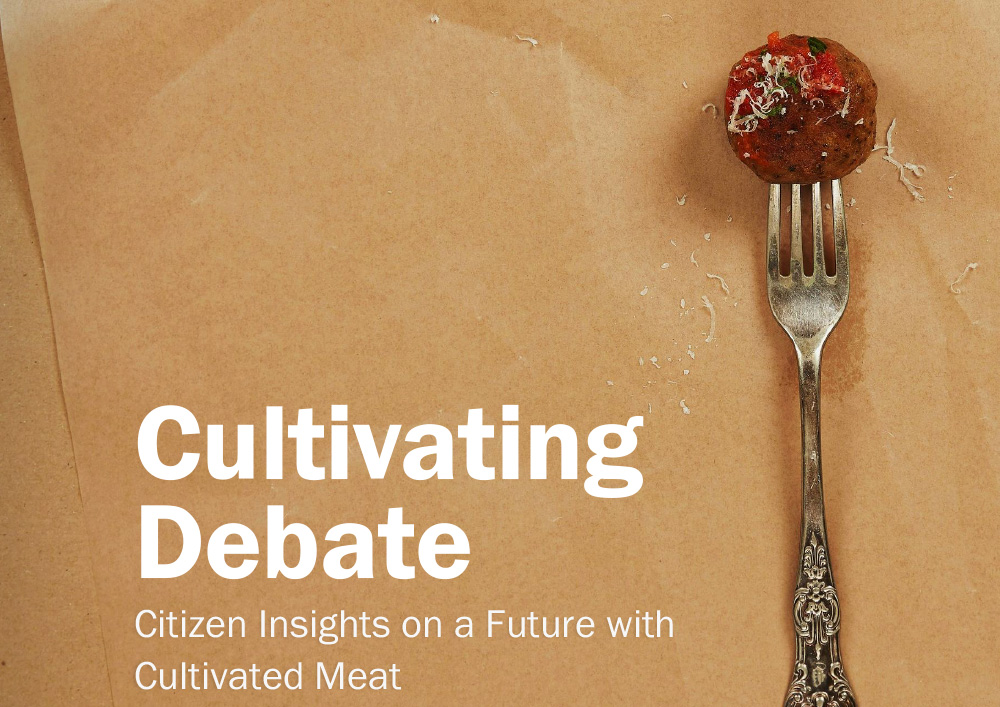
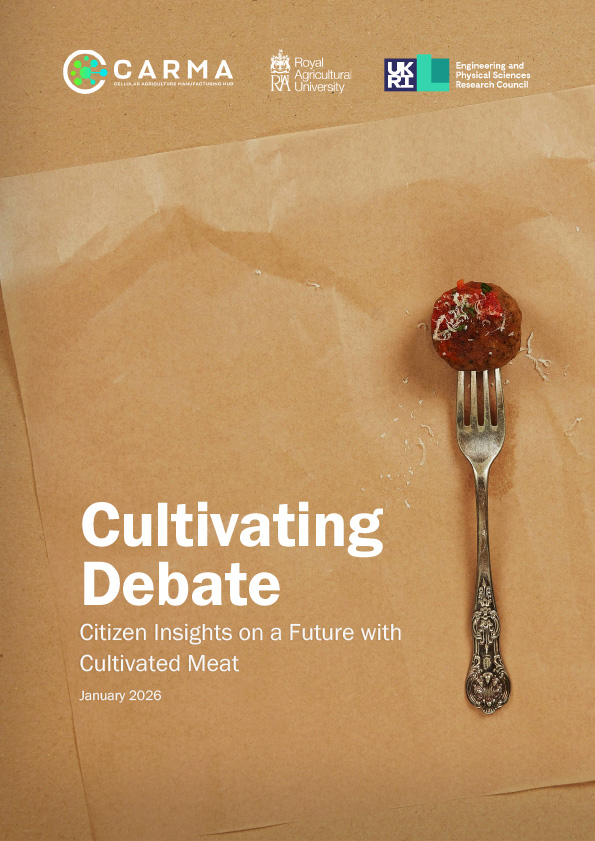
Cultivating Debate report shows how UK citizens are shaping the future of cell-cultivated meat

As cell-cultivated meat moved closer to regulatory consideration in the UK, a year-long citizen forum was quietly influencing how the technology was being researched, governed, and prepared for potential market entry. The outcome was Cultivating Debate, a report documenting how public deliberation fed directly into scientific priorities at the Cellular Agriculture Manufacturing Hub and into regulatory thinking at the Food Standards Agency.
• The Cultivating Debate report summarized insights from a year-long citizen forum run by the Royal Agricultural University between 2024 and 2025.
• Recommendations from citizens fed directly into CARMA’s research agenda and the Food Standards Agency’s sandbox for cell-cultivated products.
• Public health, power and transparency, and equality and affordability emerged as the core conditions for public trust.
The work was led by the Royal Agricultural University as part of CARMA, a seven-year research program focused on the manufacturing realities of cellular agriculture. Rather than relying on surveys or consumer polling, the project convened 18 citizens selected to reflect the diversity of the UK public and engaged them in structured deliberation over the course of a year.
Those citizens were not asked to take a simple position for or against cell-cultivated meat. Instead, they were tasked with examining the conditions under which the technology could contribute to a fairer food system, and with providing guidance on specific technical and regulatory questions being faced by researchers and policymakers.
Professor Marianne Ellis, Director of CARMA, said the timing of that input mattered as much as its content. “It is fantastic that the Citizen Forum has been able to contribute in this way; doing so early will allow us to maximise their steer on our research efforts,” she said. “The discussions have been engaging and productive and such participatory research will continue to be central to our thinking and planning going forward.”
Public health consistently emerged as the dominant concern. While participants were largely reassured by the robustness of UK food safety regulation, they repeatedly stressed that approval processes focused only on short-term safety would not be sufficient to secure public confidence. Long-term health impacts, dietary effects, and cumulative exposure were all raised as unresolved questions.
One citizen captured that concern succinctly, saying, “I'm very pro having eating trials. I think it's the only way that we can really test it in the real world. But my one concern is that I'd really want them to be longitudinal studies.”
Those discussions translated into concrete recommendations, including calls for multi-year eating trials, ongoing independent testing, strict controls on imports, and time-limited production licenses. The emphasis on health also shaped how CARMA researchers approached upstream technical decisions.
Dr Ruth Wonfor, who led CARMA’s work on cell sourcing and feedstocks, said citizen feedback challenged assumptions within the research program. “The perceptions from the citizens on the cell sources for cultivated meat were very insightful for our research,” she said. “We had not thought that genetically engineered cell lines would receive such support and so this understanding, along with current regulatory developments, has really opened up this avenue of research for us.”
As a result, CARMA researchers adjusted their approach, initially prioritizing adult animal cell sources that did not incur additional slaughter while also exploring longer-term options for developing more robust cell lines. Citizen views were weighed alongside technical and regulatory considerations rather than treated as a separate exercise.
Concerns around power and transparency formed the second major pillar of the report. Participants expressed unease that cell-cultivated meat could reinforce existing inequalities in the food system if production and intellectual property became concentrated in the hands of a small number of multinational companies. They questioned who would control supply chains, where profits would flow, and how dependent food systems might become on a narrow set of producers.
One citizen warned against “relationships where places have become dependent on cultivated meat producers and they're locked into paying certain amounts of money that they maybe could better spend on other ways of being food secure.”
In response, the Forum recommended measures that went well beyond conventional food safety oversight, including limits on vertical integration, time-limited patent ownership, and the creation of a non-commercial body to oversee transparency, competition, and governance in the sector.
Equality and affordability rounded out the Forum’s core concerns. Participants questioned whether cell-cultivated meat would enter the food system as a premium product or displace low-cost processed meats, and whether that shift could create a two-tier food system. Impacts on farmers, rural economies, and global inequality were repeatedly raised, with calls for sustained analysis and compensatory support for those most affected.
The Forum’s influence extended into regulation as well. Through its participation in the Food Standards Agency’s sandbox for cell-cultivated products, citizen input informed early thinking on labeling and consumer communication.
Dr Joshua Ravenhill, Head of the Cell-Cultivated Product Sandbox Programme at the Food Standards Agency, said the process provided valuable insight. “The insights from the Citizen Forum on this subject have been very helpful in providing us with a deeper understanding of the issues that will be important for consumers,” he said.
Participants emphasized the need for clear, standardized, and prominent labeling that explicitly referenced the cellular origin of products, with visibility comparable to allergen information. The goal, they argued, was not persuasion but transparency.
While the Forum remained cautious, it did not reject cell-cultivated meat outright. Many participants expressed hope that the technology could reduce animal suffering, lower environmental pressures, and improve food system resilience, provided it was developed and governed carefully.
As one citizen put it, “I think spaces like this are absolutely essential for progress and making sure we are being transparent and ethical in future decisions.”
The Cultivating Debate report marked the first chapter of what CARMA described as a multi-year process, with new citizen cohorts convened annually. As cell-cultivated meat continued its shift from laboratory research toward regulatory reality, the project offered a detailed example of how public deliberation could shape not just perception, but the substance of research and policy itself.

Join Us At One Of Our Upcoming Events

If you have any questions or would like to get in touch with us, please email info@futureofproteinproduction.com