

Balanced Proteins gain commercial traction as Food System Innovations maps a US$5.3 billion market

New research from Food System Innovations showed that Balanced Proteins reached a pivotal stage of commercial maturity in 2025, with growing adoption across foodservice, early normalization in European retail, and a clearly defined near-term market opportunity in the USA.
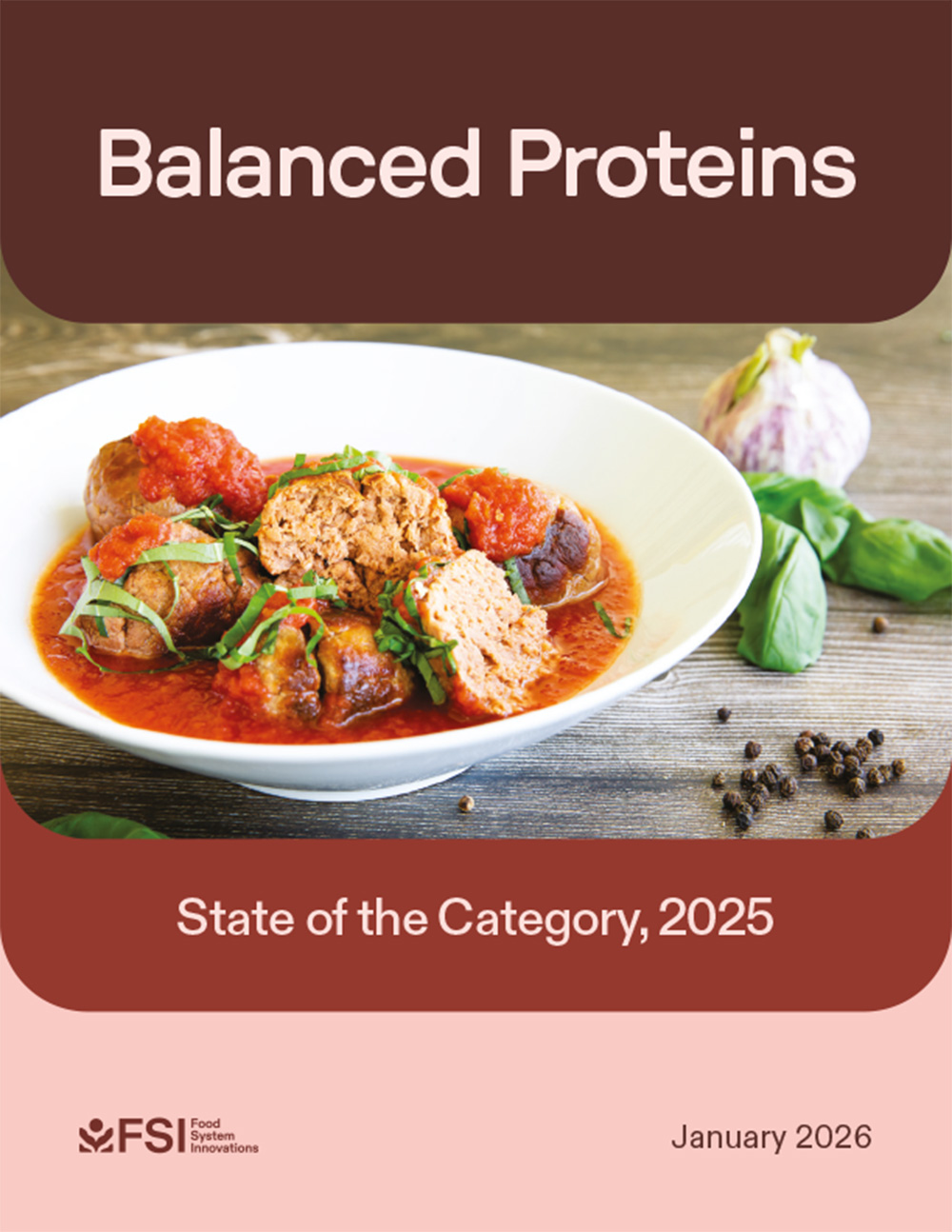
The report, Balanced Proteins: State of the Category 2025, brought together commercial data, consumer research, and case studies to assess a category defined as meat, poultry, dairy, egg, or seafood products that substituted at least 30% of animal-based ingredients with plant-based foods, fermentation-derived ingredients, or cultivated inputs.
Rather than positioning Balanced Proteins as an alternative to meat, the research framed them as an extension of familiar animal-based foods, designed to improve affordability, nutrition, and sustainability while fitting into existing consumer habits and supply chains.
The report estimated a Serviceable Obtainable Market of US$5.3 billion for balanced red meat and poultry products in the US, based on current consumer demand and manufacturing readiness.
More than 60 Balanced Protein product and ingredient companies were active globally as of November 2025, supported by over US$60 million in disclosed investment since 2023.
Food-service operators and European retailers emerged as the strongest near-term adoption channels, while US retail showed signs of a category reset.
Food System Innovations identified inflationary pressure, supply chain volatility, and nutrition gaps as key drivers behind the category’s momentum. In 2025, average US retail beef prices reached multiple record highs, while nearly all US children continued to fall short of recommended dietary fiber intake. At the same time, livestock production accounted for a significant share of agricultural land use, water consumption, and greenhouse gas emissions.
Against this backdrop, the report argued that Balanced Proteins offered a faster path to impact than wholesale dietary shifts. By blending animal ingredients with whole foods or alternative inputs, producers were able to deliver cost stability, improved nutritional profiles, and emissions reductions without requiring consumers to change purchasing behavior.
The research estimated the total addressable US market for Balanced Proteins at US$250 billion, based on combined retail and foodservice meat sales. Narrowing this to consumers open to trying balanced products and formats immediately compatible with existing manufacturing resulted in a Serviceable Available Market of US$85 billion. From that, Food System Innovations calculated a near-term Serviceable Obtainable Market of US$5.3 billion, equivalent in size to the US frozen pizza category.
Commercial signals from foodservice were among the strongest indicators of category viability. The report documented widespread adoption in institutional settings including universities, hospitals, and public-sector catering, where operators used balanced formats to reduce beef volumes while maintaining taste, yield, and operational performance. In several cases, institutions reported cost savings per serving alongside significant reductions in beef usage and associated emissions.
Large-scale examples included national healthcare systems, universities replacing most or all conventional ground beef with balanced blends, and hospitality groups standardizing balanced products across multiple locations. According to the report, these deployments demonstrated that Balanced Proteins met operator requirements on taste, price, and scalability.
Retail momentum was more uneven. In Europe, retailers increasingly normalized balanced meat products as part of their core assortments. The report highlighted examples where balanced burgers accounted for a significant share of total sales, and cases where balanced minced beef was priced substantially below conventional alternatives, driving trial and repeat purchase.
By contrast, the US retail market remained relatively small. Early balanced meat launches from major processors had largely disappeared during the COVID-19 supply chain disruptions, as manufacturers prioritized core SKUs. However, Food System Innovations noted continued shelf stability for family-oriented products and new regional launches in 2025, suggesting renewed interest under clearer positioning.
Consumer research cited in the report showed broad appeal when Balanced Proteins were framed around taste, value, and familiarity rather than restriction or substitution. Across surveys involving more than 4,000 US consumers, appeal varied widely depending on messaging, with the highest interest linked to value propositions such as flavor enhancement, budget stretching, and stealth health benefits.
Investment into the category remained modest relative to its potential. Between 2023 and 2025, more than US$60m flowed into Balanced Protein companies, primarily at seed to Series B stages. Food System Innovations argued that this level of funding underrepresented the category’s commercial readiness, particularly given its ability to leverage existing manufacturing infrastructure.
Looking ahead, the report concluded that 2026 would be critical in determining whether Balanced Proteins progressed from proof of concept to proof of category. Key priorities identified included consistent product performance, clearer consumer narratives, expanded co-manufacturing capacity, improved distribution access, and catalytic investment to support scale-up.
Food System Innovations described Balanced Proteins as a pragmatic, low-friction tool for improving the resilience of the protein system, with the potential to become a normalized component of mainstream meat portfolios rather than a niche alternative.
The full report is available to download here

Join Us At One Of Our Upcoming Events

If you have any questions or would like to get in touch with us, please email info@futureofproteinproduction.com