

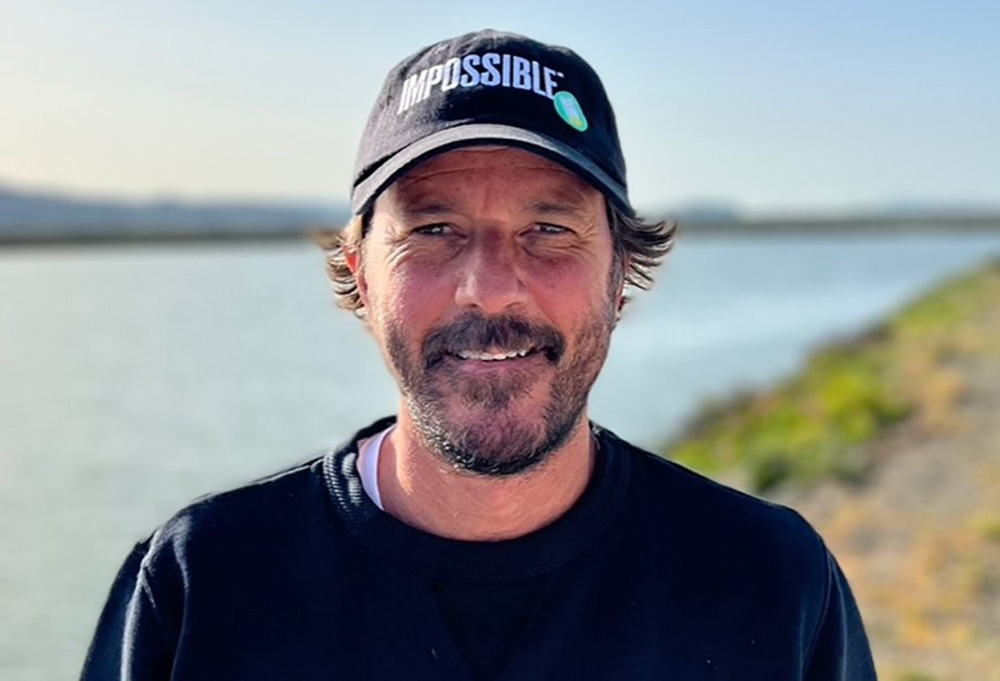
Impossible Foods enters new phase as CEO Peter McGuinness departs

Peter McGuinness has departed as Chief Executive Officer of Impossible Foods, the company announced today, closing a period defined by brand reinvention, expanded retail reach, and a shift toward positioning plant-based meat as everyday food rather than a values-driven substitute.
• Peter McGuinness departed as CEO of Impossible Foods after nearly four years, with day-to-day operations handed to the company’s three-member executive leadership team.
• His tenure focused on broadening Impossible’s appeal to flexitarians through product development, brand refresh, and expanded retail distribution.
• The transition followed recent strategic moves, including a partnership with EQUII and a public reassessment of climate-first marketing.
Impossible Foods confirmed that McGuinness’s responsibilities would be assumed by its executive leadership team, comprising Jason Gao, Chief Legal & Operating Officer; Meredith Madden, Chief Demand Officer; and Robert Haas, Chief Supply Officer. McGuinness remained on the company’s board.
The company said the transition followed several years of progress across product development, distribution, and brand visibility. During McGuinness’s tenure, Impossible expanded its portfolio across plant-based beef, chicken, and pork, while strengthening its presence in both retail and foodservice.
McGuinness joined Impossible from Chobani at a time when plant-based meat was still closely associated with environmental messaging and early adopters. Over the following years, his leadership emphasized a recalibration toward taste, familiarity, and repeat purchase, reflecting a view that the category needed to compete as food first.
That approach was visible in a comprehensive brand refresh, including a move away from plant-forward green packaging toward bolder red tones designed to signal indulgence and familiarity. The company also invested in improving sensory performance, releasing successive iterations of its flagship burger and expanding its poultry range with products such as nuggets and tenders.
In a June 2025 interview with the Wall Street Journal, McGuinness identified flexitarians as the core growth audience for the category. “Approximately over 100 million US people fit the broad term of flexitarians,” he said. “They are cross eating.” He described two main profiles within that group, ranging from consumers who leaned vegetarian to those whose diets were split roughly evenly between plant-based and animal protein.
McGuinness argued that growth depended on appealing to consumers who still ate meat, rather than attempting to convert those committed to it. “Capturing a sizable portion of flexitarians could quadruple Impossible Foods’ revenue in a short period, even if their numbers stay the same,” he said.
Retail expansion was central to that strategy. Products that had previously been concentrated in restaurants became available in around 35,000 US retail locations, including Walmart, Target, and other mass-market chains. The aim was to make Impossible products easier to find and more routine to buy.
By 2023, Impossible overtook Beyond Meat to become the second-largest player in US retail sales of plant-based meat, behind Morningstar Farms, according to data from Circana. Market share gains, however, did not eliminate longer-term financial challenges. “We’re on a path to profitability and an IPO,” McGuinness said. “Both are probably years away, given the balance-sheet strength and need to invest in the business.”
While McGuinness previously spoke about a long-term path toward profitability and a potential public listing, Impossible Foods remained privately held, with no IPO on the near-term horizon. By late 2025, expectations around a public flotation had softened as public market conditions for plant-based companies tightened, placing greater emphasis on execution, cost discipline, and steady progress within a private ownership structure.
Impossible Foods had already raised significant late-stage capital well before McGuinness’s tenure, securing more than US$2 billion across multiple funding rounds, with its last major raise completed in 2021. That funding history gave the company room to invest in product development, brand, and distribution, but also placed greater emphasis on translating scale and visibility into sustained commercial performance rather than continued capital expansion.
Taste remained a persistent focus. “The biggest issue is people think plant-based meat won’t taste good. That’s a huge barrier to even trying it,” McGuinness said. At the time, Impossible was on its fifth version of its burger and working toward a sixth. “We probably have two to three more versions before it perfectly sizzles, smells and looks like beef,” he added.
McGuinness described burgers as particularly difficult to replicate because of consumer expectations around fat and juiciness. Chicken, by contrast, was seen as an area where progress could come faster, reflected in Impossible’s expanding poultry lineup.
Marketing strategy evolved alongside product development. After a broad national campaign delivered weak returns, Impossible adjusted its approach. “We reached a lot of meat-only people who wouldn’t consider buying our products,” McGuinness said. “Our spend wasn’t efficient because we tried to move immovables.”
Instead, the company shifted toward more targeted outreach, focusing on stores and regions with higher concentrations of flexitarian shoppers. Campaigns were planned around specific occasions, including the summer grilling season, with messaging aimed at consumers already open to reducing meat consumption.
That pivot was reinforced by McGuinness’s public reassessment of how the plant-based category was initially presented to consumers. Speaking in October 2025, he said the industry had made a “mistake” by introducing alternative meat primarily as a climate solution. “People don’t want to eat tech food or climate food,” he said. “They just want to eat delicious, nutritious food, so that’s what we’re trying to get back to.”
The comment aligned with Impossible’s broader shift away from sustainability-led messaging toward flavor, nutrition, and familiarity. McGuinness also reiterated openness to formats that lowered barriers to trial, including the idea of a hybrid burger combining plant-based and animal protein. “If that got meat eaters to try it and like it, I think it’s a win,” he said.
Price remained another challenge. Refrigerated plant-based meat products continued to cost more than conventional meat. McGuinness said Impossible pursued ongoing changes aimed at lowering costs, from ingredient sourcing to production efficiencies, with the goal of eventually reaching price parity.
Nutrition messaging also took on greater importance. Addressing concerns around processing, McGuinness said the category needed to better explain how its products contributed nutritionally. He pointed to protein, fiber, and cholesterol-free formulations as areas where clearer communication was needed.
That emphasis on protein delivery became more explicit in January 2026, when Impossible confirmed a strategic partnership with food-tech startup EQUII. Announced by McGuinness, the collaboration expanded Impossible’s innovation efforts beyond meat analogs into protein-rich grain-based foods such as breads and pastas.
“Impossible products are some of the most delicious, high-quality, complete sources of plant-based protein on the market,” McGuinness wrote at the time. “Today, I’m excited to share that our innovation portfolio is expanding as a result of our new strategic partnership with EQUII.”
The partnership aimed to embed protein into staple foods rather than focusing exclusively on center-of-plate products. “Protein shouldn’t stop at the patty and now it doesn’t have to,” McGuinness wrote. “Imagine having a burger where you can get meaningful protein from both the patty and the bun.”
Founded in 2021, EQUII developed a yeast-powered fermentation process to increase protein and fiber content in grains such as oats, millets, and quinoa. The collaboration aligned with growing consumer interest in protein intake and satiety.
With McGuinness’s departure, Impossible entered its next phase with its recent strategy largely in place: a flavor-led product roadmap, a flexitarian-focused growth thesis, broader retail distribution, and early steps toward protein innovation beyond meat.
Operational leadership now rested with a three-member executive team, while McGuinness’s continued presence on the board maintained continuity at governance level. The transition left execution in the hands of leaders already responsible for supply, demand, and operations.
For Impossible Foods, the shift followed a period of adjustment rather than abrupt change. The next stage would depend on translating that strategy into consistent performance across taste, price, nutrition, and availability.

Join Us At One Of Our Upcoming Events

If you have any questions or would like to get in touch with us, please email info@futureofproteinproduction.com


