

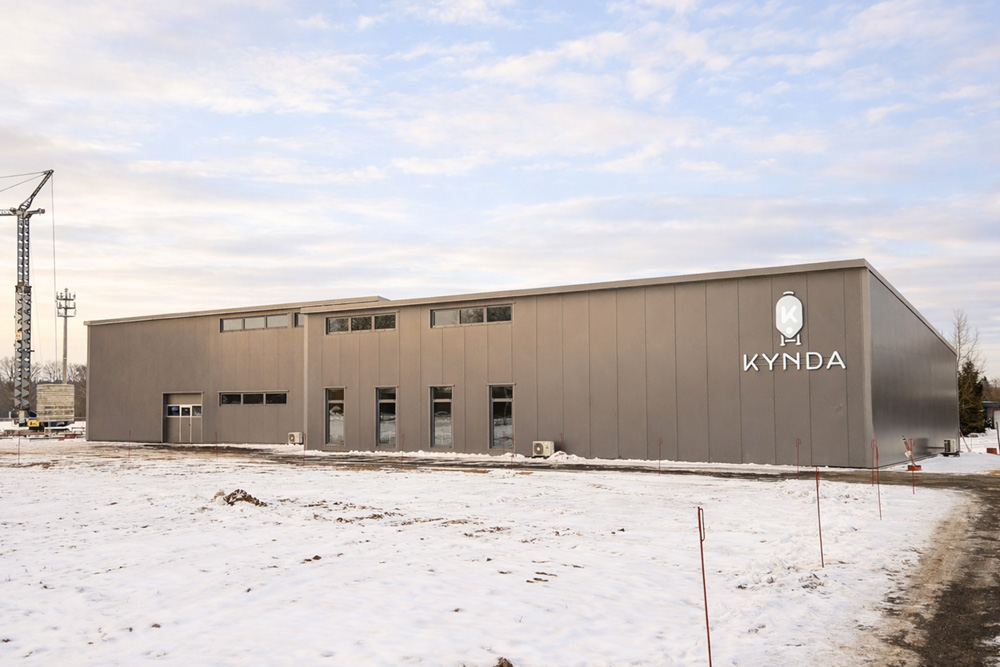
Kynda commissions Jelmstorf hub to turn food sidestreams into industrial-scale protein

Biotech startup Kynda officially commissioned a new research and production center in Jelmstorf, Germany, on 30 January 2026, marking a significant step in its efforts to scale circular protein production by converting underutilized food industry sidestreams into fungal mycelium.
• Kynda commissioned a 720 square meter research and production facility in Jelmstorf, Germany, dedicated to converting food industry sidestreams into fungal protein using fermentation.
• The site combined R&D and production capacity, including around 40,000 liters of fermentation volume for starter cultures that enabled large-scale deployment at customer facilities.
• The opening took place with industry representatives and regional government officials, reflecting growing interest in fermentation-based circular protein systems.
The 720m2 facility brings together research, process development, and industrial fermentation under one roof, establishing the site as the technological core of Kynda’s operations. The company said the center is designed to support a decentralized deployment model, in which fermentation systems were integrated directly into existing food processing facilities rather than built as standalone production plants.
The commissioning comes at a time when Europe remains heavily dependent on imported protein, even as vast quantities of nutrient-rich byproducts from food processing went unused. According to figures cited by Kynda, more than 90 million tons of sidestreams from food processing in the EU are largely underutilized each year, despite containing carbohydrates and nutrients suitable for fermentation.
Rather than competing for agricultural land or dedicated feedstocks, Kynda’s approach focuses on upgrading these sidestreams into protein-rich fungal mycelium using fermentation. The company said its modular system could convert sidestreams into mycelium within 48 hours and could be deployed directly at industrial sites where those sidestreams were generated.
Speaking to Protein Production Technology International recently, Kynda emphasized that sidestream fermentation only became economically viable when it was embedded into food manufacturing environments themselves. Processing sidestreams off-site or within parallel infrastructure, the company argued, risked reintroducing cost, complexity, and logistical inefficiencies that circular models were intended to avoid.
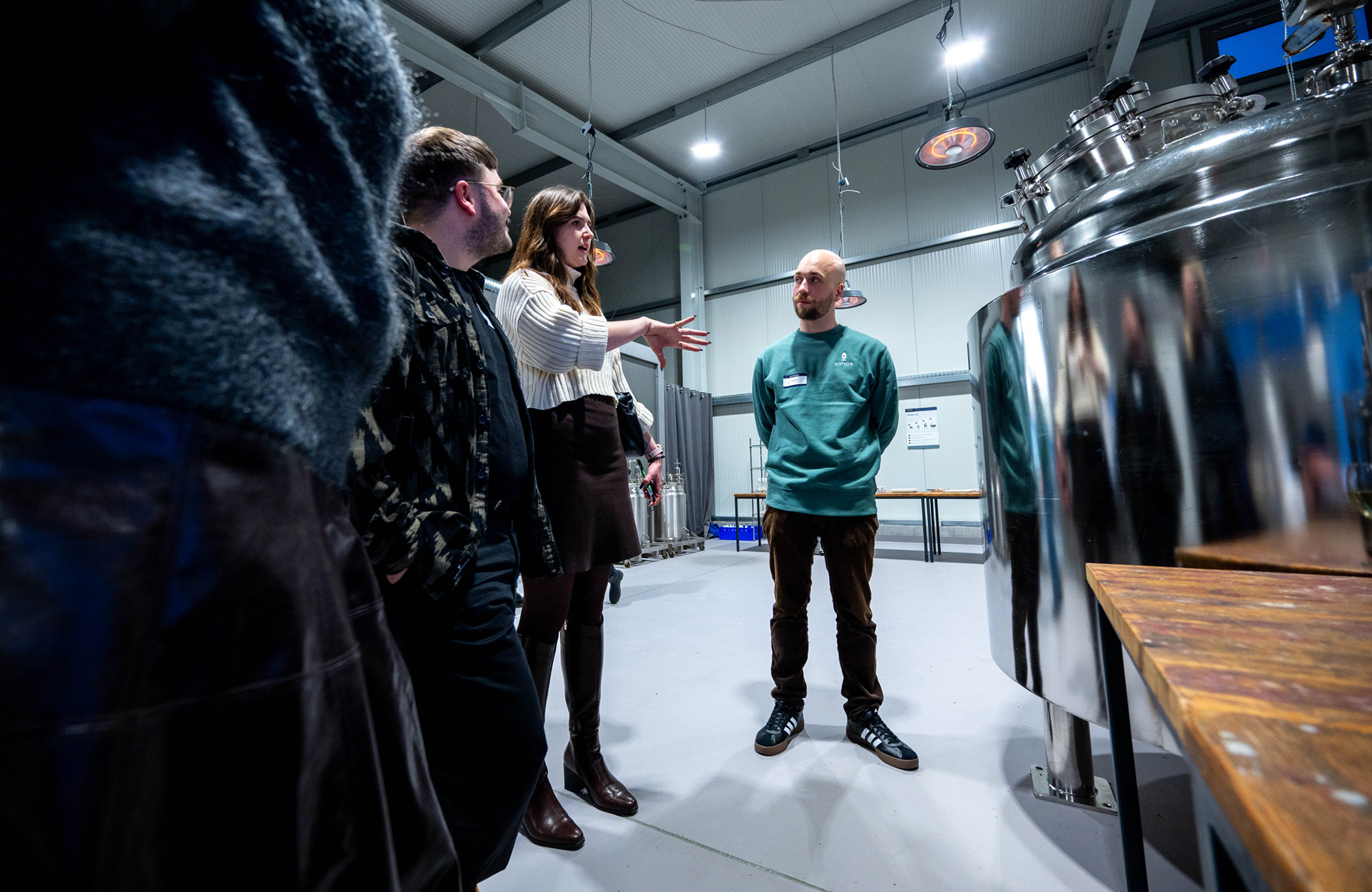
This logic underpinned the design of the Jelmstorf facility. Rather than operating as a high-volume production site for finished ingredients, the center functions as a development, validation, and starter culture hub intended to support deployment at partner facilities across the food industry.
The relevance of this approach was reflected in the strong industry presence at the commissioning event. Representatives from across the food sector attended the opening, and Kynda said German and European producers were already exploring both the processing of their sidestreams using the company’s technology and the application of the resulting fungal mycelium.
The sidestreams under evaluation spanned a wide range of food processing activities, including byproducts from plant protein production, soy and oat drink manufacturing, dairy processing, and sugar and starch production. These sidestreams varied significantly in composition, acidity, and nutrient availability, presenting technical challenges for fermentation processes that were originally developed for standardized feedstocks.
Kynda said its fermentation system had been designed from the outset to operate under these conditions. By focusing on robustness rather than narrow optimization, the company aimed to ensure that its processes could be operated within real-world food production environments without adding excessive technical complexity.
“To achieve real impact, we deliberately shared our technology with industry,” commented Franziskus Schnabel, COO & Co-founder of Kynda. “We enabled companies to create more value and increase efficiency directly within their existing facilities, rather than serving niche markets only.”
This emphasis on sharing technology rather than owning production capacity distinguishes Kynda’s model from ingredient-focused fermentation startups. The company positions itself as a full-service technology partner, providing process design, hardware integration, starter cultures, and ongoing technical support rather than producing and selling mycelium itself.
The Jelmstorf site was divided evenly between research and development and production functions. Around 360m2 were dedicated to R&D activities, including process optimization and adaptation to different industrial substrates. This work focuses on tailoring fermentation parameters to the specific characteristics of different sidestreams, with the aim of maximizing yield, consistency, and cost efficiency.
The remaining 360m2 houses production infrastructure, including a fermentation plant with approximately 40,000 liters of capacity. This production area is used primarily for the manufacture of starter cultures rather than bulk mycelium.
Starter cultures formed a central pillar of Kynda’s scale-up strategy. Produced centrally at Jelmstorf, these cultures enabled partners to operate fermentation processes at their own facilities without having to develop or maintain microbial strains internally. According to the company, a single customer installation supported by these starter cultures could produce up to 25,000 tons of fungal mycelium per year, depending on configuration and feedstock availability.
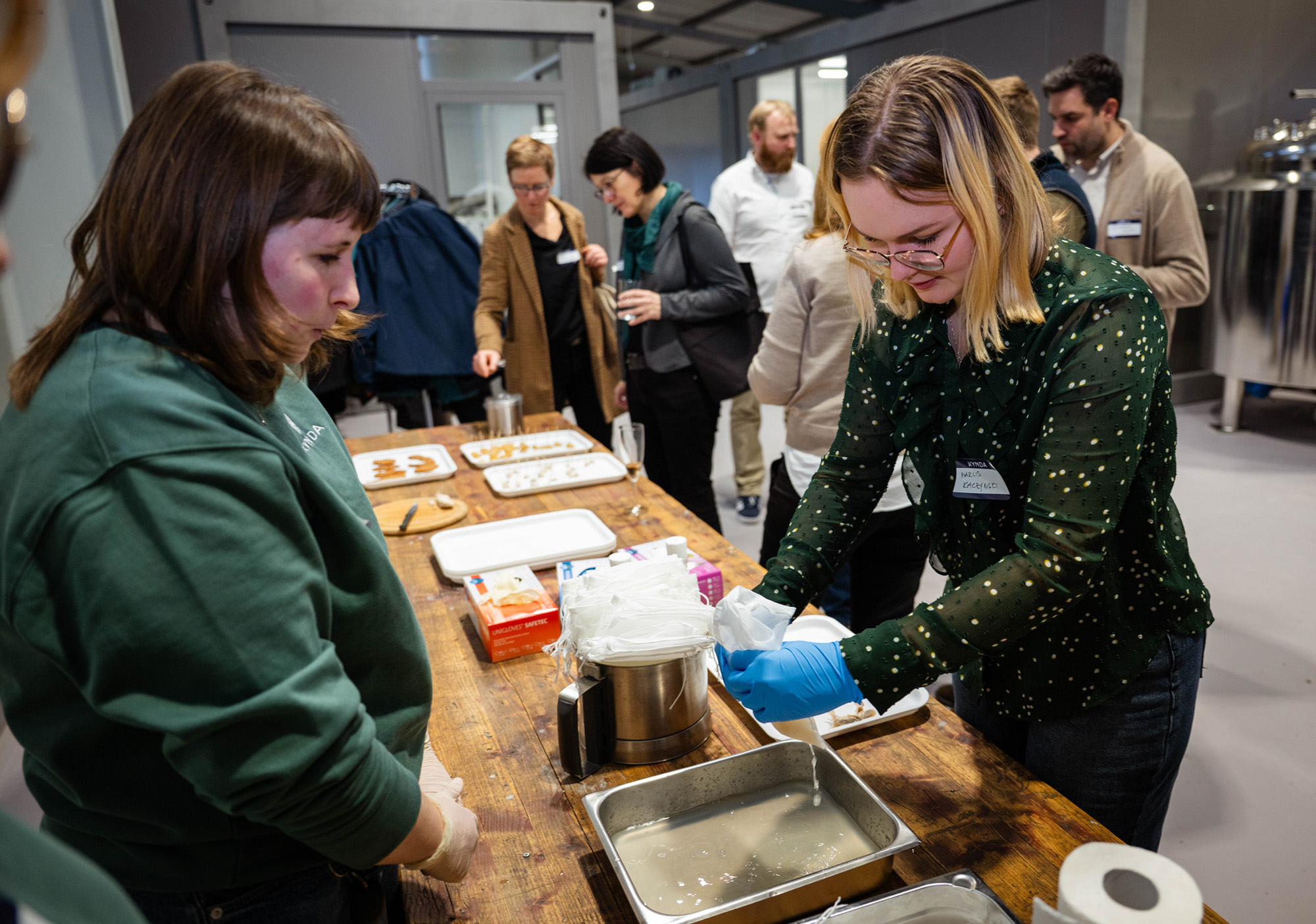
By separating starter culture production from bulk biomass fermentation, Kynda aims to reduce capital expenditure and operational complexity for its partners. The model allows fermentation capacity to scale alongside existing food processing operations, rather than requiring the construction of dedicated fermentation plants.
In discussions with PPTI, the company pointed to hardware and process economics as one of the most difficult challenges to address in sidestream fermentation. Transforming sidestreams alone was not sufficient, it argued, if the resulting processes could not compete with heavily subsidized animal-based and plant-based ingredients on cost.
Kynda said this was why its technology development had focused as much on engineering and system integration as on biology. By ensuring that fermentation units could be operated within food factories using existing utilities and workflows, the company aims to minimize additional energy use and labor requirements.
The commissioning ceremony was attended by Miriam Staudte, Lower Saxony’s Minister for Food, Agriculture and Consumer Protection, who highlighted fermentation’s role in future food systems.
“Fermentation was one of humanity’s oldest cultural techniques and at the same time one of the most modern answers to the question of how we could sustainably provide safe and affordable nutrition for a growing global population,” Staudte said. “It was therefore a key technology for the agri-food industry.”
She added that with the commissioning of its first industrial production facility, Kynda ranked among Europe’s technological leaders in biomass fermentation for food, and said alternative proteins offered Lower Saxony significant growth opportunities that should be strategically leveraged to strengthen the state’s economy.
Kynda said the Jelmstorf site would serve as its long-term technological and development hub, supporting deployment projects with food manufacturers in Germany and beyond. The company employed 12 people at the site and described its role as enabling circular economy solutions that increased efficiency and resilience across global food supply chains.
In contrast to centralized fermentation models, Kynda’s approach seeks to recover value already embedded in food processing streams, reducing waste while generating new protein sources without additional land use. The company said this model allows manufacturers to recover and remonetize costs that were otherwise lost, while avoiding the need for new agricultural inputs.
The company added that misconceptions around fermentation remained a barrier to adoption, particularly the perception that mycelium fermentation was inherently expensive or energy intensive. In practice, Kynda said, processing sidestreams on site significantly improves resource efficiency by eliminating transport, pre-treatment, and disposal steps.
With the Jelmstorf facility now operational, Kynda said it had established the technical foundation needed to support broader industrial adoption of sidestream-based protein production. The company describes the site as a bridge between pilot-scale validation and full industrial deployment, enabling partners to move from evaluation to implementation with reduced risk.
Founded as a fermentation technology provider for the food industry, Kynda focuses on integrating into existing infrastructure rather than building parallel production networks. With the commissioning of its first research and production center, the company said it has taken a decisive step toward embedding fermentation as a routine industrial tool for upgrading food sidestreams into protein at scale.

Join Us At One Of Our Upcoming Events

If you have any questions or would like to get in touch with us, please email info@futureofproteinproduction.com


