

Nourish Ingredients removes manufacturing bottleneck with 10-ton Creamilux run

Three or four years ago, the race to commercialize precision fermentation looked increasingly like a race for stainless steel. Capacity was expected to become scarce, startups were planning their own plants, and raising the capital to build them appeared to be part of the price of reaching industrial scale.
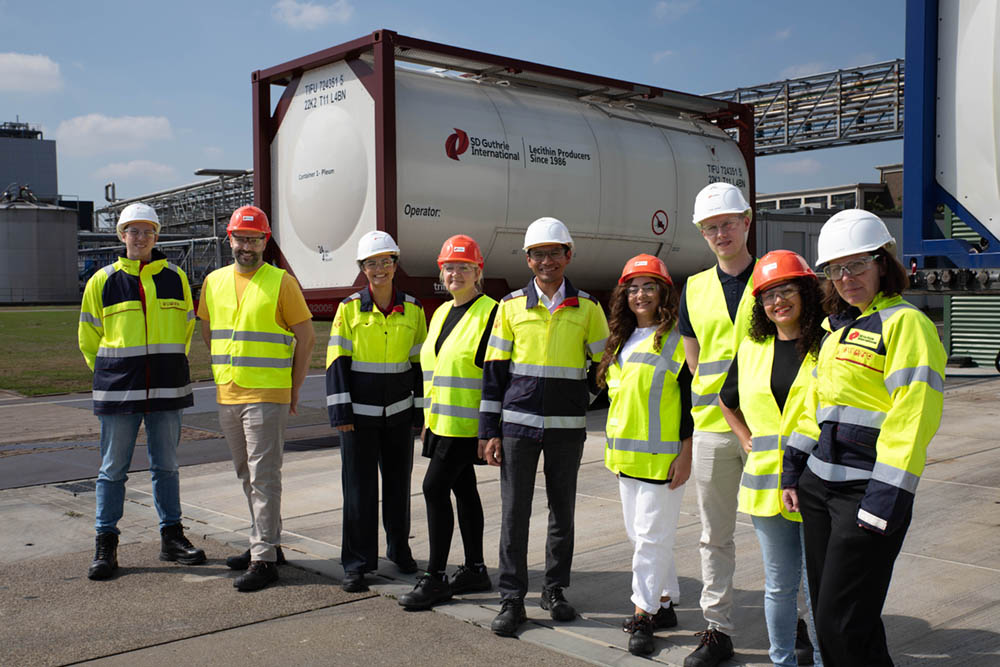
• Nourish Ingredients has completed a 10-ton industrial Creamilux production run with SD Guthrie International Speciality Ingredients B.V. in the Netherlands.
• The partnership gives Nourish Ingredients access to established manufacturing capacity in Europe without the capital cost and lead time of building its own large-scale production facility.
• Nourish Ingredients is now running customer trials across dairy, plant-based, confectionery and other applications, with products containing Creamilux expected on shelves within six months.
Nourish Ingredients took a different path. The Australian deep-tech ingredient company has now completed a 10-ton industrial production run of Creamilux, its animal-free specialty lipid, at the Netherlands facilities of its new manufacturing partner, SD Guthrie International Speciality Ingredients B.V. The run was completed in a matter of days using existing industrial infrastructure.
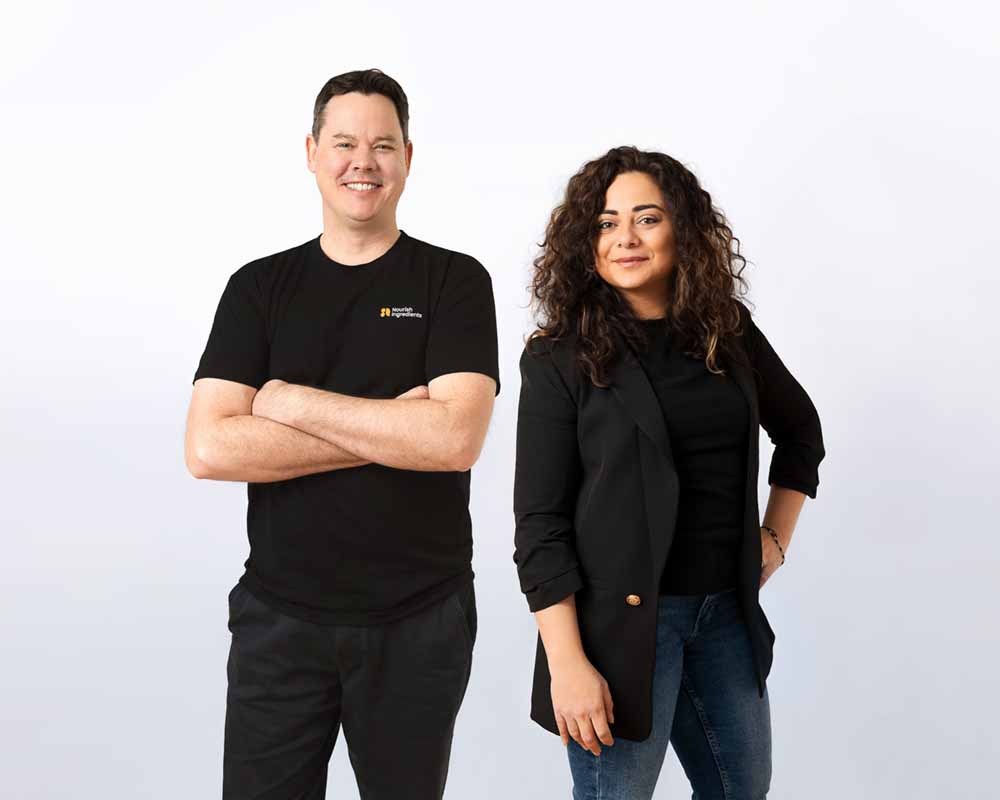
Crucially, reaching that scale did not require Nourish Ingredients to build a dedicated production facility. “We saw building and running our own large-scale fermentation and processing infrastructure as a slow, capital-intensive path that the investment market just isn’t in the right headspace for,” says James Petrie, CEO & Co-founder of Nourish Ingredients. “Partnering with an established manufacturer gives us a faster, lower-risk route to market, and lets us focus our resources on the technology and commercial side rather than plant construction.”
For Nourish Ingredients, that shifts the immediate challenge from securing manufacturing capacity to converting customer interest into orders. “The infrastructure is there; SD Guthrie's facility can support up to 20 tons a day. So as demand grows, the infrastructure to meet it already exists. That's the real value of this partnership: we've effectively removed manufacturing as a barrier to growth, and the story now is about how fast we convert customer interest into orders.”
From process to production
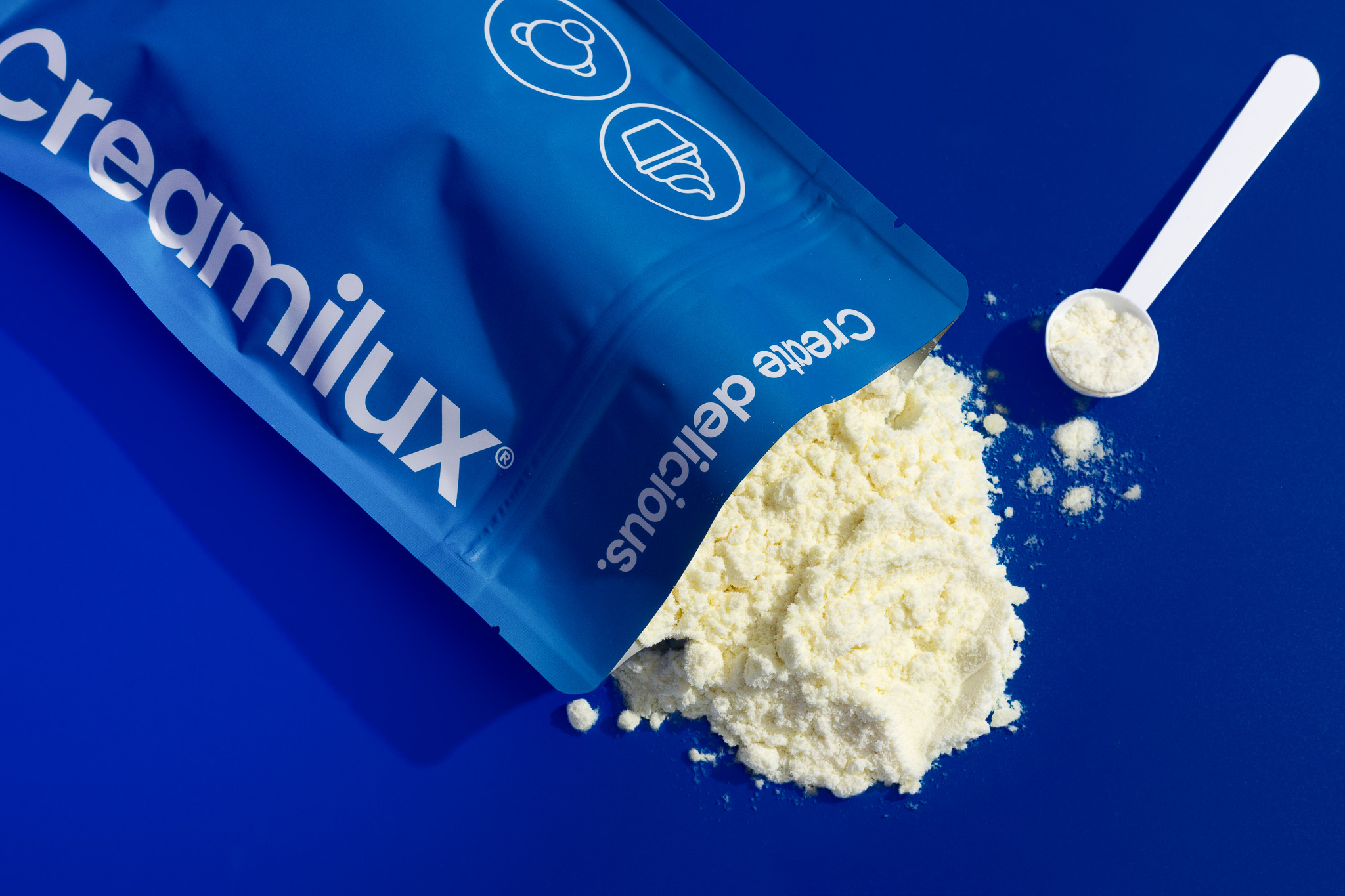
Creamilux is designed to reproduce the creamy mouthfeel and functionality associated with conventional dairy fats without requiring Nourish Ingredients to produce an animal protein. That difference has important implications for how Creamilux can be manufactured at scale.
“The answer is a combination of finding the right partners but also the fact that we aren’t working with complicated new ingredients,” says Petrie. “Many of our peers are working on recombinant proteins that face many scale-up challenges whereas we are working with commodity-scale and well understood existing ingredient substrates. The magic happens in the way we bring them together. So, when you pair relatively straightforward inputs with a partner like SDG who has decades of experience manufacturing specialty lipids at scale, we didn't have to build or commission anything new, just integrate our process into equipment and a team that already knows how to run at this volume.”
Speed was one benefit. The more important test was whether the process would behave at industrial scale as it had during development.
“The biggest validation was that the process holds up at industrial scale without the performance drop-off or contamination risks you often see when you move to pilot and commercial scale,” adds Anna El Tahchy, CTO & Founding Director at Nourish Ingredients. “We'd de-risked a lot of this internally, but seeing it perform consistently across a full production run at SD Guthrie's facility confirmed the platform behaves the way we expected, that's not something you can fully know until you've actually done it.”
The successful run also gives Nourish Ingredients product to take into the market. More importantly, Nourish Ingredients can now supply enough Creamilux to support customer trials and the first wave of commercial demand.
Ten tons goes a long way
The significance of the 10-ton run becomes clearer when translated into the amount of finished food it could support. “It's a potent lipid, so a little goes a long way, when we are looking at around 0.2% inclusion in a finished product,” states El Tahchy. “That means the 10-ton run translates into roughly 5,000 tons of finished food product, whether that's spreads, milk, dairy alternatives or bakery applications. It's a good illustration of why we don't need to be producing at the same volumes as a bulk commodity fat to have a real impact on the products people buy.”
That low inclusion rate means Nourish Ingredients does not need enormous production volumes. Nourish Ingredients can address large volumes of finished food without having to manufacture Creamilux at anything approaching commodity-fat volumes.
Finding the right lipid partner
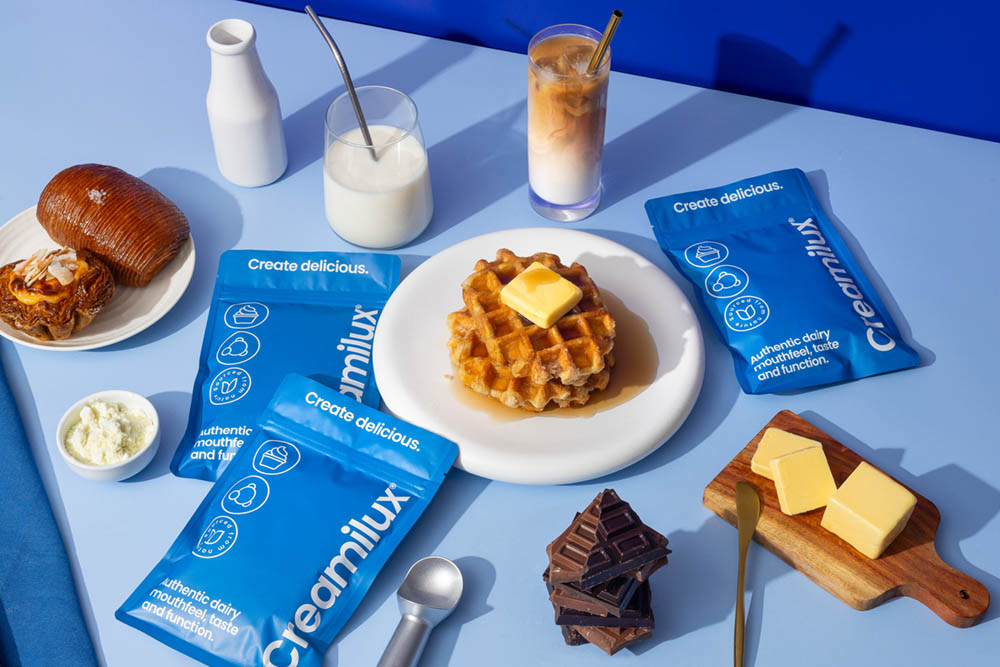
Manufacturing capacity was only part of the attraction for Nourish Ingredients. “We chose SD Guthrie for their deep expertise in lecithins, strong technical capabilities and established manufacturing infrastructure in Europe,” Petrie explains. “They immediately understood the potential of Creamilux and were enthusiastic about bringing it to market. This partnership provides us with a low-risk, straightforward path to scale, with the first production run completed in just a matter of days.”
SD Guthrie International Speciality Ingredients is part of SD Guthrie International and manufactures plant-based specialty lecithins and functional lipid systems for food, feed, personal care and industrial applications. SD Guthrie International is also a major producer of Certified Sustainable Palm Oil, with integrated sourcing and manufacturing operations.
For SD Guthrie International Speciality Ingredients, the appeal lies in the functionality created by modifying lecithin at the molecular level.
“The key difference is that we are not simply blending ingredients to mimic dairy fat. Through a controlled modification of lecithin at molecular level, the ingredient delivers an authentic mouthfeel that replicates authentic dairy functionality in food applications,” explains Amirul Hakim Noor Haizat, General Manager at SD Guthrie International Speciality Ingredients B.V.
SD Guthrie’s role will also extend beyond manufacturing. SD Guthrie International Speciality Ingredients will act as Nourish Ingredients's lead European manufacturing and scale-up partner for Creamilux, supplying customers across Europe and other key global markets. It will also help Nourish Ingredients develop customers and distribution channels for Creamilux and Tastilux, its animal-free fat-derived flavor solution.
“What excites us most is that this partnership goes beyond manufacturing. By combining Nourish Ingredients’ breakthrough innovation with our expertise in specialty lipids, formulation support and industrial scale-up, we have an opportunity to help accelerate the development and commercialization of the next generation of food products,” says Haizat.
That support becomes particularly relevant as Creamilux moves through customer trials toward commercial launch. SD Guthrie’s formulation expertise should also help customers integrate Creamilux into products that need to perform technically and commercially.

From trials to shelves
With industrial production established, attention now turns to the applications closest to commercialization. “We're seeing strong interest across plant-based dairy, spreads, milks, confectionery, and hybrid, low-fat dairy applications; companies looking for the authentic dairy mouthfeel, taste and functionality that's historically only come from animal fat,” says Petrie. “We're in active trials with a range of global companies right now, and we expect to see products on shelves within the next six months.”
Notably, the potential applications are not limited to replacing dairy altogether. Creamilux could also be used in conventional dairy products to reduce animal fat while retaining the mouthfeel, taste and functionality associated with it.
In plant-based dairy, fat has its own technical demands, contributing to creaminess, lubrication, flavor delivery and the overall eating experience. The performance of fats is equally important in spreads, bakery and confectionery, where texture, flavor release and mouthfeel can determine the success of a formulation.
The focus now is on turning those customer trials into commercial orders. “Manufacturing isn't the constraint anymore; that's exactly what this partnership unlocks,” El Tahchy says. “Right now we're focused on the exciting part: converting a strong and growing customer pipeline into confirmed commercial orders. We've got food manufacturers actively running trials and demand is building quickly. The pace of scaling from here – 100 tons, then 500 tons and beyond – is being set by how fast those trials convert to offtake, and we're confident in that trajectory.”
Scaling with demand
Further increases in production will be tied to customer demand. The 10-ton run will initially be used to seed the market, with subsequent production increases following as customer trials convert into orders.
That approach is intended to avoid adding capacity before there are orders to support it. “It comes down to converting the customer pipeline we're building now into confirmed commercial orders,” continues Petrie. “We won't scale ahead of demand. The plan is to let customer trials and offtake agreements set the pace, so each step up in volume is backed by real orders rather than speculative capacity. There’s no reason for us to race ahead of demand.”
The next 12 months will show how quickly that customer demand translates into higher production volumes. It is a more cautious approach to capacity than the one seen across parts of food tech several years ago, when large plants and rising nameplate capacities often preceded proven demand. In today's funding environment, carrying unused capacity can quickly become an expensive problem.
Rethinking the stainless-steel race
Nourish Ingredients's strategy looks rather different in 2026 than it might have three or four years ago. “That was a very different investment environment where the expectation was that fermentation capacity would be hugely constrained by numerous companies competing for the same steel,” says Petrie. “We deliberately took a different direction and decided to focus on high value, highly potent ingredients that would reach commercial scale at much lower volumes. This means that we can share the upside with our production partners and still reach our economic goals. It would be very difficult if we needed to produce a commodity-scale product at commodity prices.”
Owning a facility offered companies greater control over supply and future expansion, but came with a considerable capital commitment. The risk was committing that capital before demand had been demonstrated at comparable scale.
Nourish Ingredients instead designed its strategy around requiring less production volume. By creating a high-value ingredient from established inputs and using it at low inclusion, the company can share production economics with a specialist manufacturer rather than carry the cost of an entire facility itself.
The same model would be far more difficult for a commodity ingredient that needed to compete on price at much higher volumes.
A different route to commercial scale
The test now moves from production to the market. Nourish Ingredients now has to turn active trials into purchase orders and help customers take Creamilux from formulation through to launch. Commercial launches will provide the first indication of whether that technical progress translates into sustained customer demand.
The 10-ton campaign has already demonstrated that Nourish Ingredients can reach industrial production without building and operating a large-scale facility of its own.
For a sector that has often associated scale with bigger fermenters and larger factories, Nourish Ingredients is showing that commercial scale can look rather different for a highly potent ingredient used at low inclusion.
That is possible because Creamilux does not need commodity-scale volumes to reach a substantial volume of finished products.
The SD Guthrie partnership shows that Nourish Ingredients did not need to join the race for its own stainless steel to reach industrial production.
With the manufacturing question answered, the harder commercial question is now the one that counts: how much Creamilux will customers actually buy?
If you liked this, check these out...
• Finding the molecules that matter: Why Nourish Ingredients stopped trying to replace all animal fat
• Mondelēz selects Alpine Bio, Nourish Ingredients and fermentation innovators for CoLab Tech 2026
• Savor partners with AAK to accelerate commercialization of carbon-derived fats

Join Us At One Of Our Upcoming Events

If you have any questions or would like to get in touch with us, please email info@futureofproteinproduction.com


