Pall Corporation puts ceramic membranes center stage in deep dive on cleaner, smarter protein processing

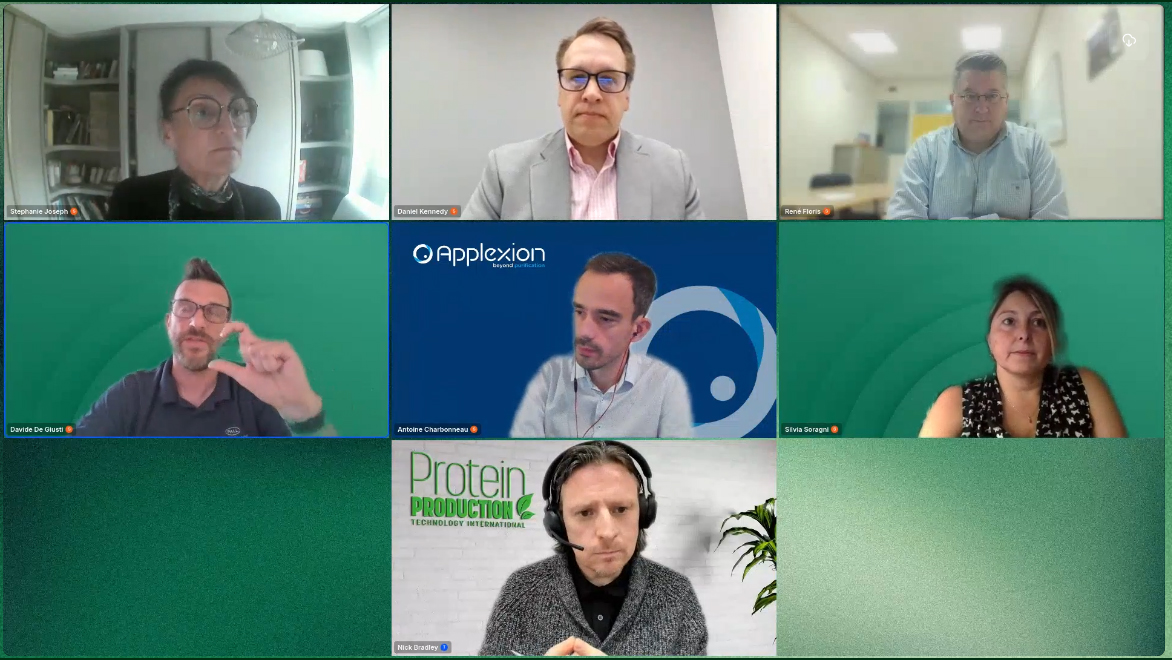
If you missed Protein Production Technology International’s October webinar, Cleaner, Leaner, Smarter: How Advanced Downstream Processes are Powering Sustainable and Functional Protein Production, held on Thursday 23 October in partnership with Pall Corporation, the full session is available to watch on demand. The discussion brought together experts from Pall Corporation, NIZO, Applexion, Ingredion, and Lallemand Bio-Ingredients to explore how next-generation downstream processes were reshaping the economics and performance of alternative proteins.
• Experts from Pall, NIZO, Applexion, Ingredion, and Lallemand discussed how downstream design decisions directly affected protein yield, cost, and functional performance.
• Panelists shared examples where advanced membrane filtration, chromatography, and process integration improved recovery rates and made marginal projects economically viable.
• The discussion highlighted downstream processing as a key lever for valorizing sidestreams, reducing energy use, and scaling alternative protein production more efficiently.
Opening the session, Pall Corporation’s Global Marketing Manager for Food & Alternative Protein, Stephanie Joseph, set out the scale of the opportunity. Pall, part of Danaher’s Life Sciences segment, had long supported traditional markets such as wine, beer, and food ingredients, while increasingly serving emerging sectors including plant proteins, precision fermentation, upcycling of F&B sidestreams, and cellular agriculture. Improving purity and functionality, she noted, could dramatically increase the value of alternative proteins, with potato isolates reaching around US$20 per kilogram and bioactive peptides above US$50 per kilogram when functionality was high.
Joseph then introduced what she described as Pall’s latest breakthrough for protein recovery. “Today I’m excited to introduce our latest innovation, which is a real game changer: the Membralox GP IC ceramic membrane system,” she said. “This innovation combines advanced membrane design with proven ceramic technology to enhance filtration performance.”
The system combined gradient permeability (GP) support with an intermingled channel (IC) geometry, engineered to deliver up to 95% protein transmission and thus increasing the recovery and yield while being 30% lower in CapEx and OpEx. By modifying the membrane support rather than the filtration layer, the GP design maintained a stable microfiltration regime along the length of the module, delivering around 30% higher protein transmission than standard ceramic membranes and extending membrane lifetime by more than a decade in some applications. When paired with the IC design, which increased membrane surface area by about 43% within the same footprint, producers could scale up without expanding plant size thereby significantly increasing the ROI impact.
Joseph highlighted some applications, including potato protein recovery and AB InBev’s Evergreen process for EverPro barley protein, where Pall’s technology helped remove more than 99% of suspended solids while transmitting over 95% of the protein. In several projects, she said, the additional 30% protein transmission had been enough to turn borderline business cases into viable investments.
From there, the panel dug into what this meant on the ground. Davide De Giusti, Food Process Lead at Pall Corporation, explained why the GP IC approach represented a step change from conventional clarification. Traditional systems often struggled with uneven layer formation and rapid fouling, which limited transmission and shortened run times. Gradient permeability, he said, helped control layer formation, so fouling was delayed and evenly distributed. Combined with the compact IC layout, “you get more throughput with fewer modules”, he said, adding that this translated into smaller skids, lower water and buffer use, and longer filtration cycles.
At Dutch research organization NIZO, René Floris had seen membrane systems deliver tangible gains in both taste and yield. Many plant proteins, he noted, suffered from poor mouthfeel or off flavors linked to components such as polyphenols. Targeted membrane steps could strip out those undesirable compounds and unlock new functionalities compared with more blunt tools such as acid precipitation. The real prize, however, lies in energy savings. “Drying is, I think, by far the most energy-consuming part of most production processes for protein ingredients,” Floris said. Concentrating streams to higher dry matter with membranes before drying, while keeping viscosity under control, could have a major impact on overall cost, prompting some companies to rethink their entire process.
From Ingredion, Daniel Kennedy described how the company’s pulse protein strategy was shaped by clean label constraints and a whole-pulse mindset. Rather than relying on chemical treatments, Ingredion leaned on mechanical processing and textural know-how developed on the starch side to improve protein flavor and mouthfeel while preserving labeling advantages. On a scale, valorizing every fraction had become critical. “Anytime something with value goes down the drain, it’s a lost opportunity, and it impacts your overall efficiency,” Kennedy said, pointing to fiber rich fractions, oils, and soluble proteins as areas of growing focus.
Lallemand Bio-Ingredients brought a slightly different perspective, working today with non-functional proteins where rheology was less critical. Silvia Soragni explained that this allowed the team to use tools such as pH shifts and temperature steps to separate the desired biomass fraction more simply. At the same time, Lallemand’s engineers looked carefully at co products, from fermentates used as biofertilizers upstream to yeast extract and cell wall ingredients for animal nutrition downstream, to keep yields high and processes sustainable.
On the purification side, Applexion’s Antoine Charbonneau argued that startups often underestimated downstream complexity, treating it as a “black box” to be solved late in development. Chromatography, he said, was still wrongly dismissed as too expensive or too pharmaceutical, despite its use in large scale commodity applications. Success depended on understanding the impurity of families and sequencing operations. “If I were to use an image, you start with a heavy axe, which is the clarification step. You take out a big chunk of what needs to be removed,” he said. “Then, down the line, your weapon blade gets thinner and sharper, and for every family of impurities there is a strategy to be applied in order to get there.”
Charbonneau also showcased how digital tools were shortening development cycles. Applexion’s Perform 4.0 platform, he said, had cut design of experiments time by about 50%, while giving operators clearer insight into how their systems behaved. A complementary Product Run 4.0 “health check” helped move plants toward preventive operation rather than firefighting after problems occurred.
Joseph confirmed that Pall was seeing similar momentum on the automation side, with customers adopting IoT enabled systems and real time analytics to detect membrane fouling early, optimize cleaning cycles, and minimize downtime. Being part of Danaher, she added, opened doors to collaboration with analytical specialists across the group for online measurement and control.
In a closing round, the panelists looked ahead 10 years. Charbonneau pointed to continuous fermentation combined with continuous downstream as a particularly exciting frontier. Kennedy highlighted precision fermentation for personalized nutrition. Floris expected energy to become an even bigger driver, pushing more processes toward dry and hybrid fractionation. Soragni stressed the importance of non-thermal drying and careful polishing steps to preserve product quality. Joseph said Pall’s ambition was to replicate in plant-based systems what it had already achieved in milk fractionation, where every side stream had been turned into a valuable ingredient.
For anyone working on alternative proteins from plants, biomass or precision fermentation, the webinar offered a dense hour of practical insight into how smarter downstream setups could improve yield, cut costs, and enhance sensory performance.

Join Us At One Of Our Upcoming Events

If you have any questions or would like to get in touch with us, please email info@futureofproteinproduction.com