Planetary explores India expansion with Dhampur to push mycoprotein below US$1 per kilo

Swiss fermentation company Planetary has disclosed that it is exploring a potential collaboration with Indian sugar producer Dhampur Bio Organics Limited to produce mycoprotein at industrial scale in India. The proposed collaboration, which remained subject to definitive agreements, was linked to Planetary’s wider ambition to produce mycoprotein at costs below US$1 per kilogram and would represent the company’s first major production move beyond Europe.
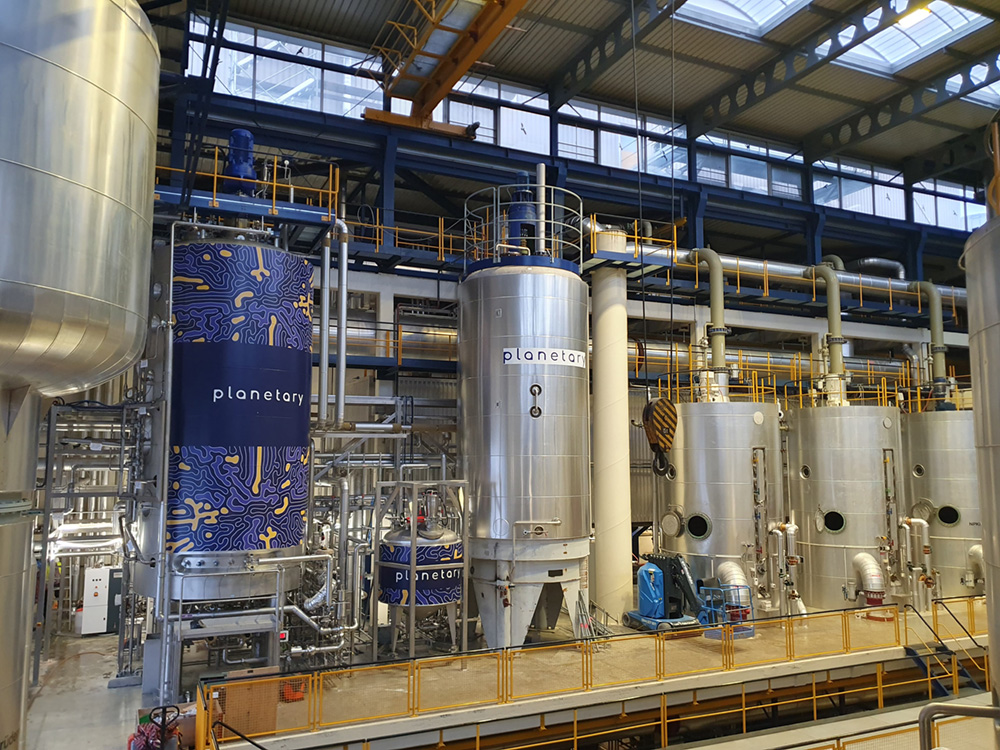
The discussions followed Planetary’s first industrial mycoprotein facility operational as of 2025, co-located with Schweizer Zucker AG’s sugar beet mill in Aarberg, Switzerland. The site made Planetary continental Europe’s only active industrial mycoprotein producer supplying B2B ingredient markets and served as the reference point for its expansion strategy.
• Planetary explored a non-binding collaboration with Dhampur Bio Organics to co-locate mycoprotein fermentation within Indian sugar infrastructure at industrial scale.
• The proposal built on Planetary’s operational model in Aarberg, Switzerland, where fermentation was integrated into a sugar beet mill to reduce capital intensity and operating costs.
• India was assessed as a potential low-cost production hub due to sugar side streams, labor economics, energy integration, and recent bioeconomy policy reforms.
The potential collaboration also coincided with broader progress in trade relations between India and Europe, following the signing of a free trade agreement between India and the European Union on 26 January 2026. The agreement aimed to deepen economic ties and expand opportunities for cross-border investment and industrial collaboration, providing a supportive backdrop for partnerships linking European technology providers with Indian manufacturing groups.
In an exclusive interview with Protein Production Technology International, Planetary Co-founder & CEO, David Brandes, said the sub-US$1 per kilogram cost target was grounded in operating data rather than projections. “The US$1/kg cost target is not based on assumptions, but rather on firsthand production data,” he said. “After careful analysis of production sites around the world, Planetary has identified India as a leading location for its structural advantages with regards to the main cost drivers: feedstock, utilities and labor.”
Planetary’s assessment followed a review of potential low-cost production locations across Central and Latin America, Central and Eastern Europe, Southeast Asia, the Middle East, and Africa. Brandes said the evaluation considered access to production inputs, innovation capacity, trade regulations, depth of local markets, logistics under cold-chain requirements, and compatibility with Planetary’s proprietary BioBlocks fermentation platform.
While multiple regions offered advantages, India aligned most closely with Planetary’s production requirements. Sugarcane processing infrastructure, abundant side streams, lower labor costs, and integrated energy systems were central considerations. Co-location with sugar mills also allowed fermentation facilities to draw on electricity co-generation from bagasse and existing utility networks.
Dhampur Bio Organics emerged as a potential partner due to its vertically integrated sugarcane operations across Uttar Pradesh, spanning refined and pharmaceutical-grade sugar production, ethanol and biofuel manufacturing, renewable power co-generation, and branded spirits. The company was formed in 2022 following its separation from Dhampur Sugar Mills, founded in 1933.
Gautam Goel, Managing Director of Dhampur Bio Organics, said mycoprotein could form part of the company’s longer-term side-stream strategy. “This proposed collaboration, as outlined in a non-binding term sheet, is anticipated to become an important pillar of our future sugar side-stream valorization strategy,” he said. “Subject to final agreements and regulatory approvals, we expect this partnership to enable DBO to both export raw Mycoprotein and introduce India-market applications such as mycoprotein-based protein fortification solutions and myco-tikka masala.”
Planetary said the technical foundations for expansion had already been established in Switzerland. Brandes described the Aarberg facility as proof that industrial mycoprotein fermentation could operate reliably within a sugar mill environment. “Aarberg validated both the co-location model and the robustness of our process at industrial scale,” he said.
Applying that model in India would require adaptation rather than replication. “Replicating it in India is less about proving the technology, but optimizing it for local conditions,” Brandes said. Regulatory compliance was identified as one design variable. “From a regulatory perspective, environmental standards and wastewater treatment requirements are different in India than in Aarberg, so our plant design must follow local regulatory procedures.”
Climate was another factor. “Geographically, the plant in India will be situated in a different climate than Aarberg, in the southern hemisphere where the weather is hot and humid,” Brandes said. “This geographical difference may affect cooling load, HVAC, water supply, corrosion rate.”
Operational integration with existing sugar mills was also described as site-specific. “Every sugar mill, every country, region, and partner is different,” Brandes said. “Whether it’s campaign cycles, available space, infrastructure, utilities, operational resources, target budget, or financial constraints, the integration process is different every time.”
Commercially, the company said affordability remained the primary objective. “It is planetary’s objective to make highly nutritious, sustainable, and versatile foods available to all consumer groups without concessions on taste,” Brandes said. “This objective requires cost leadership in production, which translates to savings for consumers on supermarket shelves.”
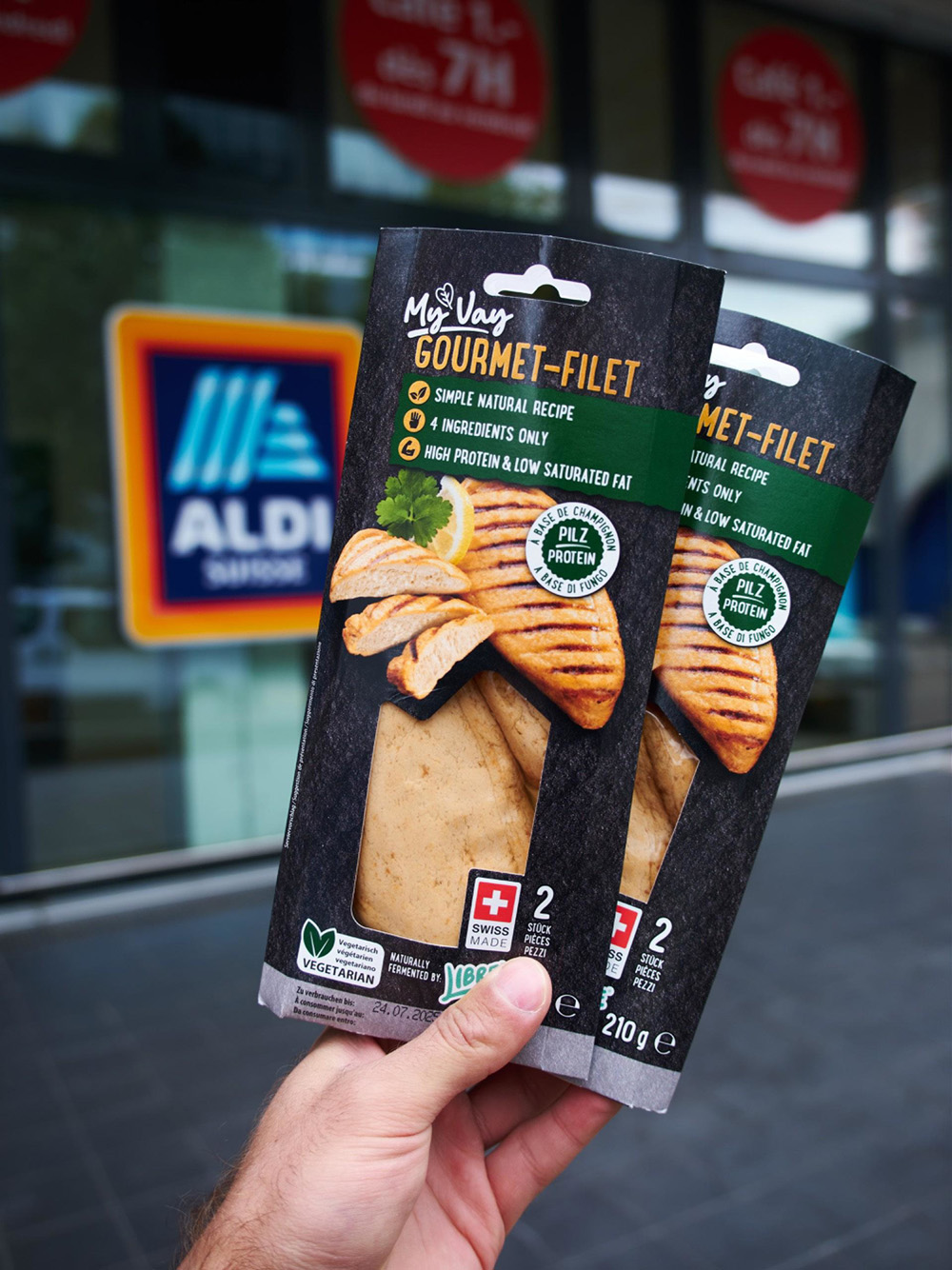
That approach had already been tested in Europe. Since commissioning the Aarberg facility, Planetary supplied Aldi Suisse with Libre mycoprotein ingredients for a nationwide retail rollout at price parity with chicken. The company reported that future European launches would include private-label meat and dairy alternatives as well as hybrid meat products blending mycoprotein with beef or chicken.
Hybrid applications were identified as a near-term route to volume. Brandes pointed to rising meat prices across multiple markets, including India, where meat and fish consumer price inflation had risen at double-digit rates. In Europe, he cited data showing that over 30% of minced meat sold at LIDL Belgium consisted of hybrid products.
From a regulatory standpoint, Planetary did not expect significant barriers to hybrid products in India. “Planetary is employing a strain with almost global regulatory approval,” Brandes said. “Other than nomenclature and labelling regulations, we do not expect complexities on the application level.”
The proposed collaboration also aligned with Planetary’s broader expansion strategy. The company owned and operated its Swiss facility as a reference installation, while offering international partners a license to its BioBlocks fermentation platform. “We own and operate the installations of our first industrial plant in Aarberg, Switzerland, as the plant that validates our business and technology model,” Brandes said. “As we expand production into international markets, we offer our partners a technology license to our proprietary and synergistic BioBlocks fermentation platform.”
Planetary attributed its operating track record to fully in-house development spanning strain adaptation, bioprocess design, engineering, and plant commissioning. The company also said the same fermentation platform could be applied to adjacent sectors beyond food, including bio-based materials and cosmetics.
Brandes said reaching sub-US$1 per kilogram mycoprotein would change how fermentation-based protein competed with conventional meat. “Mycoprotein reaching sub-US$1/kg implies that fermentation-based protein may at last compete with conventional meat not only on sustainability and taste, but price and scale,” he said.
At the time of disclosure, the collaboration between Planetary and Dhampur Bio Organics remained exploratory, pending definitive agreements and regulatory approvals.
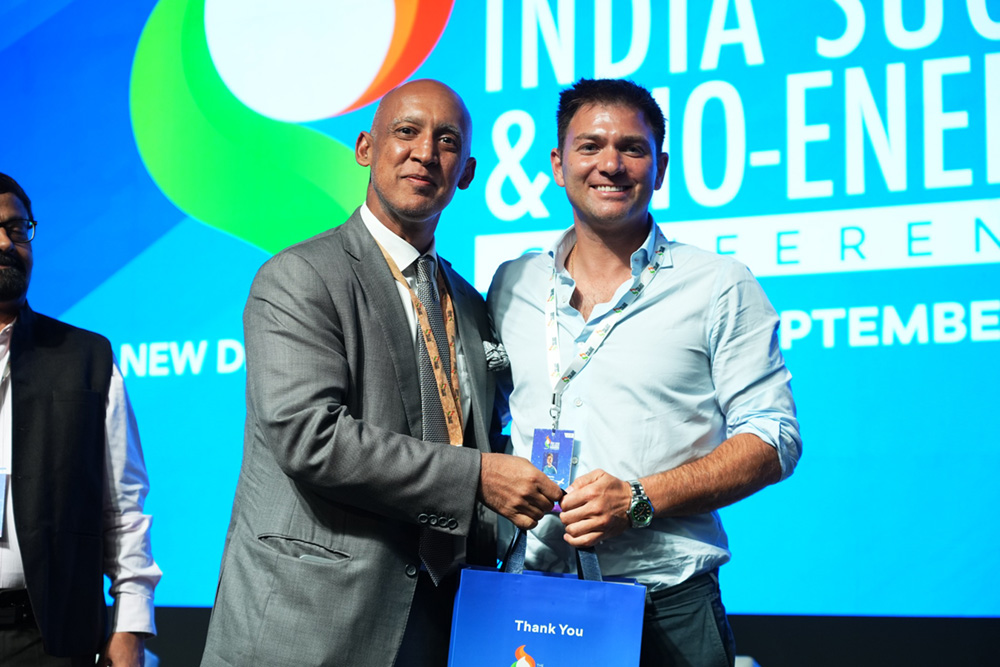
(Main photo show David Brandes, CEO of Planetary, and Gautam Goel, Managing Director of Dhampur Bio Organics, pictured at the India Sugar & Bio-Energy Conference)

Join Us At One Of Our Upcoming Events

If you have any questions or would like to get in touch with us, please email info@futureofproteinproduction.com