Regulation moves upstream as FPP Amsterdam tackles the next big hurdle for novel proteins

Regulatory strategy is moving much closer to the start of novel food development. Ahead of FPP Amsterdam, we explore why testing, safety and earlier dialogue with regulators are becoming critical to the route to market
For a novel protein company, some of the most expensive regulatory mistakes can be made years before a dossier reaches an authority. Choose the wrong production strain, characterize a product that subsequently changes, design studies around the wrong target population or discover too late that an analytical method does not work with a new food matrix, and months of work can suddenly have limited value. None of these decisions looks much like regulation when it is first made. Increasingly, all of them are.
That changing reality will be at the center of a panel discussion at The Future of Protein Production Amsterdam on 4-5 November, bringing together Jo Anne Shatkin, President of Vireo Advisors; Evangelos Katsoulis, Senior Policy Advisor for the Cell-Cultivated Products Sandbox at Food Standards Scotland; Montserrat Cerrato, Group Leader Regulatory Affairs at Argenta; Ralph Langholz, President of the Swiss Protein Association; and Vince Sewalt, Principal Consultant at Sewalt Bioconsulting.
Their brief is a broad one: what would better collaboration between regulators and industry actually look like, and can approval systems become clearer and more predictable without compromising food safety?
It is a question that has become harder to separate from the day-to-day business of developing a new food.
Flavia De Marta, Business Development Manager at Argenta, recently told PPTI that the conversations companies are having around regulation have already changed considerably. "The biggest change that strikes me is a shift in mindset on both sides of the table," she said. "Five or six years ago, companies were still asking, 'How do I get this approved? Will this ever get approved?' Today, the conversation is much more strategic."
That means asking what exactly requires authorization, which market should come first, what evidence can serve more than one jurisdiction and, crucially, when regulatory work needs to begin.
De Marta said the mistakes that prove most expensive are often strategic rather than scientific. Timing can be wrong. A product can be incorrectly classified. Work can be carried out in the wrong sequence.
For fermentation companies, for example, strain characterization needs to happen early. Switching to another strain midway through development because it produces a better yield may make perfect sense to the process team, but it can also leave regulatory work tied to a production organism that is no longer being used.
Target populations and intended food categories can have similar consequences because both influence the evidence ultimately required.
Jo Anne Shatkin, who will be on stage in Amsterdam, sees the same need to move regulatory thinking forward. "I do think that the founders today are much more aware of their requirements," she told a recent PPTI webinar with Merck Life Science. "But I think it's really important to tee things up much earlier than even founders who understand those requirements might anticipate."
There is a balance to strike. Testing a product before it is sufficiently developed can be just as problematic as leaving testing too late.
René Viñas, Corporate Toxicologist at UPSIDE Foods, described the uncomfortable point at which a development team eventually has to stop changing the product that will underpin its regulatory work. "You've got to lock it here. You've got to stop innovating," he said during the same webinar.
The science, of course, does not stop. The problem is that data generated on one version of a product may not necessarily support the version eventually intended for commercialization.
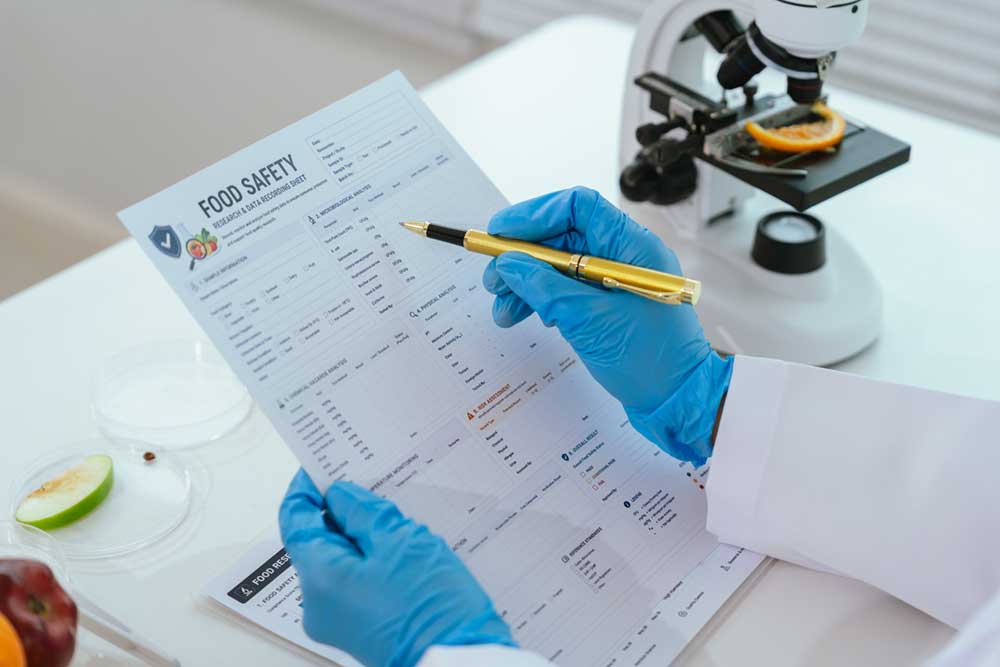
Shatkin puts analytical testing near the top of the agenda once that point is approaching. "But once you've done that, your analytical testing for regulatory needs to be at the top of the list," she said. Companies should already know which laboratories will perform the work, which components need testing and whether the methods can generate data that will stand up in the intended market. That last part is not always straightforward.
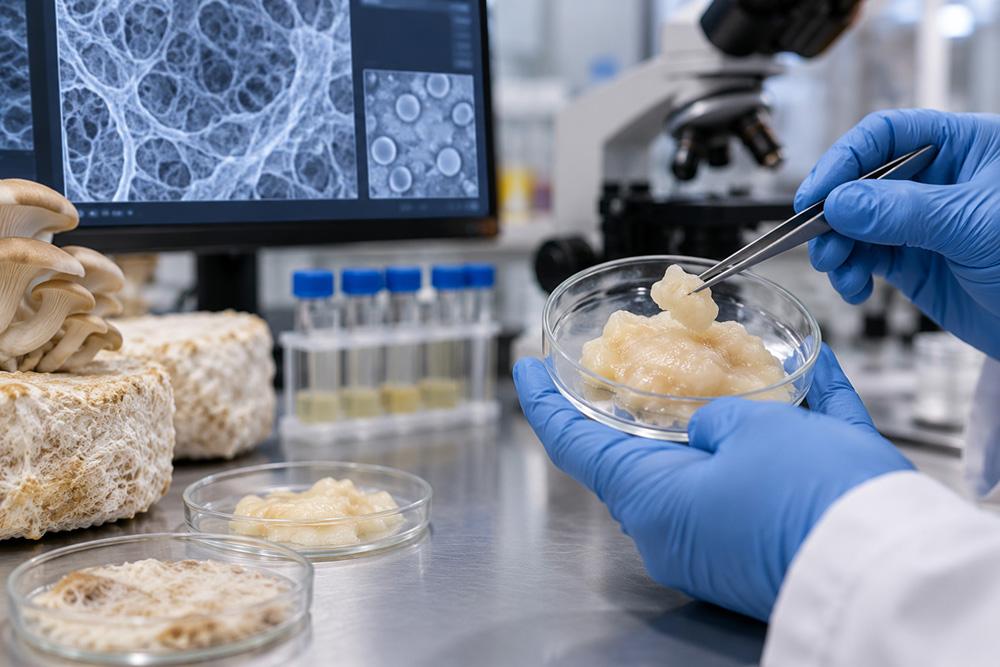
Novel proteins can present laboratories with matrices for which conventional analytical methods were never developed. Shatkin recalled one cultured meat project in which an ELISA method failed to detect a bioactive compound in the final product because of the matrix. A new method had to be created and validated.
Rosario Romero, Science Lead - Food at Fera Science, described another difficulty: "the analysis of the unknown."
Knowing that a product needs testing for a particular contaminant is one thing. Establishing what unexpected compounds or changes might be present in an unfamiliar biological system is another. Non-targeted analytical methods can generate huge quantities of information, but interpreting those data requires suitable baselines and databases that may not yet exist for novel foods.
The question, then, is not simply whether companies need to generate more data.
Naya McCartney of Vow put it more succinctly during another PPTI discussion: "More data is not safer food." Her point was that safety work should identify the genuine uncertainties associated with a product and design studies capable of answering them. Generating everything that can technically be measured can be expensive without necessarily providing a regulator with better evidence.
This is where the relationship between regulators, applicants, laboratories and scientific advisers becomes particularly interesting. Shatkin has been involved in one attempt to tackle the problem collectively. Vireo Advisors and New Harvest have worked on a pre-competitive initiative addressing common safety questions around cultivated meat. Government scientists and regulators from several markets have been brought into discussions about research priorities, while subsequent work has included efforts to establish methods that industry can use and regulators can become familiar with.
The rationale is practical. If 20 companies face the same fundamental methodological problem, there is little value in all 20 independently spending scarce resources solving it. "I think there's a need for everyone to understand the requirements and buy into them," Shatkin said. "That includes founders, investors, laboratories and regulators. All of us need to be on the same page about what is needed to get to commercialization and have a realistic view of how to get there."
That makes the presence of Evangelos Katsoulis on the Amsterdam panel particularly timely. Katsoulis is working on the Cell-Cultivated Products Sandbox at Food Standards Scotland, an initiative that has already been singled out by scientists working in the field as an example of the kind of engagement novel technologies may require.
James Hutchinson, Business Development Director at Labcorp, cited the sandbox during the Merck Life Science webinar when asked whether the surrounding regulatory and testing ecosystem was keeping pace with innovation. "I think it's a case of collaboration. It's conversations, sharing insights and working groups. The FSA sandbox is a good one," he said.
His conclusion was considerably shorter: "We need to talk."
Romero agreed, but added an important qualification. That conversation cannot consist solely of regulators and manufacturers. "Collaboration between all parties is important, and the FSA sandbox is a very good example where regulators need to be talking not only to manufacturers, but also to labs and scientists in general," she said. "Innovation is not the problem. There will always be intelligent people developing interesting things. But the testing and regulatory framework needs to follow."
Regulators, meanwhile, have their own learning curve. Vince Sewalt, another member of the Amsterdam panel, made that point during PPTI's Road to Amsterdam webinar in July. "It's not just the newness of the technology," he said. "It's also the fact that regulators think they need to put a new process in place to actually be able to evaluate those new technologies or products made with the new technologies."
He pointed to the experience of the US Food and Drug Administration in establishing its GRAS notification program and, more recently, a pre-market consultation pathway for cell-cultivated meat and seafood.
Other technologies begin from a different place. Precision fermentation and biomass fermentation have considerably more regulatory history behind them in several markets. Cultivated meat presents questions around cell lines, media components, scaffolds and production systems that assessors have encountered far less frequently.
That accumulation of precedent could prove important. Each completed assessment can give authorities and future applicants a better idea of the questions likely to be asked and the evidence needed to answer them.
For Sewalt, the longer-term objective should be to make regulatory foresight part of development rather than something introduced when the technology is already fixed.
"I would hope to be able to say that regulatory is no longer an afterthought, which it still is in many cases, but rather that regulatory foresight has taken center stage in alternative protein innovation and is demanded by the investment community," he said.
Investors are part of this conversation for a reason. Sally Powell Price, Regulatory Affairs SME - Life Science and Public Health at MilliporeSigma, told the Merck webinar that many regulatory delays she sees result from strategy failures rather than failures of the underlying science.
Starting too late is one. Underestimating the data package is another. So is getting the testing scope wrong or treating the process and finished product as two separate regulatory questions. "Companies that treat regulatory strategy as a late-stage activity will fall behind," she said.
Powell Price also believes investors are becoming better at spotting the gap. A company may have impressive science, but if management cannot explain how it intends to reach an authorized market, that uncertainty becomes part of the investment proposition. "The companies pulling ahead are those seeing regulatory as a competitive advantage," she said.
Geography adds another complication. Rocío Duchén Bocángel, Principal Regulatory Affairs Manager at Argenta, has previously told PPTI that discussing a proposed regulatory strategy with FDA officers can help companies test assumptions about issues such as classification before committing substantial resources.
"It is good to start step by step, with regulatory running in parallel with development," she said.
In Europe, companies face different procedures and timelines, while the relationship between the UK and EU introduces another layer. De Marta has cautioned that the planned sanitary and phytosanitary agreement may reduce trade friction but would not create mutual recognition of novel food authorizations. Companies targeting both markets would still have separate processes to navigate.

For businesses trying to conserve cash and reach revenue, those differences can influence which market comes first.
Harmonization will therefore be another subject for Amsterdam. Sewalt has pointed to cooperation between Food Standards Australia New Zealand and Health Canada as evidence that reducing duplication does not necessarily require countries to surrender their own approval systems. Under that model, authorities can recognize safety assessments while retaining their respective regulatory processes. He wants to see more of it.
The immediate question is how far that principle can travel across technologies and jurisdictions with very different legal frameworks, institutional experience and attitudes to novel foods.
That should give Shatkin, Katsoulis, Cerrato, Langholz and Sewalt plenty to disagree on when they meet in Amsterdam. They will examine where earlier regulator-industry engagement genuinely helps, what greater transparency should look like, whether approval pathways can become more predictable, how Europe competes with markets moving at different speeds, what the UK-EU relationship means in practice, and what companies should expect from the next phase of novel food regulation.
For anyone developing a strain, choosing a cell line, designing a safety program, preparing for scale-up, raising money or deciding which country should see a product first, it is difficult to argue that regulation belongs at the end of the plan anymore.
On 4-5 November, FPP Amsterdam will put the regulators, advisers and industry representatives dealing with those questions on the same stage.
Regulation as Growth Infrastructure takes place at The Future of Protein Production Amsterdam on November 4-5, 2026, at RAI Amsterdam. The full conference program and ticket information are available here

Join Us At One Of Our Upcoming Events

If you have any questions or would like to get in touch with us, please email info@futureofproteinproduction.com