
Daesang and Seoul put tofu pulp into a baked Korean pastry

Daesang and the Seoul Metropolitan Government launched a baked version of the Korean pastry yakgwa on November 23 using pulp left over from tofu production. The pastry went on sale alongside a sweet potato and tofu bar, giving the city’s branded snack range its first food upcycling project with a private company.
- Seoul Yakgwa uses the soy pulp left over from tofu production. Daesang bakes the pastry and uses allulose in the recipe to reduce added sugar.
- The second product, Seoul GO-guma Bar, uses sweet potato and tofu. Seoul says the bar was designed for people who want a portable snack around a run.
- Daesang’s Re:Food Lab developed the snacks with Seoul. The city’s shops and the Dongdaemun Design Plaza design store are among the first sales outlets.
Seoul Yakgwa puts a food processing byproduct into a pastry consumers already know. Yakgwa is traditionally fried, while Daesang bakes this version. The city said the pulp contributes to the pastry’s texture and provides protein and fiber. Seoul’s release describes the formulation but does not quantify how much tofu pulp goes into each unit.
Daesang makes the pastry in stick and gift formats. Seoul lists single servings alongside five- and ten-piece sets, giving the product a place in individual snack sales and in the city’s gift range. The familiar pastry does much of the work on the shelf. Consumers can recognize what they are buying even if they have never seen tofu pulp called out as a commercial ingredient.
Switching from frying to baking also affects how the product can be made and how it feels when eaten. The city describes the baked pastry as moist and says it uses allulose to reduce the amount of sugar added. That is a formulation choice described by the city. The release does not give a side-by-side nutrition comparison with a conventional yakgwa or enough information to calculate the contribution from the pulp.
The pulp, known as biji in Korea and commonly called okara in English-language ingredient research, is the material left when soy liquid is separated from solids. It still contains protein and fiber. Researchers reviewing okara as an ingredient have identified its high moisture content and short shelf life as obstacles to wider use. The commercial work includes deciding how to handle a perishable material consistently enough to put it into another production line.
Ingredient developers have considered using okara to replace some flour in baked foods because it retains part of the original soybean’s protein and fiber. Fresh okara is wet and perishable, and composition depends partly on how much is removed earlier in processing. A producer working with the material needs to know what arrives at the bakery and how stable it is between production runs. Daesang and Seoul did not describe how the pulp is prepared for this particular recipe.
The bar has its own retail pitch. Seoul lists sweet potato as just under 91% of the formula, with tofu accounting for 7.31%. The city paired the running theme with packaging showing its tiger character on a route by the Han River. The figures describe the bar and should be kept separate from what the city says about the pastry. Seoul gave no comparable ingredient breakdown for the yakgwa.
The second snack uses soy differently. The Seoul GO-guma Bar contains locally grown sweet potato and tofu made from Korean soybeans. Seoul lists it at 55kcal per pack and says Daesang developed the format with runners in mind. The city’s ingredient breakdown names tofu itself, so the upcycled pulp application is the pastry.
Daesang developed the two products through Re:Food Lab, which grew out of its internal venture program. The city brought its Seoul My Soul branding and distribution channels. It has also put Seoul landmarks on the yakgwa gift packaging, including Dongdaemun Design Plaza and Bukchon Hanok Village. The merchandising gives the pastry a role as a souvenir alongside its place in the everyday snack range.
The yakgwa is sold individually and in gift sets. The city announced availability through its Seoul My Soul shops and at the design store, including online. Its release also identified duty-free retail as a planned outlet for the pastry and wider online and offline distribution for the bar. The two routes give Daesang a way to reach tourists picking up a gift as well as shoppers buying a portable snack.
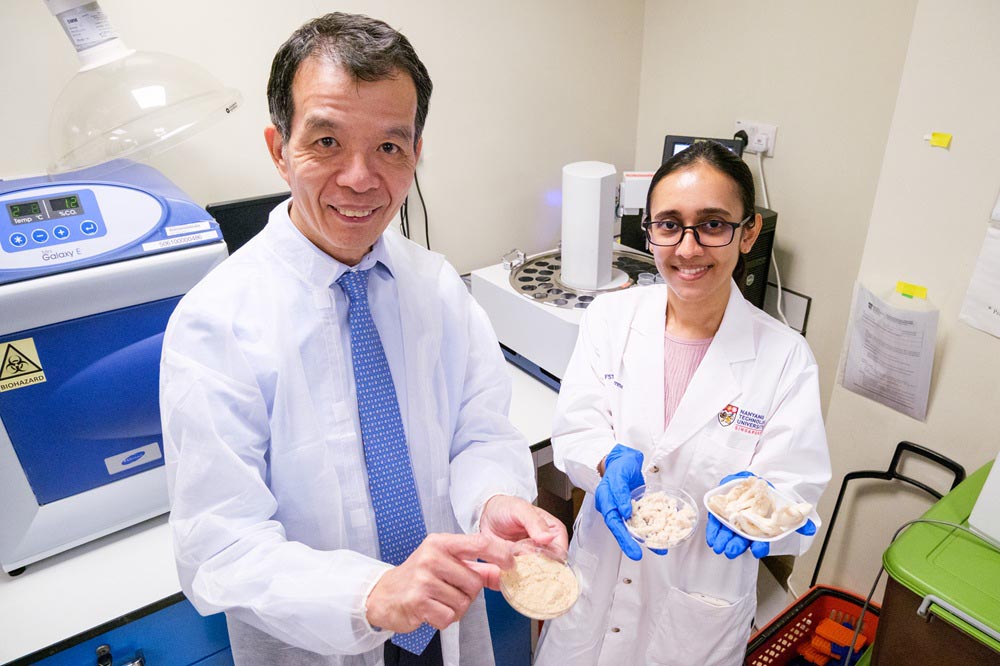
PPTI previously covered research at Nanyang Technological University that took a different approach to okara by fermenting it with fungi to alter its nutritional and flavor characteristics. The Seoul launch shows how a manufacturer can use tofu pulp in a familiar baked food. The city did not disclose the quantity of pulp the product will use, so the waste reduction from the launch is still unknown.
The city plans to put the yakgwa into Lotte Duty Free stores and the bar into more retail channels, including Coupang. Those plans would take both products beyond Seoul’s own shops and the Dongdaemun Design Plaza store.
(Main photo courtesy of Kamala Bright / Unsplash)

Join Us At One Of Our Upcoming Events

If you have any questions or would like to get in touch with us, please email info@futureofproteinproduction.com