

UPP strikes broccoli waste supply deal with East of Scotland Growers to build new plant protein stream

UPP had signed a five-year partnership with East of Scotland Growers that linked automated broccoli harvesting with ingredient production, giving the UK food-tech company access to a proprietary supply of up to 100,000 tons of broccoli biomass a year that would previously have gone to waste.
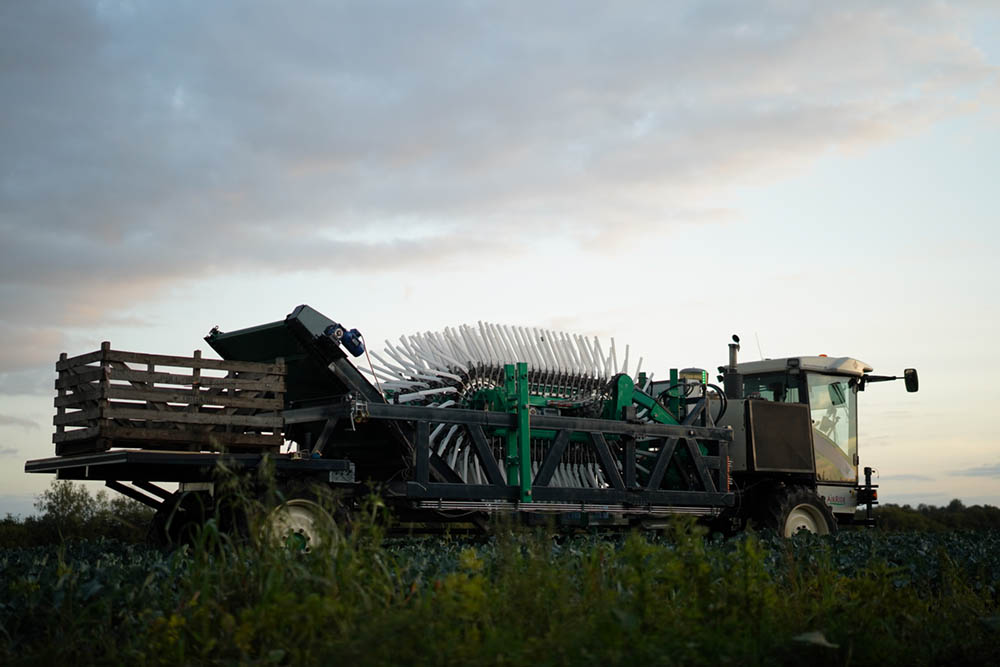
• UPP entered a five-year agreement with East of Scotland Growers to deploy its Harvesta selective harvesting system and secure up to 100,000 tons of broccoli biomass annually.
• The companies said the deal was targeted to cut harvest costs by 30% while creating a new revenue stream from broccoli side-streams that would otherwise have been wasted.
• UPP said the partnership built on its recent £3.5 million (US$4.5 million) funding round, including a £1.5 million (US$1.9 million) follow-on investment from Elbow Beach.
The agreement marked a significant step for UPP as it moved to commercialize a model built around recovering value from underused vegetable crops. Under the deal, East of Scotland Growers would deploy UPP’s Harvesta system across its farms, automating broccoli harvest operations and supplying the recovered material back to UPP as feedstock for its ingredient business.
The companies said the harvesting system had been targeted to save 30% of harvest costs, while also helping growers reduce dependence on casual labor during one of the most pressured parts of the production cycle. For farmers, the proposition extended beyond labor savings. By converting crop residue into a saleable side-stream, the model had also been designed to open an additional source of income from biomass that had little or no commercial value.
UPP said its processing technology could turn broccoli side-streams into allergen-free ingredients for a wide range of products, including hybrid sausages and burgers, pasta, soups, sauces, bakery products and pet food. Because the biomass came from crops that had already been grown, the company said its protein production did not require extra land, water or fertilizer inputs.
That argument sat at the center of the company’s pitch. Rather than asking growers to dedicate acreage to a new crop, UPP had built its model around recovering more value from existing agricultural production. In doing so, it said it could help reduce pressure on land and resources while also supporting efforts to cut food waste and lower emissions across supply chains.
The companies tied the partnership directly to those carbon goals. Diverting broccoli biomass from waste, they said, would materially reduce Scope 3 greenhouse gas emissions in food supply chains, while supporting regenerative agriculture commitments and retailer decarbonization targets.
“We’re proud to partner with UPP to deliver real economic and environmental value back to growers and to the broader food ecosystem,” said Andy Laing of East of Scotland Growers. “This collaboration not only improves farm profitability but also contributes to a food system that is more sustainable, resilient and impactful. We are working with supermarket partners to address Scope 3 emission reduction, and working with UPP is supporting us to meet our goals.”
The commercial structure of the agreement reflected that shared approach. East of Scotland Growers would benefit from a share of gross margin from the upcycled ingredients, while UPP would secure a reliable, high-volume source of biomass to support scale-up of its protein lines. Over the five-year term, the companies said the collaboration could generate up to £10 million (US$12.9 million) in gross profits shared between the parties.
For UPP, the announcement also showed how it intended to put recent investment to work. The company said the partnership built on its £3.5 million (US$4.5 million) funding round, which included a £1.5 million (US$1.9 million) follow-on investment from Elbow Beach. That capital, it said, was now being used to accelerate Harvesta deployment and expand its dual-revenue partnership model.
The deal offered a clearer picture of what that model looked like in practice. On one side sat an automation proposition for growers under pressure from labor shortages and rising costs. On the other sat an ingredient business built on upcycled agricultural side-streams. Together, the companies argued, that combination could reshape the economics of broccoli harvesting while creating a more dependable flow of raw material for food manufacturers.
“This partnership exemplifies a shared vision: empowering growers, reducing waste, and creating nutritious, planet-positive food ingredients,” said Mark Evans, CEO of UPP. “By combining ESG’s agricultural scale and expertise with UPP’s proprietary processing and ingredient technology, we are turning materials with little commercial value into nutritious proteins and fibre for food producers.”
Elbow Beach, which had backed the company in its recent funding round, also cast the agreement as evidence of broader commercial potential in agricultural waste valorization.
“At Elbow Beach, our mission is to back innovative UK technologies that drive efficiency, resilience and sustainability across the real economy,” said Andy Summerfield, Investment Director at Elbow Beach. “UPP’s partnership with East of Scotland Growers exemplifies this – transforming under-utilised agricultural biomass into high-value, nutritious ingredients while generating meaningful incremental income for farmers. We’re proud to continue supporting UPP as they scale a technology that strengthens both farmer livelihoods and the commercial resilience of our food system.”
For UPP, the ESG partnership moved the company beyond the promise of upcycling and into the mechanics of supply. With a long-term harvest agreement, a defined farm partner and a stated route to ingredient scale, the company had tied its automation platform directly to commercial protein production.

Join Us At One Of Our Upcoming Events

If you have any questions or would like to get in touch with us, please email info@futureofproteinproduction.com


