
Who controls the bioreactor?

From real-time sensing and adaptive process control to digital twins and smarter downstream processing, automation is moving deeper into protein manufacturing. The question now is where it can make the biggest difference
A bioreactor can contain excellent biology and still produce a bad batch. For Yash Mishra, CEO & Co-founder of Cellcraft, that is precisely why the next gains in biomanufacturing may come not only from better cells or microorganisms, but from what happens around them.
“You could have excellent biology and still lose a batch because the process control wasn’t keeping up with what the cells needed in real time,” he says.
.png)
The problem becomes harder as companies move from laboratory development toward industrial production. Cells change throughout a run. Their metabolic activity shifts, their requirements evolve, and a process that behaved predictably at one scale may become considerably less obliging at another.
The software controlling the vessel, meanwhile, may still be working to parameters established before the run began.
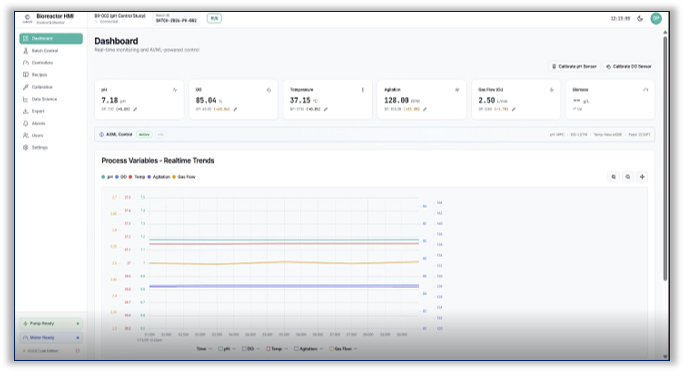
Cellcraft is trying to close that gap. In April 2026, the Cambridge-based company launched Cellcraft IQ, an AI-powered operating system designed to introduce adaptive control to existing bioreactors. It uses measurements including pH, dissolved oxygen, temperature, agitation and gas flow to build a picture of what is happening inside the vessel and adjust the process accordingly.
“How much information is already in the bioreactor vessel that nobody is using,” Mishra asks. “You have pH, dissolved oxygen, temperature, agitation, gas flow, etc, all being measured in real time. But conventional control systems use each of those signals in isolation to maintain a setpoint.”
In internal testing, Cellcraft reported a 90% reduction in overshoot, a 45% reduction in settling time and more than 99% reduction in steady-state error compared with conventional control approaches. Those are measures of control performance rather than commercial protein yield.
“We have seen our biggest gains so far in consistency go hand-in-hand with efficiency,” Mishra observes. “Before you can optimize yield or scale a process, you need runs that are reproducible and comparable to each other.”
Cellcraft has also included an advisory mode, leaving an operator to approve recommended changes rather than handing complete control to the software. Autonomous biomanufacturing does not have to arrive all at once.
Seeing inside the vessel
Better control depends on knowing what there is to control. Researchers at the University of Nottingham are approaching that problem through BioSee AI, a multi-sensor platform combining ultrasonic and optical measurements with machine learning. The technology is being developed to detect changes including cell aggregation, contamination and process drift while a run is still underway.
Temperature, pH and dissolved oxygen can all remain within their specified ranges while something less obvious is going wrong biologically. It is one reason process analytical technology has become such an important part of the scale-up discussion.
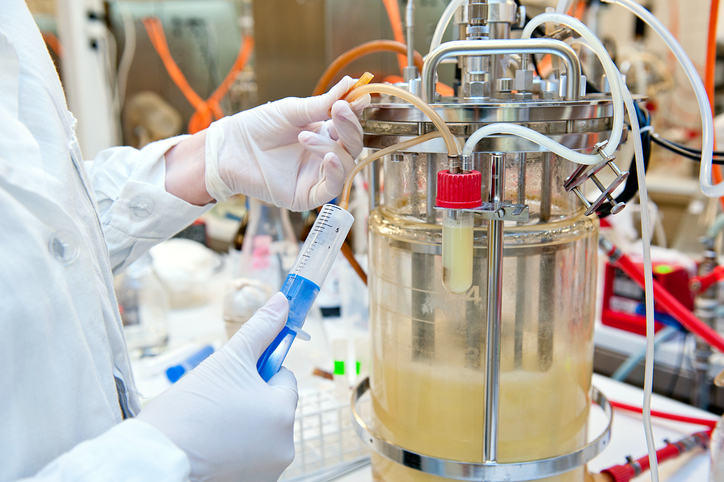
“The idea is simple but powerful: by measuring critical parameters like pH or oxygen in real time, you gain deeper understanding and tighter control of your process,” explains Charlotte Hughes, Scientific Content Manager at Hamilton. “I often describe PAT as the eyes and ears of the bioreactor. Without these tools, the process is essentially a black box.”
At larger scales, even apparently straightforward measurements become more complicated. Multiple dissolved oxygen probes can expose differences within a vessel that a single probe would miss. Carbon dioxide data can add information about metabolic activity, nutrient availability and process stress.
AI may eventually make increasingly sophisticated decisions from those signals. First, the signals have to be good enough.
From data to decisions
Pow.Bio and Bühler have been testing what happens when digital process control moves further into production.
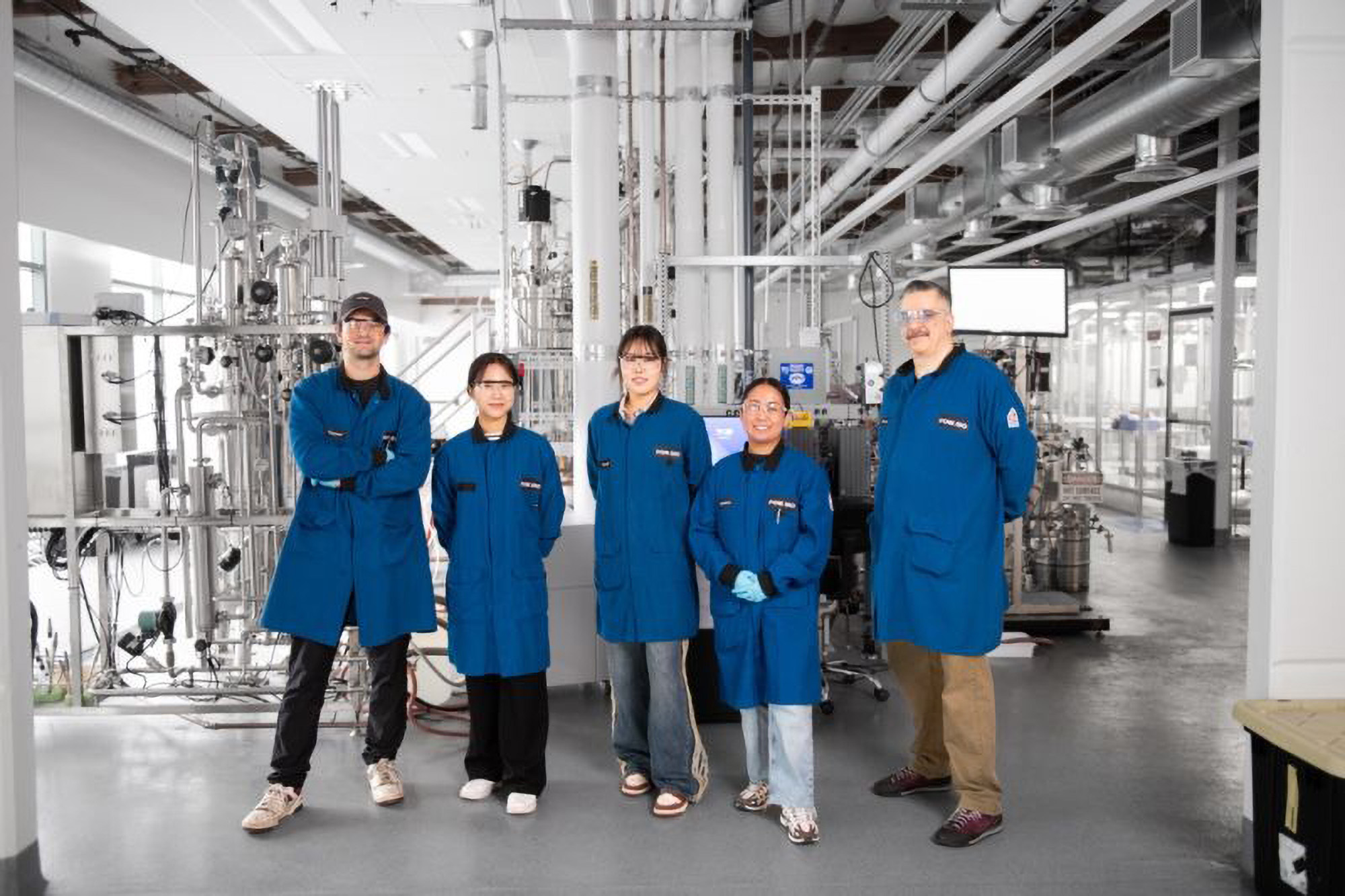
In a continuous fermentation campaign conducted with ATV Technologies in France, Pow.Bio's platform was taken to 3,000L. The partners reported three times the protein output of an equivalent fed-batch process and projected a reduction in cost of goods sold of more than 50%.
Continuous fermentation presents a different control problem. Rather than completing a batch, examining the results and making adjustments for the next one, manufacturers need to maintain productive biological conditions over much longer periods.
Pow.Bio has developed a digital twin that can account for differences between manufacturing sites. In one deployment, oxygen transfer and evaporation behaved differently enough to require changes to the process.
“The AI layer recommended different feed strategies and other operational adjustments, which the system then applied in real time during the run. The result was first-run success,” reveals Pow.Bio CEO & Co-founder Shannon Hall.
The attraction is not confined to biological performance. Existing equipment could also work harder.
“So the CapEx will, give or take, remain the same,” explains Bühler's North American Director of Innovation, Thierry Duvanel. “If we talk about a retrofit, there will be added costs to the infrastructure, but they’re not significant – the real change is in utilization.”
Pow.Bio estimates that at least 70% of existing fermentation infrastructure could potentially be reused in suitable installations.
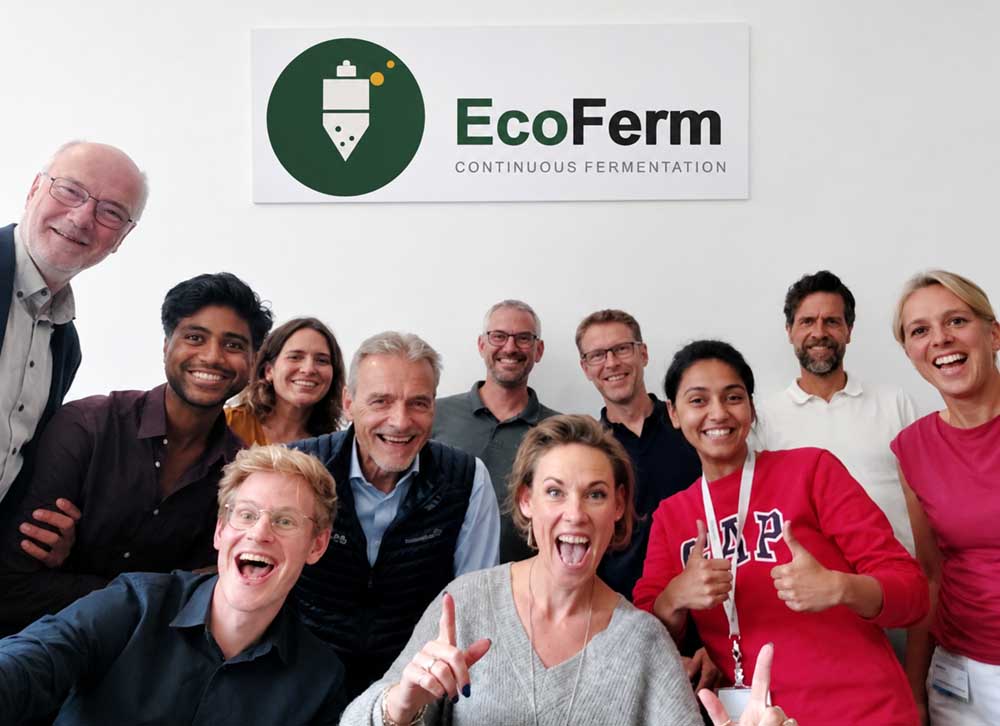
The same interest in continuous production is appearing elsewhere. The recently launched Dutch ECOFERM consortium, involving NIZO Food Research, BFF, DAB.bio, Vivici, dsm-firmenich and Van Hall Larenstein University of Applied Sciences, is investigating continuous precision fermentation with in-situ biomass retention.
Keeping a process productive for longer sounds attractive. Keeping the biology stable while doing it is where monitoring, automation and process control earn their keep.
When the factory cannot communicate
For Stefania Stoccuto, Global Industry Developer Future Food at Siemens, scale introduces problems that extend well outside the vessel. “High capital costs, inefficient resource use, and complex infrastructure are ongoing concerns. However, the biggest barriers are operational complexity, lack of standardization, and data integration issues,” she states.
A commercial plant can contain equipment from numerous suppliers, running different software and generating data in different formats. Making each machine more intelligent does not necessarily create an intelligent factory.
“Machines and software from different vendors often can’t communicate, creating disconnected data that hinders real-time decisions and optimization,” Stoccuto explains. “Moving recipes from R&D to large-scale production is rarely smooth – downtime and inefficient operations make each batch unpredictable and hard to optimize.”
Siemens is using digital twins to tackle some of those problems before steel is installed. A virtual model allows engineers to examine production sequences, equipment configurations and bottlenecks before committing capital to a physical facility.
Standardization becomes part of the same conversation.
“Standardization not only enables automated recipe control, reduces engineering work, and simplifies maintenance – delivering significant operational expenditure (OpEx) reductions – but also facilitates the seamless integration of new technologies such as advanced sensors, machinery, and other inputs,” Stoccuto notes.
The challenge becomes increasingly apparent as companies move from relatively self-contained pilot systems to factories in which fermentation, media preparation, utilities, harvesting and downstream operations have to work together.
Swedish companies Curve and Digital Tvilling are approaching the data problem from another direction. Their AI-enabled biomanufacturing platform is intended to capture information from successive fermentation runs so that previous manufacturing experience informs what happens next.
“Together, we are building a new kind of biomanufacturing platform where every production run contributes to making the system smarter, more efficient, and more scalable,” says Curve CEO & Co-founder Jacob Peterson.

Don't forget downstream
There is little value in squeezing more productivity from a fermenter if much of the gain disappears during recovery. In a PPTI webinar on advanced downstream processing, Pall Corporation discussed the use of connected systems and real-time analytics to detect membrane fouling, optimize cleaning cycles and reduce unplanned downtime.
Pall's Stephanie Joseph discussed the growing use of IoT-enabled systems in downstream operations, while Applexion's Antoine Charbonneau described a digital platform that had reduced design-of-experiments time by approximately 50%.
Pall also reported protein transmission of up to 95% in suitable applications using its Membralox GP IC ceramic membrane technology.
Better information can help operators decide when equipment needs attention, when cleaning is necessary and whether a process is moving away from its intended performance. It also makes a strong case for looking at automation across the production line rather than stopping at the bioreactor wall.
Does it make the protein cheaper?
David Brandes, Co-founder & CEO of Planetary, brings the discussion back to industrial economics. Planetary operates a mycoprotein facility integrated with a sugar beet mill in Aarberg, Switzerland, and has been using experience from that plant to inform plans for expansion elsewhere. Its proposed collaboration with India's Dhampur Bio Organics has an explicit ambition to bring mycoprotein production below US$1/kg.
“The US$1/kg cost target is not based on assumptions, but rather on firsthand production data,” Brandes stresses.
The economics depend on far more than software. Feedstocks, utilities, energy, labor, equipment utilization and existing industrial infrastructure all enter the calculation.
“Aarberg validated both the co-location model and the robustness of our process at industrial scale,” Brandes says. “Replicating it in India is less about proving the technology, but optimizing it for local conditions.”
That is where some of the grander claims around digital biomanufacturing meet the factory floor.
A digital twin cannot make inadequate equipment disappear. AI can identify poor oxygen transfer, but it cannot create additional physical capacity where none exists. More sensors do not automatically produce useful information. Automating an inefficient process does not make it efficient.
What these technologies can potentially do is make problems visible earlier, preserve knowledge between production runs, reduce variability and allow operators to respond more quickly.
The Amsterdam question
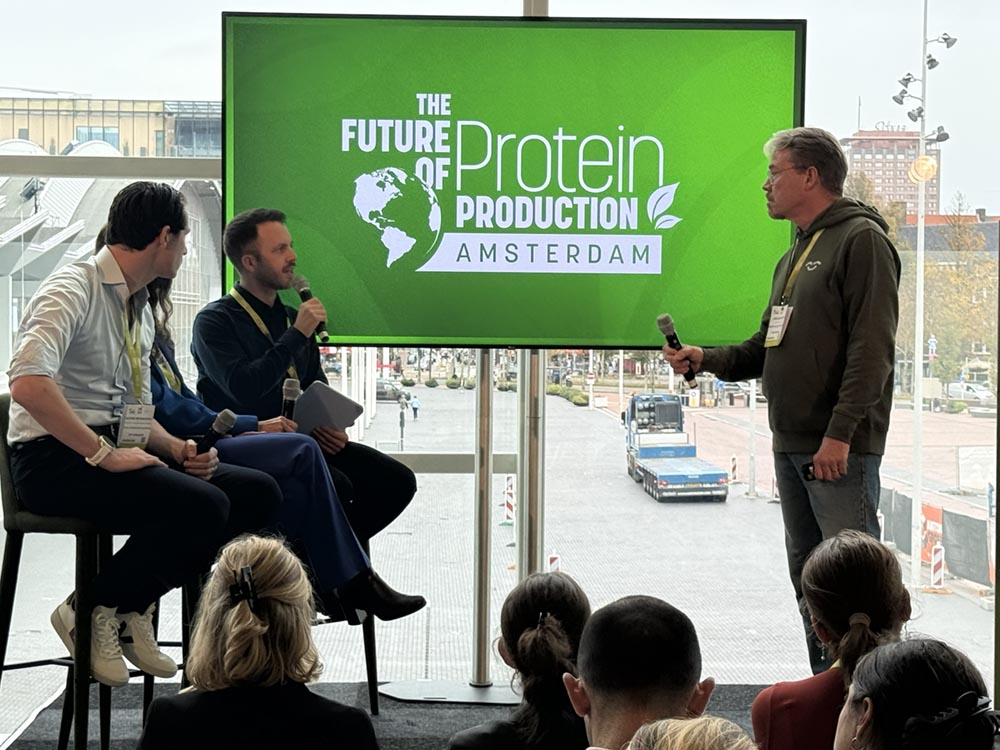
On November 4, Mishra, Stoccuto and Brandes will bring those experiences to Scaling Through Automation and Digital Biomanufacturing at The Future of Protein Production Amsterdam. They will be joined by Kartheek Anekella, Strategic Marketing, Food and Alternative Proteins at Pall Corporation, and Jonathan Kahan, Co-founder of Quartz Labs.
It makes for an unusually broad automation panel. Cellcraft is working at the level of adaptive bioreactor control. Siemens is dealing with digital twins, standardization and the connections between systems across a factory. Pall takes the discussion downstream. Planetary has to make industrial fermentation economics work in the real world.
And there is plenty to disagree about. How much automation does a company actually need at pilot scale? At what point does investment in digital infrastructure begin to pay for itself? Should software be allowed to change critical process parameters autonomously? Can digital tools compensate for imperfect equipment, or simply expose its limitations more quickly? The answers will vary with the process, product and scale.
There is a more immediate reason the conversation is becoming important. Protein production is moving into facilities where failed batches cost more, small inefficiencies accumulate quickly and yesterday's successful run needs to be repeated tomorrow. The biology still has to perform. Increasingly, so does everything watching it. Cellcraft's Mishra comes back to reproducibility. “Before you can optimize yield or scale a process, you need runs that are reproducible and comparable to each other.”
Scaling Through Automation and Digital Biomanufacturing takes place at The Future of Protein Production Amsterdam from 3:00-3:30pm on Wednesday, November 4, 2026, at RAI Amsterdam. The conference is co-located with the Cultured Meat Symposium, with access to both conferences included in the conference pass.
Book your conference pass here

Join Us At One Of Our Upcoming Events

If you have any questions or would like to get in touch with us, please email info@futureofproteinproduction.com